VertRep

VertRep

Monday, July 18, 2005

Somalia Refresher - Like a Slap in the Face

Good basic summary of how things stand in Somalia here.

And this delightful note:
Al Qaida has captured a foothold in Somalia.
The International Crisis Group said in a report that Al Qaida has taken over parts of the Arab League state. ICG reported that the Al Qaida network, based in the capital Mogadishu, has been abducting foreign aid workers.
"The threat of jihadi terrorism in and from Somalia is real," the report said. "Since 2003, Somalia has witnessed the rise of a new, ruthless independent jihadi network with links to Al Qaida."
What can happen if you don't stay to finish the job you started of trying to clean up a mess...

Update: The International Crisis Group Counter-Terrorism in Somalia: Losing Hearts and Minds? executive summary, with a link to the full report in pdf format. Quote of interest: "Ultimately a successful counter-terrorism strategy requires more attention to helping Somalia with the twin tasks of reconciliation and state building."

Hmmm. Sounds like Iraq, too.

Sunday, July 17, 2005

Piracy: an Islamist view?

Here's a different view from Khilafah.com


Update: Oh, yes, it mentions the US desire for world domination and the return of the Caliphate and suggests Islamic reassertion of control over the Strait of Malacca, Suez Canal and the Strait of Gibralter. All as a part of the "restoration" of the world described thusly:
There was a time when we the Islamic Ummah, were free of any power or authority other than that of Allah subhanahu wa ta’ala and were free of the influence, wishes and commands of the kuffar. Before, the Islamic Ummah were respected and held in awe by the kuffar. Before the Islamic Ummah was cared for, their affairs managed, their lands under the protection of the Khalifah. The Khilafah was a powerful and secure, and the Muslims were respected and lived noble lives on this earth.
By the way, "kuffar" is the plural form of "Kafir" defined as "a person who refuses to submit himself to Allah (God), a disbeliever in God" (source.
The correct use of the word kafir in Islamic theology does not include either Christians, Samaritans, Jews, and all "Sabians" who are covered by the term Ahl-al-Kitab, or "People of the Book," because they are considered recipients of divine revelation from Allah. Some Militant Islamists, however, often do not make the distinction in their rhetoric and do often use it to include these religious communities, or any enemy.(source)
Update2 Mapping the Global Future -Caliphate scenario. (whole thing here)

Lawless Zamboanga? Vice mayor, 3 others killed in ambush

Responding to pirate attacks can be deadly in Zamboanga as reported here:
A southern Philippine town vice mayor and three of his bodyguards were killed after gunmen attacked them in Zamboanga del Sur province at 3 p.m. today. Three others were seriously injured in the attack, officials said.

Officials said Dinas Vice Mayor Abdul Bassit Maula was killed along with his bodyguards in the coastal village of Tarakan, where government militias were battling pirates at sea.

Three of Maula's bodyguards were also wounded, said Major General Gabriel Habacon, commander of the Army's 1st Infantry Division. "The vice mayor and his three bodyguards are killed in the ambush. Troops were sent to the town to pursue the attackers," General Habacon said.

He said the official rushed to the village after learning that pirates, onboard three speedboats, attacked patrolling militias. "Pirates and bandits are actively operating in the area and we have been pursuing these gunmen the past months," he said.

Military intelligence reports have tagged Camel Lao, a pirate leader, as allegedly behind the attack.

Lao's brother Rumano was killed by security forces in a fierce firefight earlier this year, General Habacon said.

Saturday, July 16, 2005

Pirates attack yachtsman off Mozambique

News of an attack off Pemba Bay in Mozambique here:
A member of Kingsley Holgate's African Rainbow Expedition, Bruce Leslie of Shongweni, near Hillcrest, is in a stable condition in a Johannesburg hospital after being stabbed by pirates during an attempted robbery at Pemba Bay, northern Mozambique, this week.

The expedition by land and sea, launched last month, aims to educate people along the East Coast of Africa about malaria, and to distribute mosquito nets, particularly to mothers with babies who are most at risk.

Leslie was attacked on the inflatable boat accompanying the expedition's Arab dhow, Spirit of Adventure, to the beach base the crew had set up in Pemba Bay on Wednesday. Leslie is the skipper of the dhow. He was stabbed in the neck, hand and foot during the struggle. ...

...Leslie was trying to stop pirates from stealing the outboard motor on the inflatable when he was attacked and ended up in the water. Nothing was taken. He swam to the safety of the Spirit of Adventure dhow, where he was dragged on board by the Swahili crew...

Holgate said what happened to Leslie was an unfortunate, isolated incident.

"Violent crime is not common here, but Yamaha outboard engines are like gold and we need to watch our security," he said.

Newest ONI World Wide Threat to Shipping Report to 13 July 05

For latest Office of Naval Intelligence World Wide Threat to Shipping Report go here and click on the date
Hightlights: A warning to commercial shipping in the Northern Arabian Gulf
Despite Coalition presence, pirates
operating in the Northern Arabian Gulf, in the vicinity of the deep-
water anchorages south of the Al Basra oil terminal, continue to
boldly rob large merchant vessels. Vessels operating in this area
should not be lulled into a false sense of security by Coalition
presence and employ the anti-piracy precautions required of piracy
prone areas (ONI-13 Jul).


More details on the M/V Semlow seizure (that the captured World Food Program ship:
SOMALIA: The general cargo ship (SEMLOW) was hijacked
26 Jun while underway in position 04:47.6N, 048:12.0E, off Hobyo.
Hijackers are demanding $500,000 to free the vessel and ten
crewmen. The vessel was under charter of the UN World Food
Program (WFP) and is carrying 850 MT of rice, donated by Japan
and Germany, destined for Bossaso, Somalia. On 12 Jul, the UN WFP
director warned the pirates that if the vessel, crew, and cargo were
not released within 48 hours, then the WFP would blacklist the area
of Haradheere and Hobyo for the next 10 years. Mohamed Abdi
Hassan, the leader of the group holding the vessel, denied they
were demanding ransom but rather simply guarding the seas against
illegal fishing and dumping of toxic waste, and impounded the vessel
because of improper documentation. ONI NOTE: This is likely the
same militia group responsible for the attempted boarding of M/V
(TIMBUCK) and successful hijacking of a LPG tanker back in April
(see 20 Apr ONI Worldwide Threat to Shipping report paragraphs 5.H.3
and 5.H.4). After 18 days of captivity, the LPG tanker and crew were
released unharmed upon receipt of ransom payment. All vessels
should heed the IMB warning to stay as far away as practical from the
eastern coast of Somalia, particularly in the area off Haradheere and
Hobyo.

Friday, July 15, 2005

Iraqi Military phasing as oil terminal protector


The Iraqi military has begun the next phase in the security turnover process to assume responsibility for the Khawr Al Amaya and Al Basrah oil terminals.

In an interview July 12 aboard USS Normandy (CG 60), Royal Australian Navy Commodore Steve Gilmore, commander, Task Force 58 said that the process will be complete when Iraq's military takes command and control of the oil terminals.

"We’re beginning phase two of a three-phase process, which will transition the point-defense of the Iraqi oil terminals to the Iraqi Marines," said Gilmore.

The oil terminals provide significant revenue for the Iraqi economy. Iraq and coalition forces are working together to progressively transfer full security of the oil terminals to Iraqi forces.

“[The Iraqis] are part of the task force,” said Gilmore. “They are not being placed alongside coalition units; they are replacing coalition units.”

Anti-Malacca Pirate Developments


A newly set up marine police tactical unit is expected to assist in fighting piracy and kidnappings, especially in the Straits of Malacca.
Thirty officers have already been trained to take quick action in the event of any attack on vessels in the Straits of Malacca.

Marine police commander Senior Assistant Commissioner I Abdul Rahman Ahmad said for the time being, the focus of the tactical unit would be on the Straits of Malacca.

"The Straits of Malacca is used for international trade and attacks on vessels may affect the economy in the region,” he said.

"The unit can also be transported quickly by air if there is a need for them to conduct a rescue exercise in other areas, such as in Sabah. Eventually, a similar unit may be set up in Sabah and Sarawak, but we will have to consider several factors such as costs," he said.
Meanwhile, India announces some ship visits to the Malacca area:
The Indian naval aircraft carrier INS Viraat, accompanied by four other Indian naval ships namely INS Rajput & Ranjit (guided missile destroyers), INS Shakti (replenishment tanker) and INS Khukri (indigenously built missile corvette) are scheduled to be deployed overseas to countries in South East Asia...To ensure peace and stability in the region and prevent illegal activities such as smuggling, piracy, gunrunning, armed robbery, drugs trafficking and poaching etc, the Indian Navy conducts coordinated patrols with the Indonesian Navy in the six-degree channel separating both the countries. The first Indi-Indo-corpat was conducted in Sep 02 and since then four coordinated patrols have been successfully executed. The next patrol is scheduled to be held in Sep 05.
And a call for even more copperation:

Attacks on ships in the pirate-infested Straits of Malacca are unlikely to decline unless Indonesia, Malaysia and Singapore share more intelligence, maritime security experts say.

The three countries straddling the straits began coordinated patrols last year after Washington said more needed to be done to protect the 50,000 commercial vessels that ply the waterway annually.

Experts at a seminar in Singapore marking the first anniversary of the patrols said Thursday that naval and coast guard cooperation are not enough to stop piracy and urged the three countries' police forces to step up information exchanges to help in the apprehension of pirates.

``We still have a significant problem,'' said Graham Gerard Ong, a piracy researcher at the Institute of Southeast Asian Studies in Singapore.

Thursday, July 14, 2005

Just had enough of it

It appears this Chap has just had enough...
But I want a reckoning. I want people dead. I want the Syrian guy interviewed in the paper who helps anti-Iraq forces across the border dead. I want the people who donated money for their war effort and celebrated the London bombing in a kebab shop in another country in Europe to be dead, and the shop destroyed, and the insurance money stolen to make an offensive sculpture planted on what used to be the celebrator’s house.
I know the feeling...and I have a proposed solution
photo source Try a couple of these and call me in the morning...and remember, revenge is a dish best served cold...

Wednesday, July 13, 2005

U.N. Calls for Release of Hijacked Ship but backs off threat of total cut-off

Maybe the headline on my last post on the WFP ship should have read "UN to Somalia poor -'Drop dead!'" based on articles like this and this.

However, the UN WFP has apparently recanted/denied/backed off its threat not to deliver food to Somalia for "ten years" if the pirate-seized World Food Program ship is not released as reported here:
The World Food Program said Wednesday it hoped negotiations between a shipping company and a group of pirates would lead to the release of a ship that was hijacked last month while carrying U.N. food aid for tsunami victims in Somalia.

Somali gunmen boarded the MV Semlow on June 27 and took the crew of 10 hostage.

Caroline Hurford, a spokeswoman for the Rome-based agency, said shipments to Somalia remain suspended. She warned that dwindling food stocks in the country are endangering those depending on the aid.

Hurford denied reports that the agency issued an ultimatum threatening to suspend shipments to Somalia for 10 years if the ship were not returned in 48 hours.

"What we meant was that we are suspending shipments and this could lead, unless they are restarted, to a suspension of distribution, because obviously the stocks will run out," she said.
Maybe cooler heads prevailed, but it's an interesting study in disavowing prior comments...

Tuesday, July 12, 2005

Indonesia says no to Indian patrol in Straits- Sovereignty Issues

Reported here
‘‘We wish to make clear that the Strait of Malacca is not an international strait. It's only for international navigation and the responsibility of its safety lies with the three states of Indonesia, Malaysia and Singapore. While we realise that user countries have understandable interest in ensuring security, whatever efforts are being made will need to have the consent of these three states,'' Indonesian Foreign Ministry spokesperson Marty M. Natalegawa, who's also the Director General for ASEAN Cooperation, told visiting Indian journalists.

Though the Indian and Indonesian navies have been conducting coordinated patrols, it started in September 2004 in the Six Degree Channel, west of the Strait of Malacca between the Nicobar Islands and Indonesia's Aceh province, Jakarta points to sovereignty sensitivity when it comes to the Strait of Malacca.
They did just increase their own patrols...

Myanmar 's got gas

Headline: Giant Myanmar gas field may feed LNG, two pipelines
Myanmar's giant A-1 gas find may be large enough to support an expanded liquefied natural gas (LNG) export project as well as new pipelines to India and Thailand, a senior oil official said on Tuesday.
Myanmar, also known as Burma, is an extremely repressive regime and things are not good economically:
Burma is a resource-rich country that suffers from government controls, inefficient economic policies, and abject rural poverty. The junta took steps in the early 1990s to liberalize the economy after decades of failure under the "Burmese Way to Socialism", but those efforts have since stalled and some of the liberalization measures have been rescinded. Burma has been unable to achieve monetary or fiscal stability, resulting in an economy that suffers from serious macroeconomic imbalances - including inflation and multiple official exchange rates that overvalue the Burmese kyat. In addition, most overseas development assistance ceased after the junta began to suppress the democracy movement in 1988 and subsequently ignored the results of the 1990 legislative elections. Economic sanctions against Burma by the United States - including a ban on imports of Burmese products and a ban on provision of financial services by US persons in response to the government of Burma's attack in May 2003 on AUNG SAN SUU KYI and her convoy - further slowed the inflow of foreign exchange. Official statistics are inaccurate. Published statistics on foreign trade are greatly understated because of the size of the black market and unofficial border trade - often estimated to be one to two times the size of the official economy. Though the Burmese government has good economic relations with its neighbors, a better investment climate and an improved political situation are needed to promote foreign investment, exports, and tourism. In February 2003, a major banking crisis hit the country's 20 private banks, shutting them down and disrupting the economy. As of January 2004, the largest private banks remained moribund, leaving the private sector with little formal access to credit.(source
Of course, being a source of energy for neighbors may change the dynamics somewhat...

Singapore and US Expand Relations

Joint Statement Between President Bush and Prime Minister Lee Hsien Loong:
President George W. Bush and Prime Minister Lee Hsien Loong reaffirm the strong U.S.-Singapore partnership and will open a new chapter in strategic cooperation by signing the “Strategic Framework Agreement Between the United States of America and the Republic of Singapore for a Closer Cooperation Partnership in Defense and Security.”

The Agreement is a natural step in the expansion of bilateral ties. President Bush and then-Prime Minister Goh Chok Tong first announced their intention to conclude this agreement in October 2003. It was born out of a shared desire to address common threats such as terrorism and the proliferation of weapons of mass destruction (WMD), which called for even closer cooperation between the United States and Singapore. The Agreement recognizes Singapore’s role as a Major Security Cooperation Partner and will expand the scope of current cooperation in areas such as counterterrorism, counter-proliferation, joint military exercises and training, policy dialogues, and defense technology. The Agreement will further enhance regional stability by supporting the continued security presence of the United States in Southeast Asia.

Indonesia launches operation to curb piracy

Radio Australia reports here:
The Indonesian navy has launched a three-month operation aimed at curbing piracy in the Malacca Strait.

The strait is a key international shipping route that has been plagued by pirate attacks.

The operation will involve 20 navy warships, seven motorboats, four planes and two helicopters.

A navy spokesman says it will also involve marine and infantry battalions, four teams of navy frogmen, three teams of amphibious scouts and an intelligence team.

The spokesman says the operation is part of efforts by the states bordering the Malacca Strait - Malaysia, Indonesia and Singapore - to secure the waterway.
Wow! The insurance rate increase seems to have gotten some action. Even though the waters are allegedly "safe"...

WFP ultimatum over Somali ship

WFP gets tough with Somalia over the seized WFP ship here:
The UN food agency has warned it will stop shipments to central Somalia for 10 years if one of its ships hijacked by pirates is not returned in 48 hours.
The World Food Programme's director for the region, Robert Hauser, was speaking after reports the pirates were in talks with Somalia's interim government.

It also follows Kenyan claims that the WFP was delaying the ship's release by refusing to talk to the warlords.


Update: My original post on the ship's seizure ("Somali Pirates Seize UN Aid Ship") here.

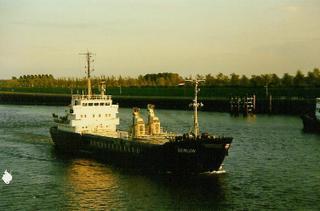
MV Semlow (photo source)

Update: (7/13/05) More on this threat here and here. The WFP is quoted as be concerned over the ship's safety:
But Mr Hauser told the BBC they were increasingly concerned for the safety of the ship as bad weather was bringing high winds and rough seas to Somalia's north-east coast. (BBC)
and
Hauser said the sea had become turbulent and there was a real risk of the vessel being tossed to the shore by the waves; the crew also risked running out of fresh water and food.(Reuters)
.

Just in case you don't get it: Winds of Change Flash on al Qaeda attacks

Visual summation of what the AQ terror network has been up to here.
There have been 30 major mass casualty attacks directed against the United States, Britain, France, Spain, Pakistan, Kenya, Tanzania, India, Iraq, Morocco, Yemen, Tunisia, Indonesia, Saudi Arabia, Turkey and North Osetia. 14 of the 30 attacks were conducted prior to the invasion of Iraq, making claims of the occupation of Iraq as a casus belli for al Qaeda’s terrorism to be disingenuous at best. 4,895 people have been killed in these attacks, and 12,345 plus have been wounded. The majority of the countries attacked are Muslim countries. And although not stated, the vast majority of the victims of al Qaeda's violence are Muslims.

Latest Piracy Report from ICC Commercial Crime Services (to 11 JUly 2005)

Latest weekly piracy report here. Highlights include continuation of alert for Somali coast and a report on the Palm Chen:
03.07.2005 at 0005 LT at Tanjung Pengelih, Malaysia.
Eight pirates wearing face masks armed with guns and long knives boarded a tug with a barge in tow awaiting berthing at Tanjung Pengelih port. They held master and crew as hostages below deck. Barge was laden with 5,300mt of palm oil. Pirates transferred about 3,500mt of cargo into another tanker called Palm Chem. They left the tug and barge 04.07.2005 at 1800 LT in position 01:30N-104:30E. Subsequently, Malaysian marine police located Palm Chem with stolen cargo and arrested the crew.
See my earlier report on the Palm Chem here.

Monday, July 11, 2005

Back to Sea Lanes: Maritime attacks could damage Australian gas exports

Australia is concerned about its sea lanes, too.
Australia's sea lanes are at risk. The infiltration of organised crime into piracy has made these incursions more dangerous, more ambitious and harder to stop. But the problem gets worse.

New evidence shows global jihadists are entering the fray. Indeed regional terrorists and insurgents in South-East Asia have a history of using the sea as a launching pad for brutal acts.(source)
As reported here:
However, recent developments have evidently prompted Canberra to pay much closer attention to the possibility of an attack launched by al-Qai'da-inspired terrorists in the southern Philippines against ships carrying billions of dollars of Australian exports to Asia and the US, including tankers laden with liquefied natural gas headed for Japan, South Korea or Taiwan. The destinations will soon include China and the west coast of North America as well.

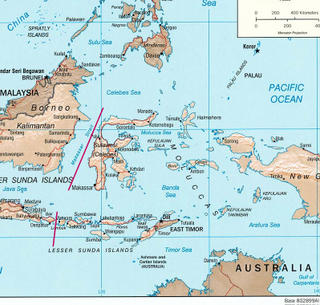
Almost all of Australia's $153 billion export trade by bulk and about 72 per cent by value is carried in ships. Much of the trade with northeast Asia, the source of five of Australia's top 10 markets, goes through two deepwater passages in Indonesia: the Lombok Strait between the islands of Bali and Lombok, and the Makassar Strait between Borneo and Sulawesi.

Then, depending on their destination, size and weight, the ships either branch right through the Sulawesi Sea south of Mindanao, the main island in the southern Philippines, out into the Philippine Sea and the Pacific Ocean; or they branch left, skirting the Sulu archipelago and Palawan Island in The Philippines to reach the South China Sea.

The Philippine Government sought assistance from the Australian Federal Police after a ferry carrying almost 900 passengers caught fire and sank shortly after leaving Manila for the south in February 2004. A total of 116 people were killed or are still missing, presumed dead. AFP forensic investigators and explosive specialists helped the Philippine authorities confirm that two local terrorist groups linked to al-Qai'da had placed a bomb on the ferry.

Six members of the Abu Sayyaf group and an affiliated organisation known as Rajah Sulaiman were charged with the bombing in October. The Abu Sayyaf is believed to have several hundred members based in the Sulu Archipelago and other parts of the southern Philippines. It has been involved in kidnapping people, including crew members of passing ships, and holding them for ransom. The Rajah Sulaiman group is made up of zealots who have converted to Islam from among The Philippines' Christian majority. (emphasis added)


Major sea lanes for Asia (note there are 2 lines working their way out of Australia toward Japan):

(from Straits, Passages and Chokepoints: A Maritime Petroleum Distribution by Jean-Paul Rodrigue Rodrigue)

See also "Australia's Maritime Dependence":
This is of direct relevance to Australia’s maritime environment. Noting that Australia is a net exporter of energy, especially coal and raw materials such as iron ore, and a net importer of manufactured goods, it is of vital importance that a true understanding of the role of maritime strategy for Australia is pursued. The Australian economy is absolutely dependent on shipping. Globalisation has meant that Australia’s economy is more integrated with other nations and less self-sufficient. Of our international trade, 99% by bulk and 73.5% by value is carried by ship,2 with about 95% of that in foreign flagged vessels.

In acknowledging the vital role that air transport plays in supplementing seaborne trade, the role of the maritime environment is still relevant. This is because all trade which goes by air flies over the sea and is just as influenced by Australia’s ability to control the sea, as is the overriding proportion which goes by sea. Without control of the maritime environment air services to Australia can also effectively be interdicted, and as a result Australia could be virtually isolated.

Trade is not the only issue that makes Australia a maritime nation. Other important areas that could be targeted by any adversary include tourism, employment and resources, especially offshore oil and gas installations and their supporting infrastructure. Employment and trade are intrinsically linked. One in five jobs in the city and one in four jobs in the country are directly related to the export of goods. Even low level threats against shipping at distance from Australia could have a deleterious impact on costs, which may severely damage Australia’s trading position. These include fuel costs, insurance premiums and time constraints imposed by routing ships by other than the most direct route. Thus, Australian security requires a much broader focus than just conventional invasion through the northern sea-air gap.
And this interesting analysis from Stratfor in 1999:
Australia assumed the congruence of Australian and American strategic interests meant the United States would be forced to intervene in support of the Australian national interest, without involving massive risk and expense by Australia. Australia assumed it was a matter of strategic interest to the United States to guarantee sea lanes through the archipelago. Australia would be the beneficiary of a policy it did not have to underwrite.

In East Timor, John Howard encountered the limits of this assumption. Certainly, the United States has an interest in maintaining secure sea lanes between the Pacific and Indian Oceans. U.S. presence in the Persian Gulf, among other things, depends on that. The United States may have an interest in maintaining sea lanes for the movement of oil from the Persian Gulf to Japan. That does not mean it has an ongoing interest in keeping open sea lanes that are of interest to Australia.

Howard tried to portray his new policy as a tilt toward Asia. He is actually trying to reorient Australian foreign policy in a direction that meshes with the United States... (source)
I think it only works to Austrlia's long-term benefit.

Update: Just a little note on organized crime and piracy - the captain of the MT Nepline Delima was quoted as being concerned about sailing his ship again because "“I am afraid because I heard that land mafias are involved. They can always engage other pirates to attack us. They are plotting to get the diesel..." (source). Not that this is new development...

Update2: Lombok Strait and Makassar Straits with red lines: Important Australian Sea Lanes
New Indian missile frigate- 85% home grown

Reported here.

Somali Aid Worker Killed

In a failed country, the UN "condemns" a murder as reported here:
Ali headed the non-governmental organisation which he helped co-found. According to reports, the gunmen reportedly pulled Ali out of his house and shot him, killing him instantly.

The incident has sent fears in the bullet-riddled capital, where fresh efforts to set up a central authority are showing promising results.

Somali gunmen have long targeted humanitarian workers, who are used as sources for ransom, which is used to sustain militia groups.

Somali pirates are currently holding eight Kenyans and Tanzanian sailors whose vessel was carrying food- aid to the tsunami-affected Somali people.

The UN World Food Programme chartered the vessel. (emphasis added)
I think something a might stronger than "condemnation" is required to deal with Somalia's gunmen.

200 missing as Indonesia ferry sinks

Some belated news from last week 200 missing as Indonesia ferry sinks
150-ton KMP Digul sank on Thursday night off the coast of Papua province while heading from the port town of Merauke to Tanah Merah, 200 km to the north, said Sumpeno Juono of the local Search and Rescue agency.

The ferry was officially reported to be carrying 50 crew and passengers. But survivors said about 200 people were on board, Sum-peno said. So far, only 15 - two crewmen and 13 passengers - have been found. He said the ferry did not have any safety equipment and sank quickly.
And a sad update:
Hopes faded today of finding any more survivors from a ferry that sank off the eastern Indonesian province of Papua last week, with as many as 200 people believed trapped inside, a rescue official said.

Some of the passengers were children on school holiday when the state-operated ferry, the Digul, was engulfed by waves on Thursday. Fifteen people, including two crew members, were rescued alive.

"Seeing that we have only been able to find 15 people after three days, we believe that most of the passengers had been trapped inside the boat," said Sumpeno Juwono, a search and rescue official from Merakuke district. (source)