VertRep

VertRep

Sunday, October 16, 2005

Submarine warfare experts gather

This ought to make the US submarine community feel better as sub experts gather:
The specter of a war with China over Taiwan was one of several global security issues that drew U.S. submarine officers from around the world to a top-secret meeting at the Naval Postgraduate School this month.

The fact that more than two dozen Navy leaders met under the highest security in Monterey puts the Navy school on the front line of a developing Cold War-type scenario in the Pacific. In recent months, military exercises there have been marked by tense diplomacy and saber-rattling between the U.S. and China.

Under security conditions that one Pentagon insider described as "impenetrable," Chief of Naval Operations Mike Mullen was quietly whisked in and out of town Sept. 28 and Sept. 29 to address the admirals on undisclosed military and security topics, said Mullen's spokesman, Cmdr. John Kirby. He said Mullen, the Navy's top officer, was invited by the admirals. During his quick trip to the Peninsula, Mullen visited Fleet Numerical Laboratories.

Kirby said he could not comment on whether Mullen discussed China and the Pacific with the submarine commanders, but he said Mullen talked about the future direction of the Navy and "the crucial role of the submarine forces." In 2006, the Navy plans to rapidly develop its anti-submarine warfare technology, according to a report released Friday by Mullen.
Guam, once again, becomes a vital part of the US Defense structure. Below are photos of Apra Harbor and USS Houston (SSN-713) which is homeported there.


UPDATE: An interesting look at China by former SecDef Brown here posted by Simon.

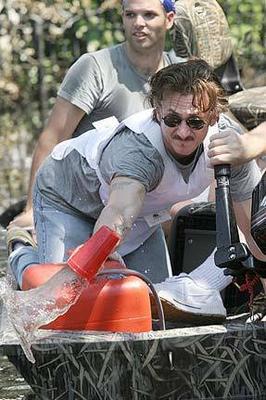
Great boating adventures of our time


A couple of great boating adventures of the 21st Century.

Saturday, October 15, 2005

Heavy Cruiser


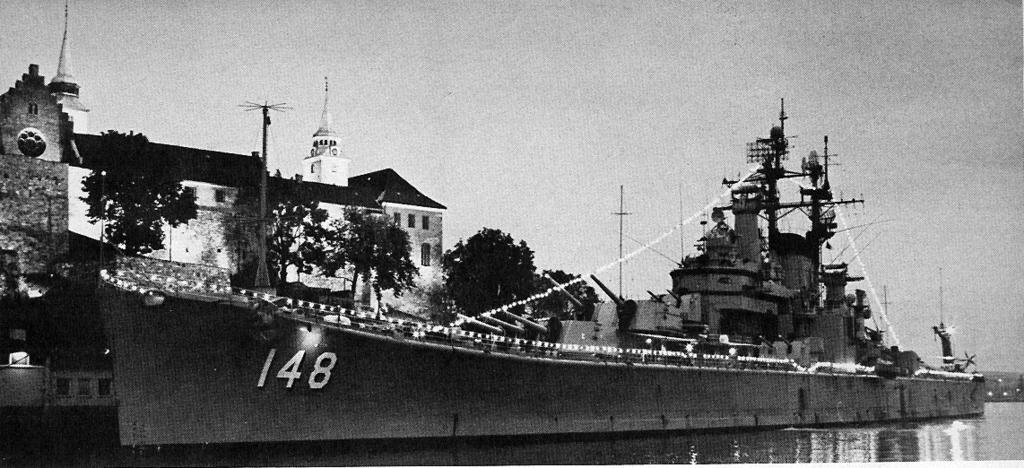
Off the coast of Vietnam in 1972, after the North Vietnamese started the Easter Offensive, the big gun ship that began patrolling the South China Sea was USS NEWPORT NEWS (CA-148), one of the heavy cruisers carrying 8-inch guns.

Such was her importance that ammunition ships on scene transferred deckloads of 8-inch when they met on their rotation to and from Subic so that there was a sufficient supply on station at all times.

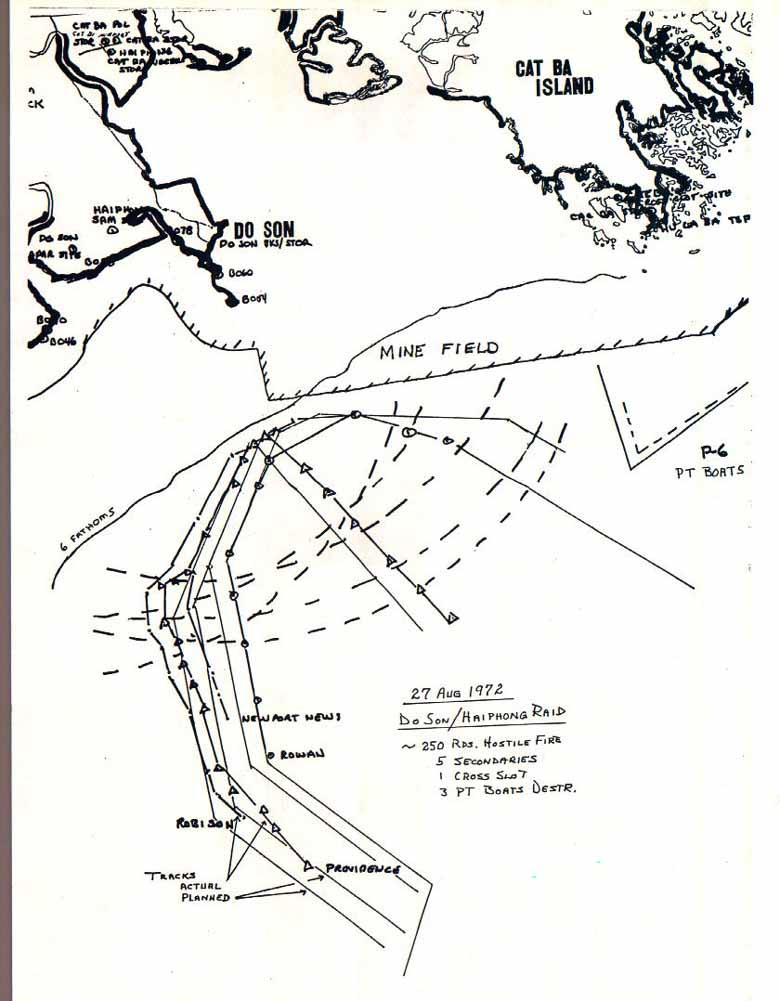
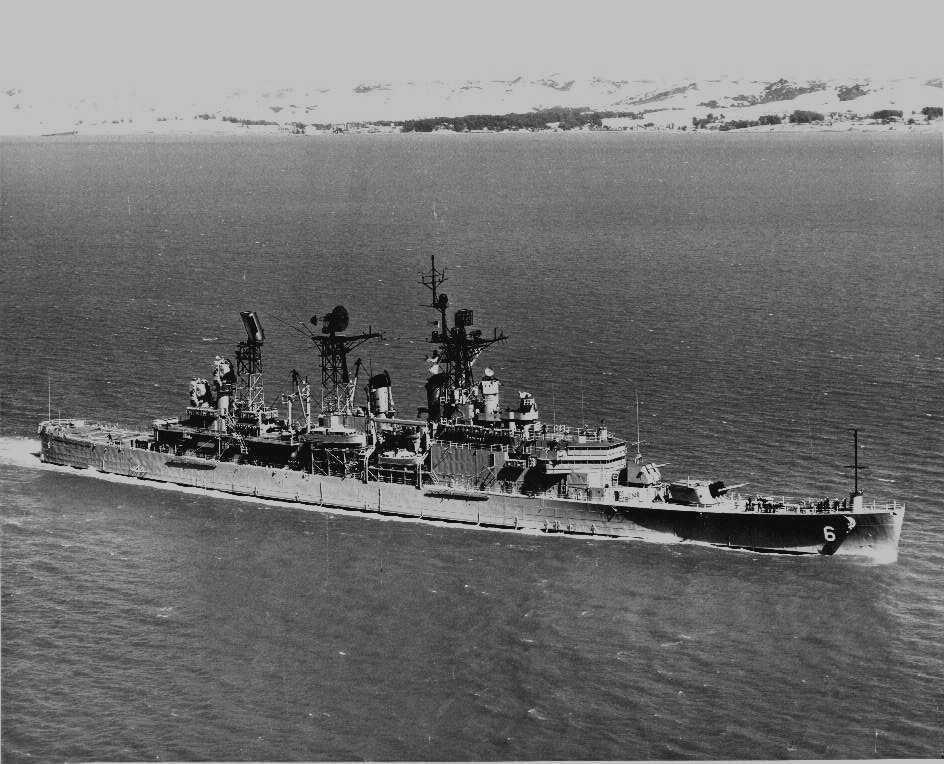
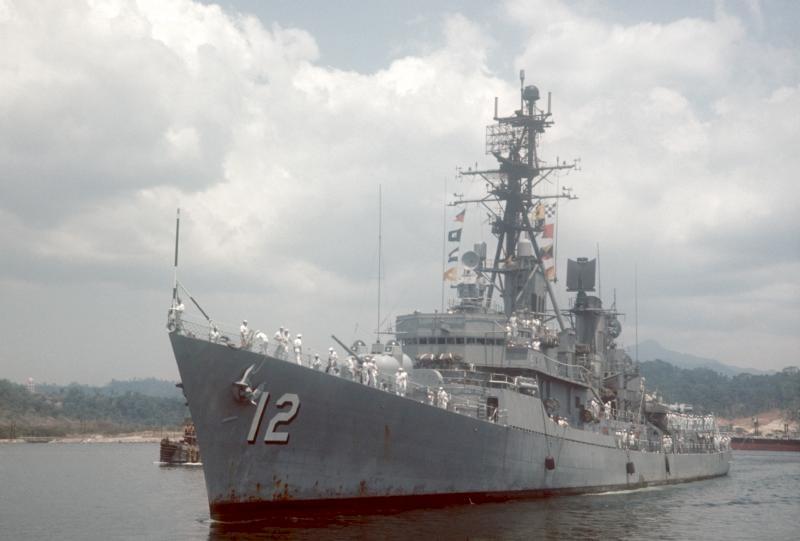
And the NEWS undertook some interesting missions, one of which took them into Haiphong for some shore bombardment as set out here. Accompanied by USS PROVIDENCE (CLG-6), USS ROBISON (DDG-12) and USS ROWAN (DD 782), the mission was to be "a naval gunfire strike against targets in Haiphong, Do Son Peninsula and Cat Ba Island."
The attack brought retaliation in the form of North Vietnamese PT boats and a "surface action" followed:
Upon commencing retirement after firing at 10 targets, three NVN torpedo boats closed to attack. Initial NEWPORT NEWS' salvos appeared to damage one torpedo boat which slowed and retired from the action. A second was sunk, and after NEWPORT NEWS was joined by the DD, the third was damaged and set afire, and subsequently sunk by tactical aircraft.

Drawing by Captain Charles Farnham (then serving on Flag Staff USS PROVIDENCE CLG-6) and "borrowed" from here.
USS ROWAN
USS PROVIDENCE
USS ROBISON
USS PYRO

After all the action, NEWPORT NEWS rearmed from USS PYRO (AE-24) one of the ammunition ships supplying the gun line ships. A day in the life of one of the last heavy cruisers in the US Navy.

Thanks to Mudville Gazette's Open Post!

UPDATE: I forgot to add that NEWPORT NEWS' radio callsign in those days was "THUNDER" and I think they must have had a collection of deep-voiced Combat Information Center radio talkers, because when they called it was a memorable experience:
For example: "Stud Poker, Stud Poker* this is THUNDER, THUNDER, over"

It was a hard act to follow.

*" Stud Poker" was the voice call sign of USS Leonard F. Mason (DD-852).

UPDATE@: USS ROWAN crew view of the engagement here. Close to 300 men served in a Gearing class destroyer like ROWAN. There are many more stories we have yet to hear.

Yemen

Interesting opinion piece on Chemical Weapons, Drug Smuggling, and Other Crimes of the Yemeni Dictator

An ally bites a bullet to help stop terrorism


Although the UN refuses to call a shovel a shovel,the African country of Malawi has stepped up and chewed a bullet to help fight the GWOT as reported here (ironically, a UN website):
Malawi's cancellation of a US $30 million deal to buy fertiliser from a Saudi company because of its alleged links with al-Qaeda could delay a government subsidy plan for poor farmers, a senior official told IRIN.

"We are at the beginning of the rainy season and farmers will start planting anytime now - it is critical that they get the input in time. Unless alternative arrangements are made to source the fertiliser, there would be a delay in the distribution of fertiliser coupons," said Michael Kamphambe-Nkoma, Malawi's High Commissioner to South Africa...
More here at al Reuters:
Malawi, reeling from crop failures that have left almost half its people dependent on food aid, has cancelled vital fertiliser imports from Saudi Arabia over reported al-Qaeda links, a minister said on Wednesday.

Malawi had planned to import more than 130,000 tonnes of fertiliser at a cost of $38 million through an unidentified Saudi company as part of a universal subsidy programme to help farmers grow food.

But Finance Minister Goodall Gondwe told parliament in the capital Lilongwe on Wednesday that the deal had been cancelled after the American bank involved in the transaction raised concerns that the company had links with al Qaeda.

"Malawi was dealing with a Saudi Arabian company and when we were about to pay through an American bank, Citibank, we were advised against that because they said that the company had al Qaeda links," Gondwe told parliament.

"(The) Citibank investigation also revealed that this company was just a broker for a Ukrainian company," he added.
I note the UN reports:
Gondwe said the government had identified the Saudis because their fertiliser was the cheapest, but the government had not yet paid the firm and the money was still in the country's central bank. "We are now dealing with [fertiliser] firms from Ukraine and Thailand," he noted.
So all is not lost. The US might want to help out to reward this type of selflessness from an ally.

UPDATE: For the geographically challenged -the blue arrow points to Malawi.

Read the The Fourth Rail

A couple of days ago one of my kids asked why I don't post much on the war in Iraq. My answer to him was the same as that which I now provide you - there are many others who are handling it so well, and with far better knowledge than I would hope to have, that I mess around in other areas, like boats and things. One of my favorite reads is Bill Roggio and his gang over at The Fourth Rail.

Go there and gain enlightenment.

Come back to read about pirates and other things.

UPDATE: And you might want to read CDR Salamander on the latest Russian resistance to Islamic terrorists and his suggested link to the Gates of Vienna (which, by the way, is also on the track of some Islamists here in the US. Just go visit here. Tell 'em I sent you...

Friday, October 14, 2005

Odd Cars: Dymaxion


An odd design for an automobile?
Explained here
For those that haven't heard of it, the Dymaxion Car was a teardrop-shaped (least air resistance), 3-wheeled, rear-wheel (single) steering, 20 foot long, Aluminum bodied auto, designed by Buckminster Fuller in 1933 to achieve maximum output and service with minimum material input. It was about 6 feet tall (kinda like a big van), seated the driver and 10 passengers, weighed less than 1000 lbs., went 120 miles/hr on a 90 horsepower engine, and got between 30-50 miles to the gallon of gas. Fuller referred to it as the "Dymaxion Car", "Dymaxion Vehicle", and "Omni-Medium Transport" since it was ultimately intended to go by land, water, or sky. Only three were ever built.
Quicktime videos of the car in operation here and here, More information on Buckminster Fuller here

While you are at it, you might want to look into the Dymaxion House here and ponder why they might not be a good idea for the US Gulf Coast (with modern materials being used, of course).

Somali pirates release latest captured WFP ship

This just in:
Somali pirates freed a ship carrying United Nations food aid early on Friday, two days after seizing it in the latest hijacking off the anarchic country's dangerous coast, the world body said.
See post on the seizure here.

It's a good start.

Major innovation: Stanford Wins Robo-Race


Speaking of drones, the DARPA guys offered up a prize and some really smart people took up the challenge - to create a vehicle capable of self-direction over rough terrain from Point A to Point B and the results are impressive as reported here:
It's an incredible feat. Giving robots the intelligence and the vision to manuever over all that rough terrain was considered closer to science fiction than science fantasy not too long ago. I'm beyond impressed. And so is the Pentagon. "I don't know if I'd go 'moon shot,'" Darpa director Anthony Tether told the Merc-News. "It's closer to the Wright brothers."
Image from Stanford Racing's website. Carnegie-Mellon is also heavy into this as you can see from their racing team site. Besides, they let their teddy bear wear the 2nd place medal.

Should note that Zoe Brain reported on this race a couple of days ago here.

Unmanned, self-directing vehicles? More safety for troops. Cool.

Tunnel and cave flying UAVs?


Reported here, "US defence research agency wants to develop air vehicle small enough to fly inside caves and tunnels."
“The warfighter needs something that can navigate inside a building, cave or tunnel, where MAVs can’t go,” says NAV programme manager Darryl Pines. “We need something even smaller that can fly through a window and provide situational awareness inside a building.”
DARPA’s goal is to “provide a clear direction for development of a system that will be useful to the warfighter,” says Pines. “We understand the fundamental physics. This is about integrating technology into a vehicle that can perform a notional mission.” The requirement is for an air vehicle that can fly more than 1,000m (3,280ft) at 7-10m/s, loiter at 0.5m/s for more than 60s then hover in place for another minute or more, sending video back to the operator. The vehicle could be expendable or reusable, he says.
Gosh, I wonder why tunnels and caves are mentioned?

Hat tip to: UAV Blog

Photo is of a micro UAV or "MAV" from here, but it seems that, as with the IPOD, technology marches on.

Thursday, October 13, 2005

Good reads: Somalia ''Jihad'' Springboard and more


Interesting reading here:
Building up to attack Yusuf’s forces is an array of scary men in Mogadishu. In the lawless city I found that Islamic jihadis of al-Ittihad al-Islamiya (AIAI) have recently gained a significant foothold. Backed by rich businessmen, they have established a network of Islamic courts with up to 3,000 recruits.

AIAI’s leader, Shaykh Hassan Dahir Aweys, has declared jihad against ‘the devil’ Yusuf. Aweys occupies a compound next to the colonial-era Italian cemetery, where his militias dug up the bones, tossed them into the street and then constructed a mosque over the site.

In a bizarre twist the jihadis have now formed a loose alliance with warlord gangs whom the CIA has bankrolled to capture Islamic extremists. These are the thugs that American troops once battled to overthrow, who are making far too much money from the war on terror to want an end to anarchy.

Last month in Somaliland — the relatively stable breakaway region that covers the part of Somalia formerly ruled by Britain — the authorities fought a long gun battle with militants they claim are al-Qa’eda operatives. Eight were arrested and the house they occupied was found to contain explosives and heavy weapons. It appears that their objective was to disrupt the region’s elections and kill poll observers and international aid workers.

This is the latest vindication of Western fears that Mogadishu could grow as a base for Islamic extremists. Al-Qa’eda members used Somalia as a base when they were planning bomb attacks against the US embassies in Kenya and Tanzania in 1998. The same happened when terrorists passed through Somalia on their way to bomb the Israeli Paradise Hotel in Mombasa in November 2002. The same day they also narrowly missed blowing up an Israeli charter flight out of the same city.

In 2003 British Airways suspended flights to Nairobi and Mombasa for six weeks. Reports emerged of a plot hatched by Somali-based al-Qa’eda terrorists to break through the fence of a Kenyan airport with an explosives-laden truck designed to detonate beneath a taxiing BA jumbo jet. Another alleged Somali plot was to fill a Cessna small aircraft with a bomb known as the ‘hippo’, which would be flown out of a Nairobi airport and piloted into the brand new US embassy rebuilt to fortress standards since the last one was demolished.

Now this year, Yusuf’s counter-terrorism chief told me, foreign terrorists were planning fresh attacks throughout eastern Africa. He said they felt so secure and protected in Mogadishu that they had even married local girls and were raising families. ‘They will kill anybody who disagrees with them.’ He pointed at me. ‘And they will kill any white people they find like you, too. They will know you have arrived as soon as you land at the airstrip.’
And more good info here:
A hulking UN-chartered cargo ship, docked at a port in Somalia this week, was halfway finished unloading its 850 tons of corn and rice when a band of gun-toting bandits stormed aboard and forced the crew to take the ship to sea.
It was the second hijacking of a UN food-aid ship in four months in Somalia. Some 78,000 people may go hungry if the situation isn't resolved soon. But more than that, it's an example of how difficult it is becoming to get food to Africa's hungry masses in ways that are safe, efficient, and effective. And it's one more reason why there's growing pressure for major changes to the massive global food-aid system, which is funded by US and other wealthy-nation taxpayers.
And more from the Kenyan point of view :
Some foreign governments used to police the Coast of Somalia near Al Maan, but their withdrawal is reported to have worsened the situation.

Since the Somali waters became dangerous, the International Maritime Bureau, through its Piracy Report Centre based in Malaysia, posts regular warnings to ship owners globally.

The IMB has frequently warned ships on transit to keep 50 miles away from the Somali Coast.

But reports from Somalia indicate that the organised gangs have powerful boats that go out as far as 100 nautical miles away from the shore.

It is suspected that warlords from Puntland in Somalia are behind sea piracy as a major source of revenue.

Assistant minister for Immigration, Anania Mwaboza, says the Government is seeking the release of Mv Torgelow and investigate why Kenyans have been the target.

Kenya is also investigating whether the captors are linked to the transitional government or are criminal element taking advantage of the lawlessness in that country.
And this article:
The MV Miltzow was sighted yesterday off the small fishing port of Brava, about 50 miles south of Merca, which is a known refuge of a local militia gang. The hijackers usually demand a hefty ransom for the return of the crew and vessel, but always keep the cargo. If the owners do not pay, the crew may be held hostage for months and even killed.

Three Taiwanese fishing vessels and their crews have been held hostage on an island off the southern port of Kismayu for nearly six months.

The increased number of attacks is blamed on previous pay-offs and a decline in opportunities for criminal activity elsewhere as aid organisations have reduced their onshore operations because of the lack of security.

The International Maritime Bureau describes Somalia’s piracy problem as “the most serious in the world”. It reports that there have been 21 incidents off the Somali coast since March 15, making it as dangerous a stretch of water for piracy as the infamous Strait of Malacca in the Far East.

Since the fall of the dictator Mohamed Siad Barre in 1991, Somalia territory has been carved up between rival warlords and their militias. And since the start of the US-led war against terrorism, radical Islamic fugitives, some from Yemen and Afghanistan, have made Somalia even more dangerous for Westerners.

Weapons used in bomb attacks in Kenya and elsewhere in East Africa have been identified as having come from Somalia. Three East African suspects in the attempted London bombings of July 21 all had links with the country. Recent violence on the Indian Ocean island of Zanzibar has also been linked to Somalia.

Unscrupulous fishing companies, many with connections to Japan, China and Taiwan, have for years paid backhanders to Somalia’s regional warlords for the right to fish the waters off their respective fiefdoms. Flush with easy pickings from that trade, warlords recently began seizing commercial vessels.

The MV Torgelow, a cargo ship, was seized on Monday off the southern Somali coast as it headed north towards the ruined capital and main port of Mogadishu. Its fate is not yet known.
Kinda makes you think something is going on.

UPDATE: A couple more - a United States Institute for Peace report on "Terrorism in the Horn of Africa" here. And the recent comments by Marine Corps Major General Timothy Ghormley, commander, Combined Joint Task Force Horn of Africa here:
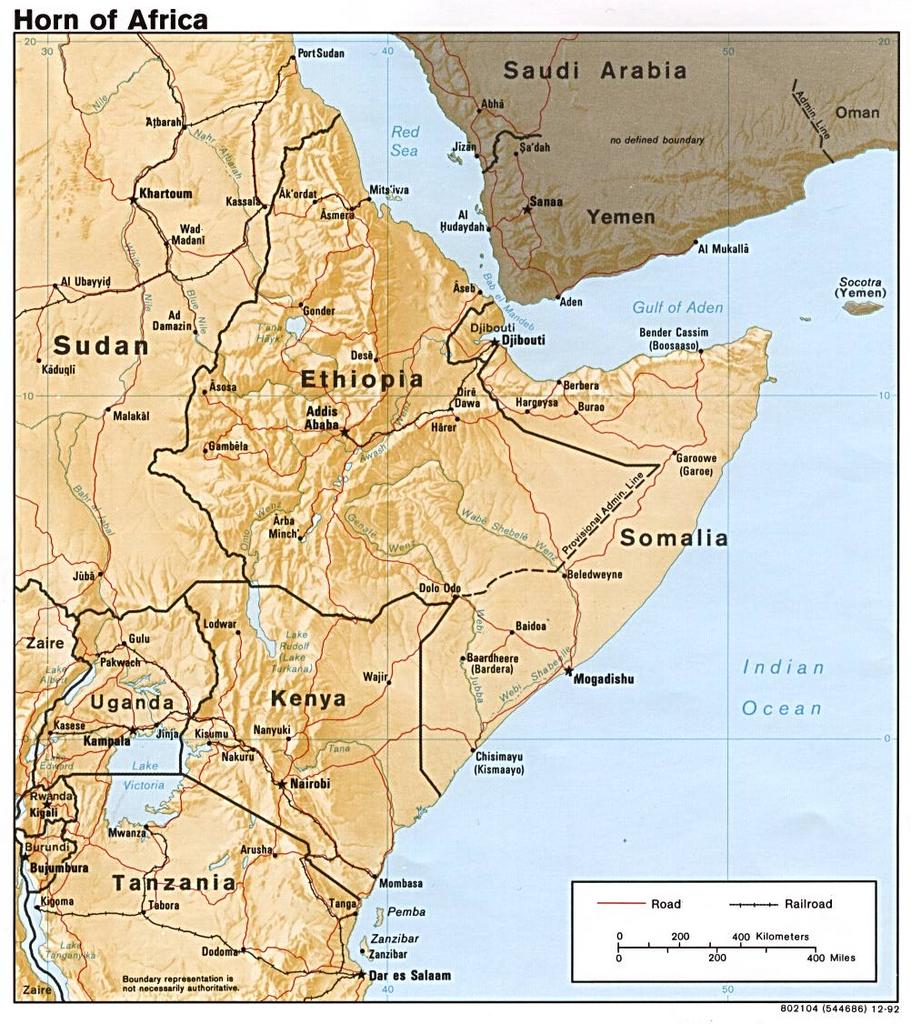
And then, of course, you have the threat. Those are the challenges. You have your sovereign boundaries, you have your tribal, you have your religious, and then, of course, you have your terrorist threat. Coming from Yemen you have the al Qaeda. Down into Somalia you have the al Qaeda network and associated movements. Then you have AIAI. And I blow this constantly -- it's al-Ittihad al-Islami; and then put an "O" at the end of it for Ogaden, and now you have the AIAI, AIAIO. And within the Ogaden, you also have the ONLF, which is Ogaden National Liberation Front. A little bit to the left there you have Oramean, which is the OLF, the Oramean Liberation Front. Up into Darfur you have the Jinjaweit; you have the Lord's Resistance Army, and of course you have the unrest along the Eritrean-Ethiopian border. You also have the seam that exists, which is the 12-mile limit. If you were to stand at high tide and let the water lap up at your ankles and then face about, I own all of that; what's behind me, I don't own. You're not allowed within 12 nautical miles of land; therefore, there's that gap that exists. That's -- the lower right-hand corner is the embassy, 1998.

Next slide, please. This is my mission statement. I have operations and training. I conduct CMOs, Civil Military Operations and Civil Affairs Operations. And I also conduct training within the CJTF-HOA. It's to combat terrorism, and to establish a secure environment and regional stability. You can't have any type of peace, you can't have any type of prosperity without security and stability, and that's our goal.

Philippine lawmaker: "Seize US military vessel off Zamboanga"


Reported here, a member of the Philippine house has decided to take on the United States:
Bayan Muna Representative Joel Virador urged local officials of Zamboanga City Thursday to seize a US military vessel found there Tuesday.

Virador said no foreign vessel is allowed to enter the Philippine coastal territory, adding that even local security officials were unaware there was a US ship in Philippine territory.

"What is the US ship doing here? I believe that even the Philippine security officials are unaware of its arrival. Is this part of the anti-terror campaign of the government? Or is this another covert operation between the US and the government which the Filipino people are not aware of?" asked Virador.

Last Tuesday, a US military ship, escorted by a small gunboat, was spotted off Zamboanga. However, spectators failed to identify what class the vessel was except that a US flag was hoisted on the deck.
Others seem less troubled:
The Department of Foreign Affairs (DFA) and the Armed Forces of the Philippines gave different explanations about the mission of the US military ship.

But both agree there was nothing unusual or illegal about the presence of the US ship in Philippine waters.

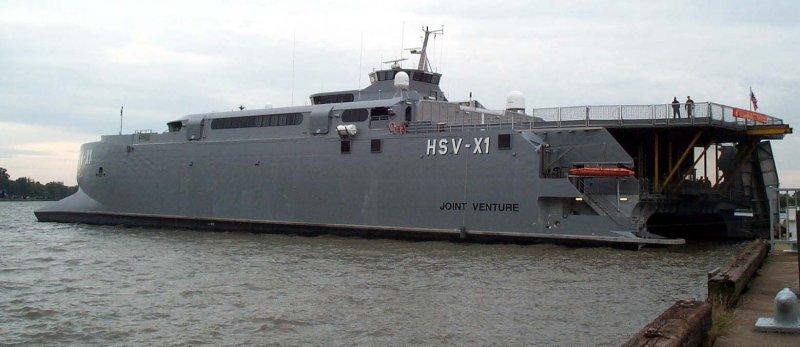
DFA spokesman Gilberto Asuque identified the ship as the USS Joint Venture, a commercial vessel chartered by the US military to carry cargo.

Asuque said the US had sent a note to the foreign affairs department on October 3 requesting that the ship be allowed entry to Philippine territory and dock in Subic so it could load "humanitarian cargo" such as school building materials that would be used for Project Bayanihan in "various areas in Mindanao" starting at the end of the month.

Armed Forces spokesman Lieutenant Colonel Buenaventura Pascual gave a different description of the ship.

He said it is the HSV 2 (High-Speed Vessel) Swift, an 11,000-ton double-hulled craft on the way to take part in a new Balikatan exercise in Mindanao.

The US embassy said there was nothing irregular about the presence of the ship, since "US vessels routinely transit through international waters (near) the Philippines, participate in bilateral exercises, and stop at ports for friendly visits, rest and re-supply."
Info on the HSVs here. Top photo is USS Swift (HSV-2). Bottom photo is USAV Joint Venture (HSV-X1).

One question is, even if the PI wanted to seize these ships, how would they do it?

Somali pirates seize another UN food aid ship


Reported here:
Somali pirates have hijacked a second ship carrying United Nations food aid in the latest act of piracy to strike vessels plying the anarchic country's treacherous seas, the world body said on Thursday.
Six gunmen stormed the MV Miltzow freighter on Wednesday as its cargo of 850 tonnes of food aid was being offloaded in the port of Merka, 100 km (60 miles) southwest of the capital Mogadishu, the U.N. World Food Programme said.
Aboard were the crew of 10, including a Kenyan captain, Ugandan engineer and eight other Kenyans, WFP added.
The hijacking came 10 days after pirates released another ship laden with WFP food aid, the M.V. Semlow, which they seized at sea and held for nearly 100 days...
...Wednesday's capture of the Miltzow is the third time pirates have struck the Mombasa, Kenya-based Motaku Shipping Agency, which owns the two ships hired to carry WFP food aid and a third stormed by pirates over the weekend.
The third ship, the M.V. Torgelow, had been headed to the Somali port of El Maan carrying fuel and supplies to restock its sister ship the Semlow when it was taken.
The Semlow has yet to unload its cargo of 850 tonnes of rice destined for victims of the Dec. 26 tsunami. A dispute with El Maan port authorities has prevented the return of its exhausted 10-man crew to Mombasa, WFP said.
Motaku typically runs about two voyages a month to Somalia, but may abandon the route because of the risks.
WFP said it is considering sending food aid overland through Kenya and Djibouti since shipping firms now want armed escorts.
Image of what I suspect is the MV Miltzow from here.

UPDATE: Some unpleasant truths about the Somali pirates (and some hyperbole):
Their motives appear to be purely profit centered although many claim to be enforcing the sovereignty of Somalia's territorial waters in the absence of a formal navy or coast guard.

"There are pirates who are flatly sea robbers, others claim to be protecting Somali waters from overfishing and dumping of toxic material," said Andrew Mwangura of the Seafarers' Assistance Programme in Mombasa, Kenya, home port to at least two recently seized vessels.

"Others are hired to hijack ships for revenge," he said.

"The whole issue of piracy is about money and control of certain portions of the sea."

Mwangura and other industry sources say the pirates have grown bolder and more successful because they have stationed accomplices in various East African ports to notify them of ship departures and expected times of passage through Somali waters.

While not always successful and occasionally beaten off by crews with the help of passing US warships, the hijackers have claimed numerous prizes, holding vessels for months until their demands are met or negotiated down.

A group of pirates based near the town of Haradere, about 300km north of Mogadishu, held a Mombasa-based ship transporting World Food Programme (WFP) aid for Somali tsunami victims for nearly three months before abandoning it in early October.

While the WFP denies paying any ransom, local residents say it is likely money changed hands during negotiations with the Somali owner of another ship commandered by the same pirates in September.

"The pirates have collected millions of dollars in ransom since [1991]," said Abdi Aden Mahad, a businessman in Bossaso, the main port in the northern Somali enclave of Puntland.

"It's the best income-generating business I've ever seen," he said.

"It's like winning a lottery."

At least three well-known former pirate chieftains who have made fortunes from ship hijackings live in the Puntland fishing village of Marreray, according to local residents.

"They are now married and have decent lives without any fear or asking for forgiveness," said Marreray villager Abdi Mohamed.

"They earned more than $100 000 each from piracy."

Attempts to restore maritime security have been limited and fraught with difficulty amid power struggles between unruly land-based militia in control of various fiefdoms and the sea-borne pirates

"The warlords are powerless, they cannot do anything about piracy," said Mire Hassan Ibrahim, a trader in Somalia's bullet-scarred capital of Mogadishu. "They have failed to pacify the land let alone the sea."

"These pirates are very rich and could kill or overthrow a warlord who tries to expand his control offshore," he said.

A tussle between pirates and warlords has kept three hijacked Taiwanese commercial fishing vessels in captivity for more than two months off the southeastern port of Kismayo, about 500km from Mogadishu.
UPDATE2: Commentor Worker was kind enough to offer up this link which reports that the putative government of Somalia is asking for foreign help:
Somalia's prime minister called on neighboring countries Thursday to send warships to patrol his lawless nation's waters after pirates seized a third cargo vessel delivering food aid.

Prime Minister Ali Mohamed Gedi said in an interview with The Associated Press that his government — which has yet to take control of the country — does not have the resources to protect shipping along Somalia's coast.

Gedi said he would call for a meeting of every country that has an interest in securing Somalia's shipping lanes to organize an interim force to protect Somalia's waters.

Somalia's 1,880-mile coastline is Africa's longest, and the country has had no effective central government since opposition leaders ousted dictator Mohamed Siad Barre in 1991. They then turned on each other, transforming this nation of 7 million into a patchwork of battling fiefdoms ruled by heavily armed militias.
.

Wednesday, October 12, 2005

US Navy Birthday 13 October 1775


Only the Navy can make its own birthday dull. 230 years - sort of-
The United States Navy traces its origins to the Continental Navy, which the Continental Congress established on 13 October 1775 by authorizing the procurement, fitting out, manning, and dispatch of two armed vessels to cruise in search of munitions ships supplying the British Army in America. The legislation also established a Naval Committee to supervise the work. All together, the Continental Navy numbered some fifty ships over the course of the war, with approximately twenty warships active at its maximum strength.

After the American War for Independence, Congress sold the surviving ships of the Continental Navy and released the seamen and officers. The Constitution of the United States, ratified in 1789, empowered Congress "to provide and maintain a navy." Acting on this authority, Congress ordered the construction and manning of six frigates in 1794, and the War Department administered naval affairs from that year until Congress established the Department of the Navy on 30 April 1798.
We can do better than that. Suppose we took a ship's name and follow it through history. Which one? How about the USS Wasp?

The first Wasp was a schooner of war- and to war she went!
Picture from here. Caption:
U.S.S. WASP Boarding H.M Brig FROLIC
Oil 27 x 53 in. Attributed to Thomas Birch, ca. 1815.
This painting is said to once have been the property of Captain James Biddle, U. S. N., Lieutenant of the U. S. S. WASP.
The tenth USS WASP (LHD-1) posts this history of its predecessors:
In naming LHD-1 "Wasp", the Navy honors nine previous ships, dating to the American Revolution, which have borne this illustrious name.

Previous U.S. Navy ships named Wasp include: a schooner (1775-1777), a sloop of war (1806-1813), another schooner (1810-1814), a tender sloop (1813-1814), a ship-rigged sloop of war (1814), an iron-hulled side wheel steamer (1865-1876), a steam yacht (1898-1921), and the most famous of the nine, two aircraft carriers, CV-7 (1940-1942) and CV-18 (1943-1972).

The eighth Wasp was a 14,700 ton, 741-foot aircraft carrier that earned two battle stars during World War II. Wasp's sterling performance evoked British Prime Minister Winston Churchill's famous quote, "Who said a Wasp couldn't sting twice?"

After shifting to the Pacific theater of operations, CV-7 participated in a number of major engagements before being sunk during the Battle of Guadalcanal on September 15, 1942.

Following the loss of CV-7, CV-18, already under construction at the time, became the ninth Wasp. The ship earned eight battle stars for it's World War II service in the Pacific. After 29 years of gallant naval service, CV-18 was decommissioned in 1972.

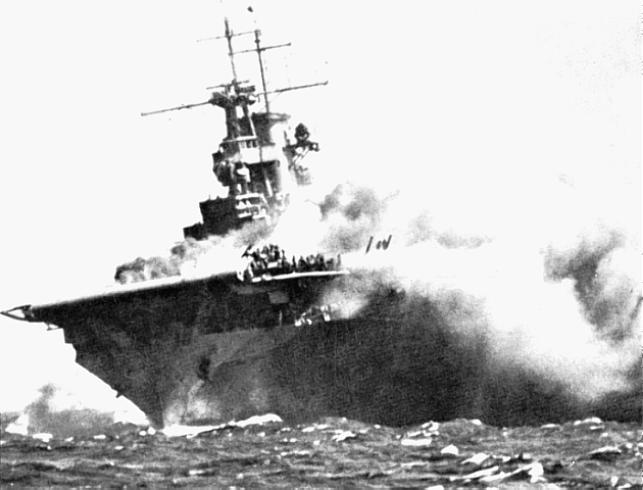
USS Wasp (CV-7): Caption:
USS Wasp (CV-7) burning and listing after she was torpedoed by the Japanese submarine I-19, on 15 September 1942, while operating in the Southwestern Pacific in support of forces on Guadalcanal. Official U.S. Navy Photograph, now in the collections of the National Archives.UPDATE: More here

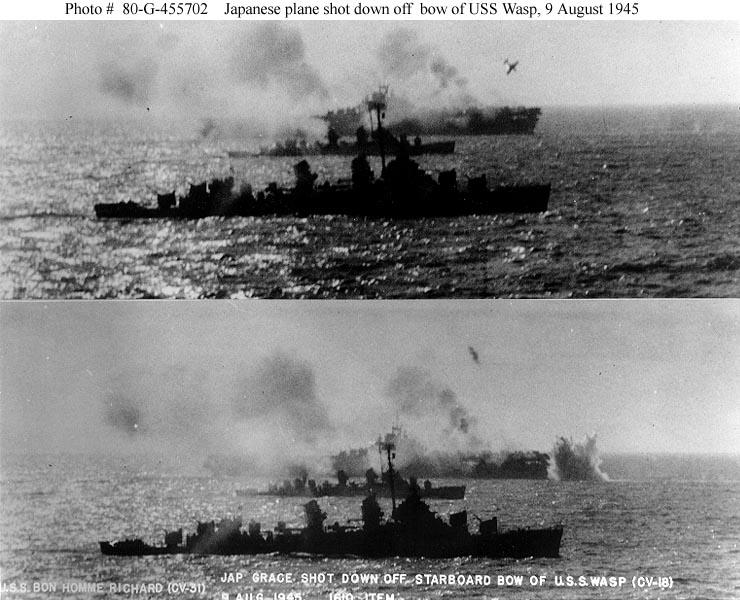
USS Wasp (CV-18): Caption:
Carrier Operations off Japan, August 1945 — A Japanese aircraft is shot down just off the starboard bow of USS Wasp (CV-18), during operations off Honshu, Japan, 9 August 1945. Two Fletcher-class destroyers are in the foreground. Photographed from USS Bon Homme Richard (CV-31), the image includes two frames, showing the scene just before and after the crash. The original caption identifies the aircraft as a Grace (Aichi B7A2).

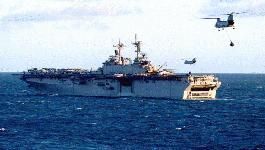
USS Wasp (LHD-1): And some facts:
The Wasp-class are the largest amphibious ships in the world. WASP class ships are the first to be specifically designed to accomidate the AV-8B Harrier jump jet and the LCAC hovercraft, along with the full range of Navy and Marine helicopters, conventional landing craft and amphibious assault vehicles to support a Marine Expeditionary Unit (MEU) of 2,000 Marines. The ships also carry some of the most sophisticated communications, command and control capabilities afloat, alongwith state of the art electronic systems and defensive weaponry.
USS Wasp (LHD-1) homepage. "First in the Fleet"

You bet!

One ship's name. 230 years. That's some Naval history.

Happy Birthday, Navy!

Thanks to Mudville Gazette's open post!

UPDATE: Some analysis of where the Navy might be headed here from Sea Power. Hat tip to NOSI

Isn't this why it's a "sport?"

Headline reads: Cardinals, Astros Have Mutual Respect".
"On the field, it's a classic," St. Louis manager Tony La Russa said. "We play the game the same way."

St. Louis has six playoff appearances over the past decade, reaching the NLCS four times and the World Series a year ago with a seven-game victory over the Astros — a memorable series that was overshadowed by Boston's comeback win against the Yankees in the ALCS.

The Cardinals stayed alive when Jim Edmonds hit a game-winning homer in the 12th inning of Game 6. St. Louis closed out the series by beating Roger Clemens in Game 7.

Houston is making its sixth playoff appearance in nine years and looking to reach the World Series for the first time in franchise history. The Astros made a breakthrough last year by beating perennial nemesis Atlanta — their first postseason series victory. They knocked off the Braves in the opening round again this year, winning the final game in an 18-inning marathon.

Then again, the Astros still have some catching up to do against the Cardinals, one of baseball's most revered franchises.
When I lived in Bellevue, Nebraska, as a kid, the 1964 Cards were my team because of great players like Bob Gibson (he was from Omaha), Curt Flood, Bill White, and Lou Brock. And because we used to travel to St. Louis to see them play. Bob Gibson
They beat the hated Yankees in the 1964 World Series. But, when I lived in Houston, I was an Astros season ticket holder and was at the long playoff game against the hated Mets (and since the managing partner of the law firm I was working for at the time was not a baseball fan, I probably lost my job as a result of his perception I was ducking work to go to the games (even though I was coming in extra early in the day to get my work done-). I watched Biggio and Bagwell from day one and Roger Clemens attended the same high school as my older daughter (Spring Woods High in the Spring Branch ISD, if you must know). Craig Biggio
My younger son wore a Biggio jersey while we lived in Houston and long after we moved up here. Biggio reminds me of Phil Garner when I first saw him join the Oakland A's when I live out there, when Garner replaced Dick Green at second for the A's. Garner is known has "Scrap Iron" for his style of play and Biggio is a throwback to that style. If he isn't dirty, he hasn't been playing.

Where I live now there is no major league team and there are way too many Boston and New York fans. So where do my loyalties lie? I like the Cards. but...let's go Astros!

Either way, let's have some fun! Isn't that why they call it a "sport?"

Samoan style football

Watching college football the other day I was struck by the number of Samoans on the field, in relative terms. So, I asked what's the deal? So, thanks to the magic of Google I found this.
The vast majority of Samoans playing in the college or professional ranks are first- or second-generation Americans from families that typically settled in Hawaii or on the West Coast. American Samoans are classified as U.S. nationals and easily can become citizens.

Yet an increasing number of college football programs are recruiting the island, plucking players from its six high school teams and placing them directly onto their squads or at junior colleges. This winter, Matt Toeaina, a running back out of Samoana High, signed with Oregon, where he'll join highly recruited, Robert Toeaina, his cousin from California. Defensive end Melila Purcell of Leone inked with Hawaii.
Ah, now I know.

Tuesday, October 11, 2005

Oh, duh: "World Helpless Against Assaults of Nature"


Hat tip to Drudge for pointing this wonderful article out: from the Washington Post:World Helpless Against Assaults of Nature
In a more hopeful time, buoyed by the promise of science, it was thought hurricanes could be tricked into dispersing, earthquakes could be disarmed by nuclear explosions and floodwaters held at bay by great mounds of dirt.

Such conceits are another victim of a year of destruction.
Wait, I though global warming, allegedly caused by man, was... or how about the Russian Weather Machine being operated by the Japanese mafia? Or the US weather machine up in Alaska? or... the Tesla earthquake machine?

Wacky anthropomorphication is also a problem; "Why is nature so angry?" it asks here as if man has somehow ticked off Mother Nature by making margerine taste like butter.

Of course, US hegemony gets trotted out, too, in the death toll blame game:
Research findings of Yale, California and Penn State Universities converge on the probability of a 1600 km. rupture of the crust along the Indo-Australian plate boundary; with the major March 30th. quake not just an aftershock, but ‘a new rupture of an adjacent segment of the fault’. On 23rd.July, Times of India reported that a Columbia University researcher having access to the December event sound tracks, felt as if ‘the earth was ripping apart along the fault’. These sound tracks were recorded at the US Diego Garcia Base, 2500km from Sumatra. The Base was established to monitor nuclear explosions for the Comprehensive Nuclear Test Ban Treaty. This vital information about the earthquake and tsunami’s advance were not immediately relayed to the affected Asian Nations, which could have saved thousands of lives. Such is the stranglehold of US hegemony ! Believe it or not there are no monitoring stations in the vulnerable South Asian region. !
Oh, and don't forget the meteor and asteroid threat. And, uh, the sun going super nova, and snakehead fish.

Doomed! Helpless! Doomed!

Right.

"Improvise. Adapt. Overcome." (source)

UPDATE: Lex has noticed that Ma might be -um- vexed.

Somali pirates seize another ship

Somali pirates have seized a ship enroute to the MV Semlow (recently released by the pirates) ferrying food and suppies to Semlow it says here.
More here:
Somali pirates are feared to have hijacked another ship with its 10-man crew and cargo of mainly foodstuff in the latest of string of hijackings off lawless Somalia, seafarers said Tuesday.

Kenyan Seafarers Assistance Program Coordinator Andrew Mwangura said the vessel, MV Torgelow, was hijacked near El Maan port in Somalia, the same area where eight Kenyans abducted in another ship three months ago were released last week.

Mwangura said MV Torgelow, which belongs Kenya-based Motaku Shipping Agency, the same company that owns the recently released MV Semlow, was carrying general cargo belonging to Somali businessmen.

The captain is Sri Lankan and the other nine seamen all Kenyans.

"The ship was carrying oil, foodstuff and water, which were to be given to the recently released Kenyans, who are still at El Maan port waiting for MV Semlow to be discharged before coming home," he said by telephone.

He said in addition, the Torgelow was carrying a consignment for Somali businessmen, of foodstuffs such as spaghetti, coffee and cooking oil.

The ship's owner said Torgelow vessel was seized off the southern coast on its way from Kenya's Mombasa port to the Somali port of El Maan.

"I have no idea if it was the same pirates or different ones. I'm not even sure it's our vessel, but it looks like it. We lost radio contact on Saturday morning, so were waiting for it to arrive at El Maan, but it didn't," Inayet Kudrati, the boss of theMotaku Shipping Agency, reportedly said.

He said despite being freed, the MV Semlow, chartered by the UNWorld Food Program to carry UN aid, has still not been able to off-load its cargo of 850 tons of rice in El Maan, preventing the return of its exhausted 10-man crew to Mombasa.

Kudrati said his shipping agency runs about two voyages a monthto Somalia mainly taking foreign-donated aid, but would now consider pulling out of the route.

"I think we have to withdraw. There are so many cases of attacks and no one is around patrolling these waters," he said.
BBC report here.

Good grief! Has no one thought of providing escorts?

By the way: STAY AWAY FROM SOMALIA!

NIMBYism in Florida-125 miles offshore drilling "too close" for comfort?

Political fallout from Florida Gov. Bush endorsement of allowing drill rigs 125 miles off the coast reported here.
The Republican governor has endorsed a plan, part of a bill proposed by a California congressman that would allow, among other things, oil rigs 125 miles off the coast. In exchange, Bush said, the state would get other coastal protections.

But environmentalists and Republican and Democratic critics say what Bush advocates would actually allow for oil and gas exploration and production in the Gulf of Mexico closer to Florida.

"The governor is seeking better protection, and lasting protection, for Florida's coasts," Bush spokeswoman Deena Reppen said in defending his stance.

She said the governor wanted a secure 125-mile ban on oil and gas drilling off the state's shoreline from Jacksonville on the Atlantic Ocean to Pensacola on the gulf.

The proposed legislation — and the pressure to support it — comes as fuel prices are at record highs and energy production in the gulf has been crippled by hurricanes Katrina and Rita.

Democratic Rep. Robert Wexler accused Bush, who cannot seek reelection when his second term expires next year, of performing a flip-flop that "abandons Florida's coast."

"For many years, the Florida congressional delegation, Republicans and Democrats, has been unified in opposing drilling off the Florida coastline," Wexler said. He said that meant in the waters up to three miles from the coast that are under Florida's control, and in the adjacent belt, extending 200 miles from shore, where the federal government regulates drilling for oil and gas.

"Gov. Bush unfortunately has effectively undermined that unity," Wexler said. "Now it's all negotiable."
NIMBY. NIMBY. NIMBY.

I guess tourists don't need fuel to get to Florida and that all the power plants producing electricity for the necessary air conditioning systems that allow life in Florida to be bearable run on coal, air or atoms. And the cruise ships operate on coal. And Disney World operates on biofuels.

Well, it's all negotiable.

South Asia Earthquake

Toll tops 42,000. "Oh, the Humanity!"