VertRep

VertRep

Sunday, January 08, 2006

Terror threat: Energy infrastructure

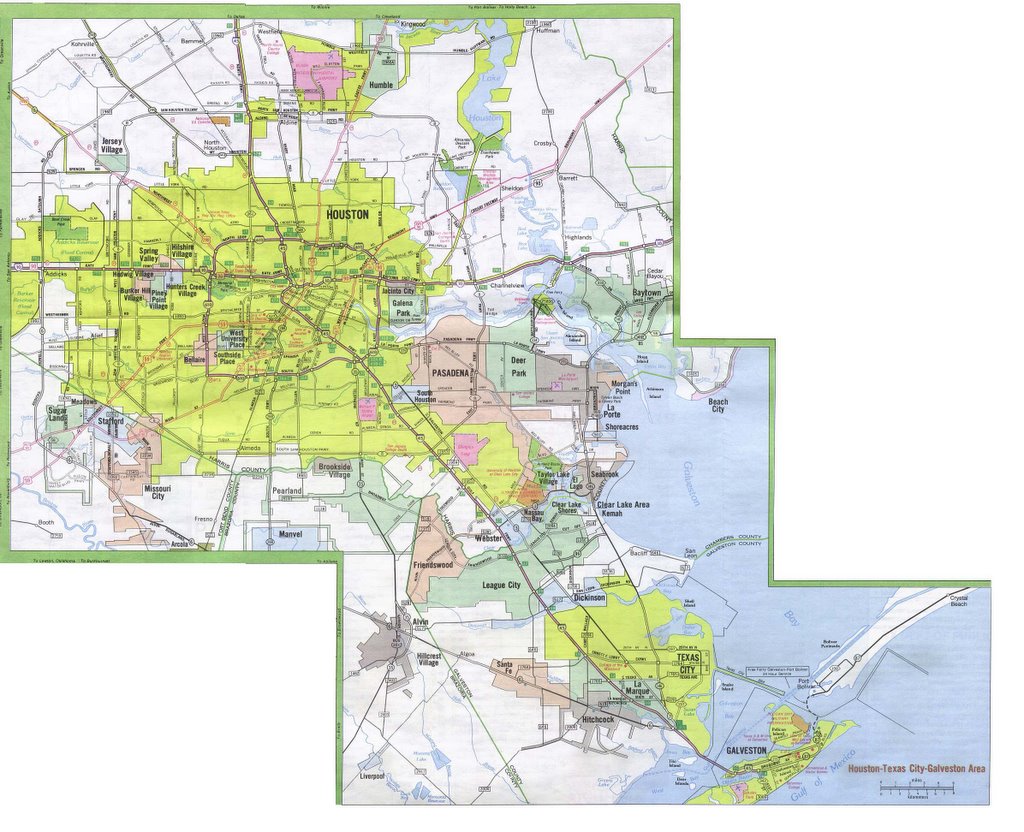
Houston-Galveston area
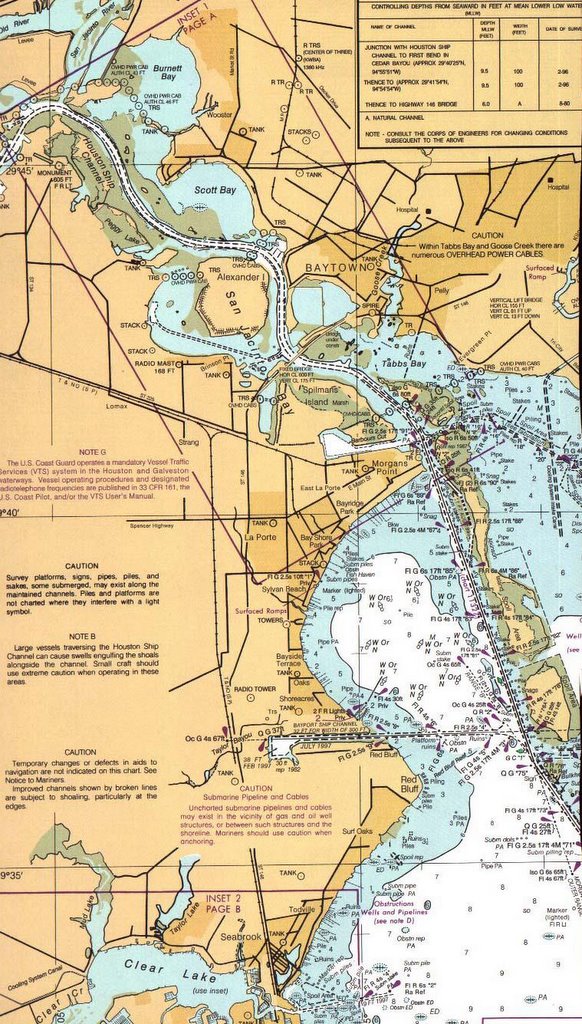
Pilot map Houston Ship Channel
Houston Ship Channel industries
An analyis of the terrorist threat to the energy industry here, which points out the relatively robust (and redundant) nature of most aspects of the oil business and contains a chilling warning for the Houston Ship Channel and other logistical links to the sea lines of communication (platforms used for loading oil tankers especially):
In the Western Hemisphere, there really is only one target that, if damaged, could cause a major impact on energy supplies: the Houston Ship Channel. The channel snakes from Houston Bay through a network of refineries and petrochemical plants.

The channel itself is not vulnerable, but if a large craft — perhaps an oil tanker — were sunk in it, it would block the United States’ most vulnerable energy corridor.

Most targets of note are instead in the Middle East. Saudi Arabia has a five million barrel per day pipeline, the Petroline, which transports crude across the Arabian Peninsula. While it undoubtedly could be repaired quickly, even a brief interruption at the world’s largest energy pipeline could have far-reaching effects. The real concern is that something would happen to Ras Tanura in Saudi Arabia — the world’s largest oil-loading platform, capable of pumping six million bpd. Were something to happen to Ras Tanura — particularly if the Petroline were also knocked offline so that the Saudis could not redirect crude to alternative ports — the global impact would be fierce.
Ras Tanura

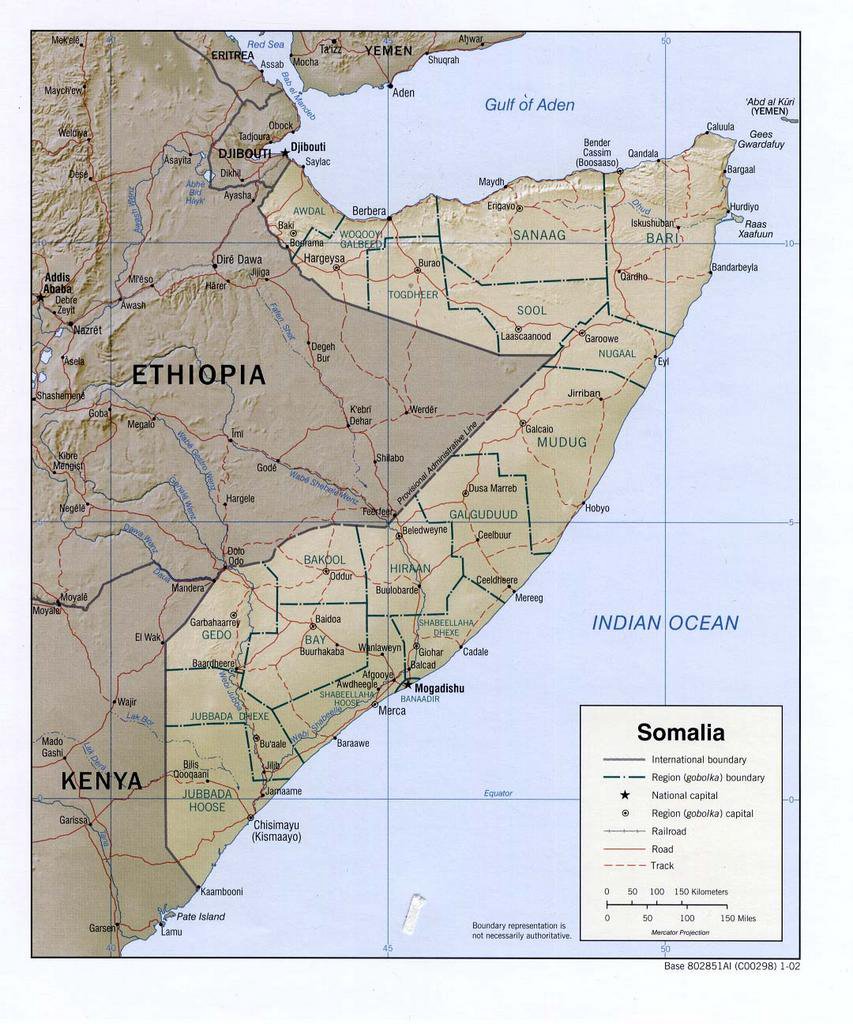
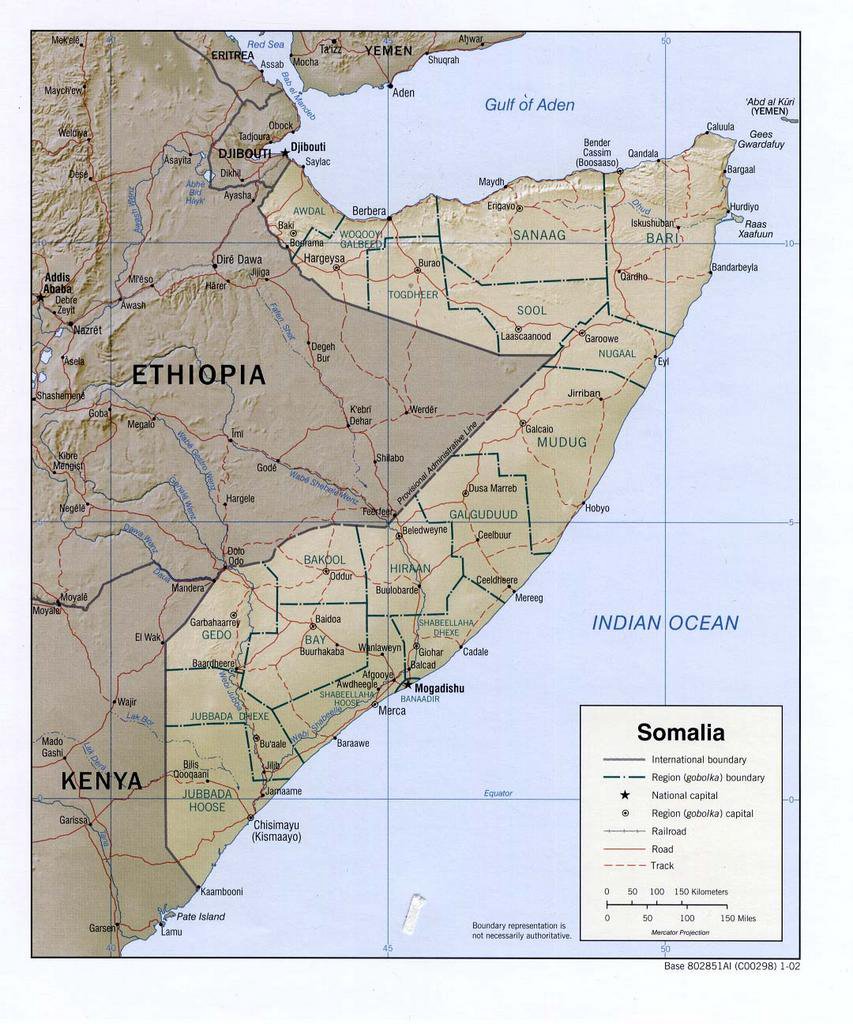
Feeding Somalia: First pirates, now a food shortage

Two million Somalis at risk of starvation because of a combination of piracy and a food shortage as reported here:
WFP Somalia, he said, has a crisis as it has exhausted its food stocks save for 40 metric tonnes, which is lying at its Mombasa depot.

Velden said the number of hungry people in Somalia had shot from 600,000 to two million.

He said the 1,500 metric tonnes of food, which was ferried to Somalia last December, had been exhausted.

The WFP Somalia deputy director said the agency would buy food from South Africa.

"We are finding means to buy food from South Africa. WFP will continue to assist Somalia to ensure that there no more food-related deaths," said Velden.

Velden said WFP requires between 41,000 to 100,000 metric tonnes till June.

The official yesterday said Usaid had donated 1,500 metric tonnes of food to Somalia.

Velden said the cargo is expected to arrive at the port of Mombasa this month.

The relief food, he said, would be ferried to Somalia by sea, through WFP chartered vessels.

WFP uses ships owned by a Dubai contractor for relief cargo from Mombasa to south Somalia. WFP is using the Merka port for small-scale shipments.

Shipping agents now want protection by navy security personnel to use Merka on a larger scale.

The official said navy officers were patrolling Kenyan waters to curb piracy.

He said WFP intended to use the two existing shipping liner feeders from Jeddah (P&Nedloyds) and Aden (PIL) for Somaliland and Puntland.

Saturday, January 07, 2006

A salute to a hero

Way back in my law school student days, we studied the Calley/My Lai case in Criminal Law and I cited Warrant Officer Hugh Thompson's actions in support of my view that it was not the US policy to target innocent civilians, contrary to the impression that too many of my younger classmates held, thanks to the effort of the MSM and the left wing anti-war crowd.

Sadly, CW2 Thompson has died and Castle Argghhh! properly renders honors to a true hero - who stepped in to save lives.

What an example of doing the "right thing!"

Where do we get such men?

If the US Navy is looking for ship names, USS Hugh Thompson sounds pretty good to me.

What next? A return to "defeat that looks like victory?"

Sometimes the head just spins. Rep. Murtha, distinguished veteran, strikes again as set out here:
Murtha said, "A year ago, I said we can't win this militarily, and I got all kinds of criticism." Now, Murtha told the strongly antiwar audience, "I worry about a slow withdrawal which makes it look like there's a victory when I think it should be a redeployment as quickly as possible and let the Iraqis handle the whole thing."
Of course, it sort of reminds me the Gore/Kerry election legacy and the lesson of Vietnam the left seems to have learned. Lose, declare victory and get out.

For his effort, Rep. Murtha earns the first EagleSpeak Dodo award given in 2006. Perhaps this quote from Monty Python better suits his attitude:
ARTHUR:
Run away! Run away!
KNIGHTS:
Run away! Run away!...
TIM:
Ha ha ha ha! Ha haw haw! Ha! Ha ha!
ARTHUR:
Right. How many did we lose?
LAUNCELOT:
Gawain.
GALAHAD:
Ector.
ARTHUR:
And Bors. That's five.
GALAHAD:
Three, sir.
ARTHUR:
Three. Three. And we'd better not risk another frontal assault. That rabbit's dynamite.
ROBIN:
Would it help to confuse it if we run away more?
ARTHUR:
Oh, shut up and go and change your armour.


UPDATE: I'm late to the party, but Mudville has been all over Rep. Murtha here and here. CDR Salamander has had his say here. Neither of them is old enough to remember the not-so-halcyon days of yore (during and after the Vietnam war) when the sort of nonsense spouted by Rep. Murtha and his cohort Rep Moran went unchallenged because there was no forum in which such counterpoints could be raised. Of course, Mudville gets the credit for putting forth Gen. Pace's comments to the press concerning Mr. Murtha's comments:
Q: If I could switch topics, sir, this week Representative John Murtha was asked if he would join the U.S. military today, and he said no. And pressed in that ABC interview -- and I don't know if you saw it or not -- he said -- the interviewer said, "I think you're saying the average guy who's considering recruitment is justified in saying, 'I don't want to serve.'" And he said, "Exactly right." Can get your response to those statements?

GEN. PACE: You know, when I got back yesterday, one of the first questions I was asked was what I thought about that. I had not seen the clip. I did get a chance to see it yesterday.

A large segment of the clip had to do with opinion about the war, and that's not my lane. This country's strength is based on the ability of its citizens and its leadership to have divergent views.

There were two parts in what I saw that went directly to my lane in the road, which is the health of the U.S. military. One was a statement that the U.S. Army is not well trained. The United States Army is well-trained. It is the best trained army in the world. It has never been better-trained, and we will continue to make sure that it stays well- trained.

The second was a quote that you just mentioned. That's damaging to recruiting, it's damaging to morale of the troops who are deployed, and it's damaging to the morale of their families who believe in what they're doing to serve this country. We have almost 300 million Americans who are being protected by 2.4 (million) volunteer active, Guard and Reserve members. We must recruit to that force. When a respected leader like Mr. Murtha, who has spent 37 extremely honorable years as a Marine, fought in two wars, has served the country extremely well in the Congress of the United States, when a respected individual like that says what he said, and 18- and 19-year-olds look to their leadership to determine how they are expected to act, they can get the wrong message.

Q: Sir, you look and sound a little angry about this. Am I misreading that?

GEN. PACE: I would describe myself as "energized" -- (laughter) -- because we have an all-volunteer, all-recruited United States armed forces. I believe that all young people should have the opportunity to serve their country in whatever way they see fit, and that those who would elect to serve in the armed forces of the United States should be encouraged to do, especially when we're in a war where our enemy has stated intention of destroying our way of life.

Q: So, General, is it irresponsible of the congressman to have made those remarks?

GEN. PACE: I think I've said what I needed to say about that.(source)
Since General Pace can't say it, I will: Representative Murtha was way off-base and totally irresponsible in his comments.

Dodo.

UPDATE2: On further pondering, I guess the concept of a victory that is a victory is simply beyond their experience. In this world view, WWII resulted in the unleashing of nuclear weapons and victory in the Cold War resulted in the US being sole uncontrolled Super Power.

Friday, January 06, 2006

Latest ONI World Wide Threat to Shipping (to 4 Jan 06)

For the latest Office of Naval Intelligence World Wide Threat to Shipping report go here and click on the date. Highlights:
1. GULF OF ADEN: An unidentified tanker reported a
suspicious approach 02 Jan at 0733 UTC while underway in position
13:48N 049:48E. Three speedboats with 3 or 4 persons onboard
followed the tanker. Master altered course and boats moved away.
Later at 0753 UTC in position 13:49N 049:54E, another speedboat
with three persons onboard followed for 30 minutes. Alarm was
raised and boats stopped following (IMB).

N. ENVIRONMENTAL AND ECONOMIC NON-STATE ACTIVIST GROUPS:
.
1. GREENPEACE - SEA SHEPHERD CONSERVATION SOCIETY - INSTITUTE
OF CETACEAN RESEARCH - ANTARCTIC WHALING: According to the
Japanese Institute of Cetacean Research, the Greenpeace vessels (ESPERANZA)
and (ARCTIC SUNRISE) and the Sea Shepherd Conservation Society vessel
(FARLEY MOWAT) follow and attempt to impede Japan’s whale research
efforts in the Antarctic as of 21 Dec. The Sea Shepherd Conservation
Society’s web site describes a near collision between the (FARLEY MOWAT)
and Japanese Research vessel (NISSHIN MARU) on 24 Dec in the vicinity
of 62:55S 136:38E. Greenpeace rejects the claims made by Japan that its
members are disregarding the laws of the sea as they trail the Japanese whalers,
and denies claims they are working in conjunction with the Sea Shepard
Conservation Society. The Institute of Cetacean Research claims the fleet
of six Japanese research vessels are operating under special permit in the
Antarctic. ONI NOTE: Supporters of the Japanese projects are
implying that Greenpeace and the Sea Shepherd Organization are
acting in concert. ONI sees no evidence for this despite the fact
that the current high-profile Japanese expedition has drawn the
attention of both groups (GP, Institute of Cetacean Research, Sea
Shepard Conservation Society, ONI).

Horn of Africa news: Somalia offshore oil?


Reported here:
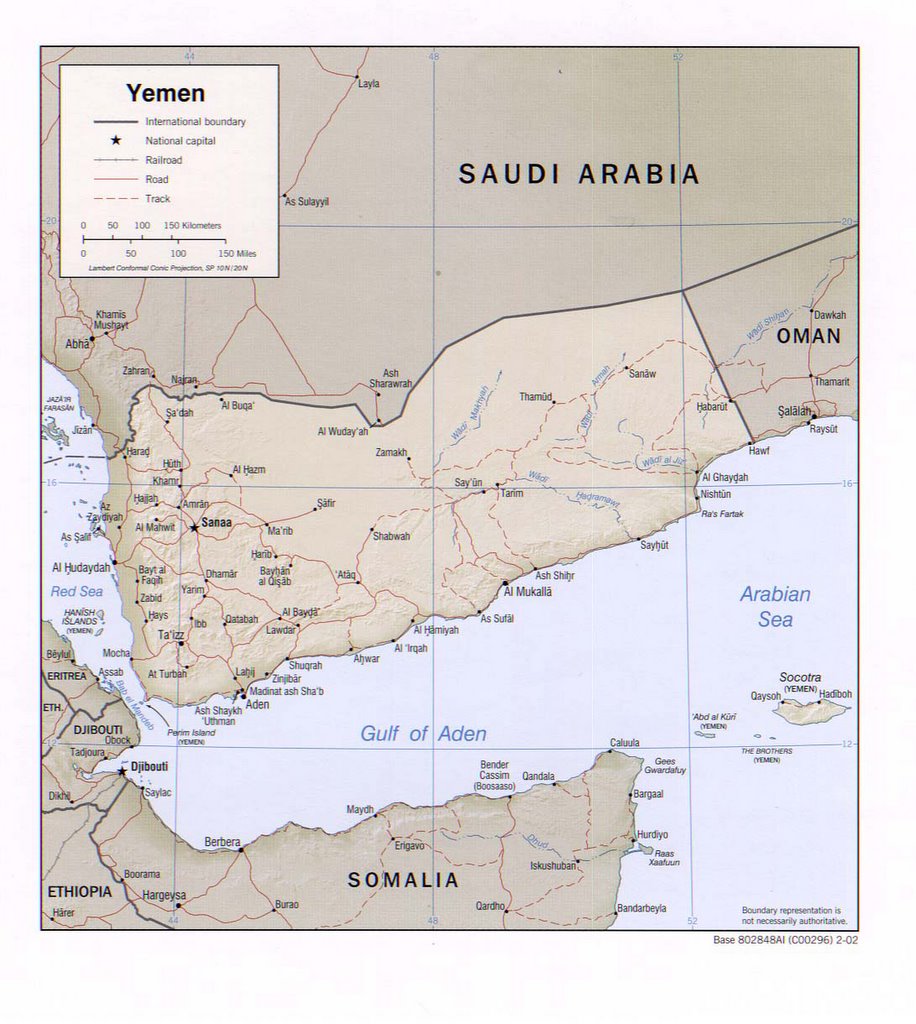
According to Thomas O'Connor, principal petroleum engineer for the World Bank, who headed a three-year study of the oil prospects in the Gulf of Aden, off Somalia's northern coast, Somalia's oilfields have “high commercial potential, once the Somalis get their act together”, like the Sana'a Somalia presidential deal. Everyone thinking the big question here isn't famine relief but oil -- whether the oil concessions granted under Barre will be transferred if and when peace is restored. It's potentially worth billions of dollars, and believe them, that's what the whole game is starting to look like piracy, famine and clan skirmishes.”

Far beneath the surface of the tragic drama of Somalia, four major U.S. oil companies are quietly sitting on a prospective fortune in exclusive concessions to explore and exploit tens of millions of acres of the Somali countryside. That land, in the opinion of geologists and industry sources, could yield significant amounts of oil and natural gas if the U.S.-led military mission can restore peace to the impoverished East African nation...

...The US government's Energy Information Administration identifies the Bab-Almandab Strait as one of the most strategic "world oil transit chokepoints". How convenient if in the course of cleaning out a nest of tyrant regimes Washington might militarily acquire control of the Horn of African region and the Red Sea zone. Until now the states in the area have supported US attempts to militarize the region to secure Oil supplies through red sea zones from the unknown enemies.
Let's hear it, now, "It's all about the OIL!"

First time: Asian agreement on combating piracy and armed robbery at sea

India will join Bangladesh, Brunei, Cambodia, China, India, Indonesia, Japan, Republic of Korea, Laos Peoples Democratic Republic, Malaysia, Myanmar, Philippines, Singapore, Sri Lanka, Thailand and Vietnam in an agreement to fight piracy at sea as reported here:
The Agreement is the first of its kind for combating piracy and armed robbery at Sea in Asia. It will strengthen cooperation amongst the contracting parties in the prevention and suppression of armed robbery and in tracing, identification and prosecution of the persons involved in such acts and would help in making the sea lanes in the region secure.
An important regional step. To date, though, only Laos, Japan and Singapore have signed and ratified the agreement.

Thursday, January 05, 2006

Somali pirates "worst in the world"


I guess if they take pride in being Number 1, then the pirates of Somalia are full of themselves today after the BBC says: "Somali piracy is worst in world".
An increase in piracy off the Indian Ocean coast of Somalia has made these waters the most dangerous for pirate activities in the world.

Shipping companies say the area has overtaken those traditionally plagued by piracy such as the Straits of Malacca in south east Asia.

The pirates generally use speedboats to steal trading goods or food aid - sometimes impounding ships and crew at gunpoint and then demanding ransoms before they are released.

Somali clan leaders have just signed an agreement to try to end over two decades of factional fighting in the country - and they say they have also made attempts to address the piracy problem.

But the high level of lawlessness off the long eastern Somali coastline reflects the level of chaos there has been on the ground in the country for more than a generation.

The problem does not affect the northern coast of the self-proclaimed and more stable Somaliland as much.
What an honor...

Wednesday, January 04, 2006

Public transport conference in Japan

Japan is hosting a international conference on public transportation security as noted here:
Fourteen countries and four international organizations will hold a conference in Tokyo for three days from Jan. 11 to discuss ways to prevent terrorism involving public transportation systems, Japanese government officials said Wednesday.
Minister-level officials in charge of transportation affairs for the United States, European countries and East Asian countries including Japan will participate in the meeting along with the four international organs among which is the European Commission, the executive branch of the European Union, the officials said.

Japanese Land, Infrastructure and Transport Minister Kazuo Kitagawa will chair the meeting, which is being launched at the initiative of Japan.

The conference will issue a joint declaration on the last day on ways to increase global cooperation in preventing terrorism involving airplanes, ships, subways and other public transportation systems.

Participants are expected to discuss ways to provide assistance to developing countries in the antiterrorism field and jointly develop technologies to prevent terrorist attacks such as the Sept. 11, 2001 airplane attacks in the United States and bombings at London subway systems on July 7, 2005, the officials said.
Sounds like a good idea.

Indonesian soldier arrested for piracy in the Malacca Strait

Reported here:
An active duty Army soldier has been arrested for piracy in the busy Strait of Malacca, in another blow to the already tarnished image of the Indonesian Military (TNI).

First Adm. Halim Hermanto said the low-ranking soldier was arrested on Monday along with four civilians in the waters off Aceh province.

The five suspects kidnapped the crews of two commercial ships 10 days ago and were demanding a ransom for their release, said Halim, the chief of the Belawan Naval Base in Medan.

When the naval base in Medan learned of the kidnapping, plainclothes Navy personnel arranged a meeting with a representative of the pirates, saying they were prepared to pay the ransom.

During the meeting at a location in Langkat regency, North Sumatra, the Navy detained the representative and interrogated him. During questioning, the man told interrogators the kidnapped crew members were being held on a ship sailing in the waters off Aceh Tamiang.

Scores of Navy personnel descended on the ship, were they arrested the four civilians and one Army soldier, who has been identified as Sur, who is with a battalion stationed in Aceh. They also confiscated one pistol and 17 bullets, and released the hostages unharmed.

"They (the pirates) are old players. They have been operating around Aceh Tamiang and in the Strait of Malacca for a few years, extorting fishermen and kidnapping crew members from ships for ransom," said Halim.

Pork and Navy Beans

An editorial that lays out the debate over multi-billion dollar destroyers in a new era here:
"America will always need a strong navy and DD(X) is transforming the way that Navy will work," Meehan said. "In a world in which land and littoral (shallow water) operations are more likely than standoffs with other navies, the DD(X) recognizes the changing spectrum of threats in the 21st century and is designed accordingly."

U.S. Rep. John Olver, a senior Democrat on the House Appropriations Committee, declined to comment through a spokeswoman.

Meehan also said the destroyer could "monitor much of (al Qaeda's) activities" throughout the world.

"The DD(X) program could be used in Afghanistan and Iraq and the Middle East," he added. "You're able to use the technology to monitor activities in a large number of countries." Opinions differ on that account.

John Pike, director of GlobalSecurity.org, a defense research outfit in Virginia, said production of the destroyer would put the U.S. Navy in a "category by itself." But it would not enhance the nation's ability to track terrorists, he said.

"I cannot imagine how anyone could make such a claim with a straight face," Pike said, adding that the DD(X) "just doesn't have anything to do with that."

"It's for fire support," he said. "It's for when the Marines want to kick down the door in a big way."
It's easy to see how the "bringing home the bacon" boys like Sen. Kennedy and Rep, Meehan keep getting elected. Not only do they bring the pork, they do it with Navy beans.

Tuesday, January 03, 2006

Latest ICC Commercial Crime Services Weekly Piracy Report (to 2 Jan 06)

For the latest ICC CCS piracy report, click here. Highlight:
02.01.2006 at 0733 UTC in position 13:48N - 049:48E, Gulf of Aden.
Three speedboats with 3/4 persons onboard followed a tanker underway. Master altered course and boats moved away. Later at 0753 UTC in position 13:49N - 049:54E, another speedboat with three persons onboard followed for 30 minutes. Alarm was raised boat stopped following.

Monday, January 02, 2006

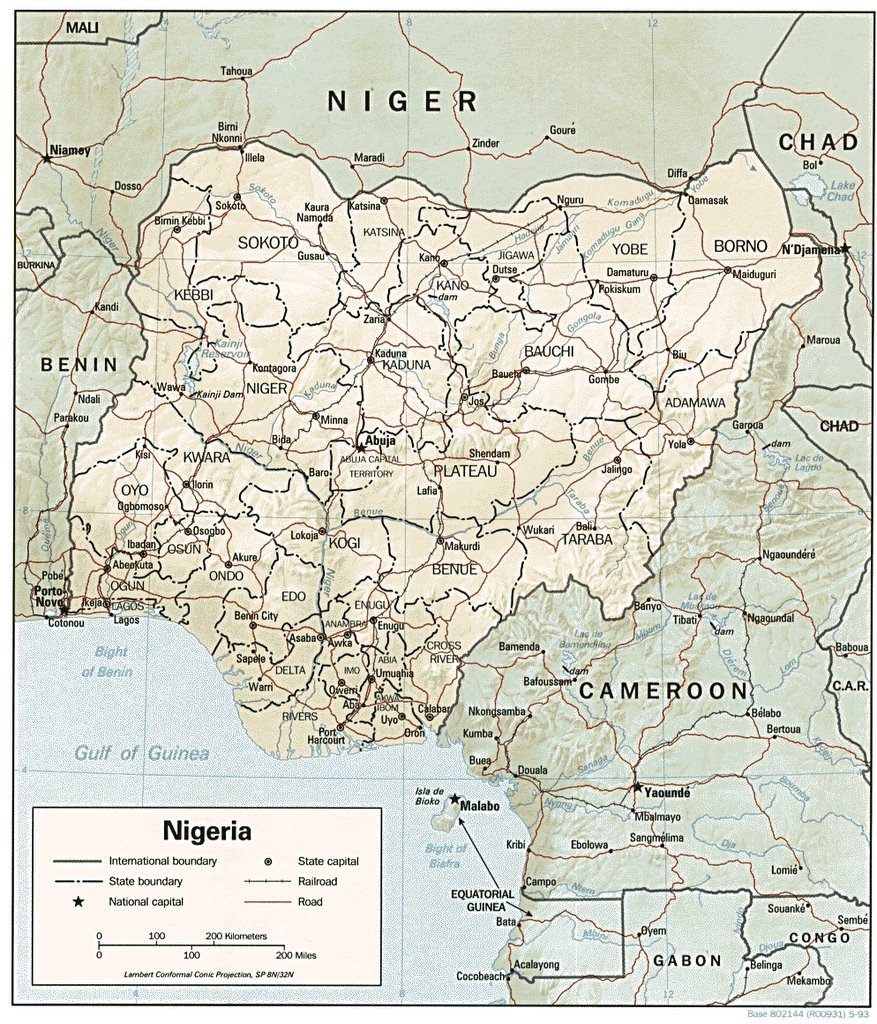
Nigeria cracks down on oil thieves

Nigeria loses lots of oil (30,000 barrels a day -see here) to oil thieves and is attempting to put a stop to it as reported here:
Security forces in Nigeria have killed 12 men they say were stealing oil from a pipeline in the southern Niger Delta.
Officials said that a gun battle broke out when troops on patrol came across a group using heavy drilling equipment to siphon oil from a pipeline.

Ukraine ups port security level


Could be Russia trouble or something else as set out here:
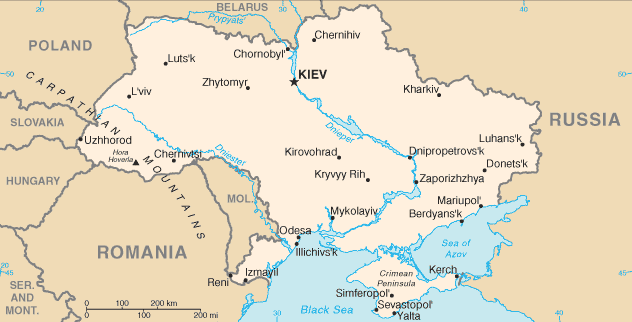
On Dec. 29 Ukrainian maritime authorities in Odessa set the port's Maritime Security (MARSEC) status at Level 2. The reason for the action is unknown. Odessa is Ukraine's fifth-largest city and its most important trade entrepot.


The "Russia trouble?" See here for the allegations of "misdirected" natural gas...

Sunday, January 01, 2006

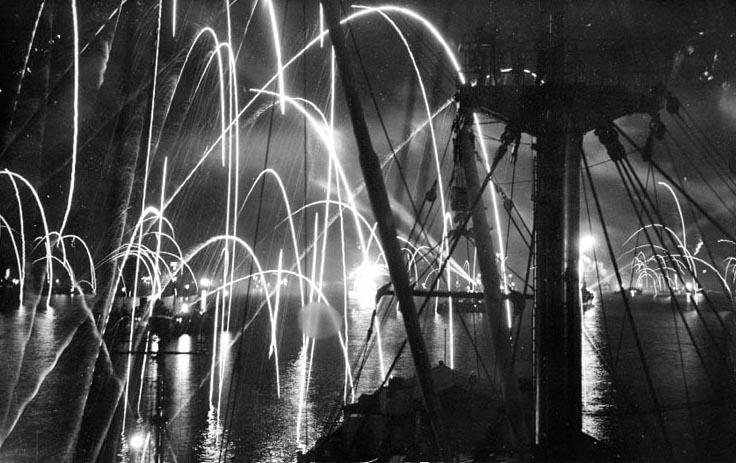
Happy New Year!


Photo source

Best wishes for a wonderful 2006!


Pyrotechnic display in Leyte Gulf, Philippines, in celebration of the end of World War II, 15 August 1945.
Note men watching the show from the mast crosstrees in the upper right foreground.

Collection of Fleet Admiral Chester W. Nimitz.

U.S. Naval Historical Center Photograph.

Friday, December 30, 2005

Surprise, surprise: Spy agency runs covert operations

What next? Firemen use water to put out fires? Read the all-too-obvious silliness concerning the use of covert operations by the CIA to track down bad guys here.

My personal guess is that the Washington Post is hoping that the government will stop the covert ops and just limit itself to running classified ads in the Post. You know, like:
"Osama, we are missing you. Please call us on the satellite phone. GPS info appreciated. Love, DOD and NSA"

Somali troubles as seen by the UN


The UN RelieWeb site posts this "special report" on the problems being caused by the pirates of the Somali coast:
Over one million people are food insecure in Somalia. Over 600,000 of these people are currently facing severe food shortages in southern Somali. Piracy is chocking the maritime supply of basic commodities because private commercial vessels are unwilling to risk sailing in Somali waters. Food imports have been especially affected at a time when they are most needed to off-set poor and failed production in 2005. At the same time humanitarian organizations are intensifying their interventions to mitigate the extreme food insecurity created by conflict, crop losses, high cereal prices and insufficient income-earning opportunities. But these critical interventions are being slowed down by piracy.

Although livestock has traditionally been Somalia's predominant industry, the livestock export ban between 1998 and 2004 has reduced its importance pushing more people to rely on the ocean for their livelihoods. The looming possibility of a ban being placed on international vessels sailing in Somali waters by the IMB, would have a serious impact on the livelihoods and thus the food security of the country, similar to the impact of the livestock ban.

Although the Transitional Federal Government of Somalia has made an effort to improve the situation by contracting the Topcoat (sic-Topcat) Marine Security, piracy remains rife. If action to contain the piracy problem is not successful, the coastline could be declared a war zone resulting in a ban on international marine transport. This would have profound consequences for vulnerable populations who would find themselves subject to even higher basic commodity prices and be stripped further of income-earning opportunities. Furthermore, humanitarian organizations would face even greater challenges in accessing and providing assistance to these populations.
This probably can all be read as "Hey, US, send some ships and Marines to clean up this mess."

UPDATE 12/31/05: Strategy Page also hears the UN calling for help.

Thursday, December 29, 2005

Training Iraqi Logisticians

Want to ease the exit from Iraq? Then help train the logisticians, as reported here:
It doesn't matter how many troops you have or how well trained they are if you can't sustain them.
Coalition logisticians are working with the nascent Iraqi army to build a logistics capability for the force.

Army Lt. Col. Steven Shapiro, chief of operations for 3rd Corps Support Command and selected for promotion to colonel, said the command's soldiers are training Iraqis through schools and, mostly, through on-the-job experience. "We're training the Iraqis to follow up and provide support to their forces as they engage the enemy," Shapiro said during an interview in Balad.

On paper, and increasingly in reality, Iraqi logistical units are embedded in Iraqi maneuver units. The 3rd Corps Support Command is partnered with Iraqi motorized transportation regiments. "When you see an Iraqi army unit engaged, ... their physical resupply is through their motorized transportation regiments," he said.

Plans call for one motorized regiment per division, and the Iraqis plan for nine divisions. The regiments will handle all their own maintenance and their own security. "When we operate on the roads, we protect the convoys," Shapiro said. "The motorized transportation regiments will have their own mobile force protection assets embedded with them."

Three regiments are operating now. Coalition logistics personnel handle supplying the rest of the Iraqi force, Shapiro said.
As the old axiom goes, "Amateurs study tactics; professionals study logistics."- see here. An army that can sustain itself in the field is not limited in the areas it can patrol and in which it can operate.

Wednesday, December 28, 2005

Nigerian Chief of Naval Staff worries about pirates and crude oil thieves


Noted here:
The menace of pirates, crude oil thieves and sea robbers in the oil producing, area of Niger Delta were the major issues discussed when the Navy authority deployed its fleet last week on patrol of the Gulf of Guinea to test the ability of its officers on the war against these threats.
The officers who were led to the battle zone by the Chief of Naval Staff (CNS), Vice Admiral Ganiyu Adekeye openly expressed the need of the navy to be on constant patrol of the area, insisting that the nation’s multi billion dollar bonga project must not be left unprotected.
Particularly of concern to the top naval chiefs who were also on the tour tagged “Operation Igbochi” was the frequent invasion of the waterways by sea robbers and pirates, vowing that the action must stop as the force would not hesitate to unleash terror on suspects of crude oil thieves and pirates...

...Adekeye led the exercise which saw the deployment of over 500 naval personnel to the Gulf of Guinea to display the forces capability to protect the country and its facilities at sea against attack by insurgent’s irate youths.
For instance, the Bonga oil field which lies 130 nautical miles from the coast in waters more than 1,000metre deep, remains the priority of the navy and with increasing activities, in terms of oil production, growing in the area, the navy’s responsibility in the area is heightening.
According to this,
In 2004, Nigerian crude exports to the United States averaged 1.1 bbl/d. In December 2004, President Obasanjo announced intentions to supply up to 15 percent of U.S. oil imports.
UPDATE: The BBC reports some NIgerian oil smugglers have returned home:
Twelve Russian sailors convicted of smuggling crude oil from Nigeria have arrived back in Moscow from Africa.
The men were convicted earlier this month but later released after having spent two years in detention.

They were among 15 east European sailors arrested after being caught in possession of 10,000 tonnes of stolen oil worth 2m euros (£1.37m) in 2003.

Correspondents say the incident soured relations between Russia and Nigeria - Africa's largest oil exporter.

The tanker - the MT African Pride - mysteriously disappeared from custody last year, causing embarrassment in Nigeria's political circles.

Some 30,000 barrels of oil are believed to be lost to fuel thieves each day in Nigeria.
Coverage of the "missing tanker" here.

Let's see, 30,000 barrels times $60 a barrel, that's like a whole lot of money times 365 days in a year....

Corruption in a big way.