VertRep

VertRep

Thursday, January 18, 2007

Rescue in the English Channel


Reported here:
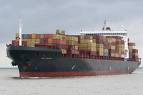
Twenty-six crew have been rescued from a damaged British container ship in the English Channel 50 miles (80km) off the Lizard in Cornwall.

The crew of the MSC Napoli abandoned ship after it got into difficulties. No-one suffered any major injuries.

The 62,000-tonne vessel took in water through a hole in its side as it made its way through the Channel.

Two helicopters from RNAS Culdrose airlifted all the crew in the French co-ordinated rescue.

Falmouth Coastguard received a distress call from the Napoli at about 1030 GMT after a 1m by 0.5m (3ft by 1ft 6in) hole in its starboard side started letting in water.

The crew of 275m (900ft) long ship, owned by Mediterranean Shipping Company, then abandoned ship for a lifeboat.

The rescued crewmembers were taken back to RNAS Culdrose
Despite storm force winds, the Royal Navy aircraft, from 771 Search and Rescue Squadron, were able to hover above the crew's lifeboat and perform the rescue in what were described by the rescuers as "pretty horrific" conditions.
Flying the venerable H-3 Sea King helicopter, too. Best line from the pilot:
One pilot, Capt Damian May, said his aircraft was nearly having to surf the waves.

He said: "Once we come alongside the lifeboat, the waves and the swell were up to 50ft, which effectively meant we were going up and down 50ft in the dips of the swell and the top of the waves while we were trying to maintain station on the lifeboat."

Take this, Pace University!

'Cause CDR Salamander is right.

Obsession The Movie

Now, talk to me about hate crime.

Wednesday, January 17, 2007

Latest ICC CCS Piracy Report (well- sea robbery report) to 16 Jan 07

Latest ICC Commercial Crime Services Piracy Report (to 16 Jan 07) here, though, as you will see, it really just robbers boarding ships in port in the Congo and Nigeria:
10.01.2007 2300 LT in position 05:52S - 013:03.3E, Boma Anchorage, Congo River, Democratic Republic of Congo. A large group of robbers in several boats armed with long knives and wooden sticks boarded a roro ship. Robbers tried to attack the duty crew on deck. Crew retreated to the bridge and raised alarm. Robbers broke two containers, stole cargo and escaped. Duty Officer tried to call port control but no response.

08.01.2007 2335 LT at Lagos Roads, Nigeria. Robbers armed with guns and knives boarded a product tanker during STS cargo operations. They attacked duty crew, tied him up and asked for key and security lock code for the cargo control room. Duty Officer noticed the robbers and raised alarm. Robbers stole personal belongings from the duty crew, ship's stores and escaped. Duty crew sustained injuries on his left hand. Port control informed.
Not so much activity off Somalia or in the Malacca Strait recently.

Helicopters Help Capture Comb-er- Bomb Makers


If you look closely at the listing of headlines from the front page of the DoD anti-terrorism website from today as seen in the capture above (click it to make it bigger), then you might be surprised to find that air assets are needed to deal with the threat of "comb makers."

The link leads to the real story:

Soldiers Use Air Assets to Capture Bomb Makers:
“Conducting missions with the use of aviation assets decreases the risk to Coalition Forces on the ground with minimal risk to those soldiers in the air,” continued Atienza. “In addition, the (helicopters) allow for a 360-degree view of the battlefield and can, for instance, greatly assist ground forces in locating individuals that are triggering improvised explosive devices (IEDs),” he said.

Nice to see the gremlins are not visiting my keyboard only.

Tuesday, January 16, 2007

Least politically correct (but accurate) opinion piece of the day: "Half the kids in school are below average"

My father-in-law used to say that 50% of all doctors finished in the lower half of their class. Now, good old Charles Murray, still "truthing" after all these years, points out a problem with demanding too much of our educational system here:
Education is becoming the preferred method for diagnosing and attacking a wide range problems in American life. The No Child Left Behind Act is one prominent example. Another is the recent volley of articles that blame rising income inequality on the increasing economic premium for advanced education. Crime, drugs, extramarital births, unemployment--you name the problem, and I will show you a stack of claims that education is to blame, or at least implicated.

One word is missing from these discussions: intelligence. Hardly anyone will admit it, but education's role in causing or solving any problem cannot be evaluated without considering the underlying intellectual ability of the people being educated. Today and over the next two days, I will put the case for three simple truths about the mediating role of intelligence that should bear on the way we think about education and the nation's future.

Today's simple truth: Half of all children are below average in intelligence. We do not live in Lake Wobegon.
You can do a lot of things with education, but improving innate abilities is not one of those things:
Now take the girl sitting across the aisle who is getting an F. She is at the 20th percentile of intelligence, which means she has an IQ of 88. If the grading is honest, it may not be possible to do more than give her an E for effort. Even if she is taught to read every bit as well as her intelligence permits, she still will be able to comprehend only simple written material. It is a good thing that she becomes functionally literate, and it will have an effect on the range of jobs she can hold. But still she will be confined to jobs that require minimal reading skills. She is just not smart enough to do more than that.
Oh my! It's a good thing that the lower 20% can't read the Wall Street Journal because they might get offended.

Monday, January 15, 2007

Maritime Monday 42 at Fred Fry International

Hey it's Maritime Monday 42 at Fred Fry International! And Fred links to some follow ons to the tale of the Miami port mysterious truck and the "misunderstanding" abut three gentlemen who arrived without proper documentation...like this Debbie Schlussel bit: which, seems to point out a bad pattern with the "Dearbornistan-Miami Port Three."

Not mention raising more quesions about the follow-up to a good job by the gate guard at the Miami Port...

NECC's First Year

Navy Expeditionary Combat Command (NECC)'s birthday:
Rear Adm. Jamie Barnett, NECC's deputy commander, pointed out how the command has set an ambitious pace in its first year of operations.

"We started off with 15 people at our headquarters and now weíre up to a staff of 146. In that time period we have stood up a Riverine Group equipped with two squadrons, a Maritime Civil Affairs Group (MCAG), and an Expeditionary Training Command (ETC)," said Barnett.

NECC also focused internally, looking at its existing units and making changes within to better serve its Sailors.

"In the area of community management and expertise weíve created a new EOD and divers rate," said Barnett. "One of the biggest things weíve done in a very short period of time is weíve created the enlisted expeditionary warfare (EXW) pin."

To integrate better training for the expedionary fight and the individual augmentees who often support it, NECC helped to create the Expeditionary Combat Readiness Center (ECRC), which began operations Oct. 10.
A staff of 146? How many boots on the actual ground?

Sunday, January 14, 2007

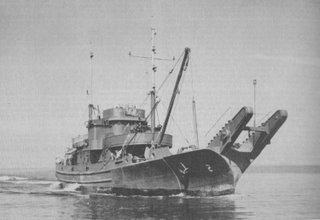
Sunday Ship History: Net Tenders


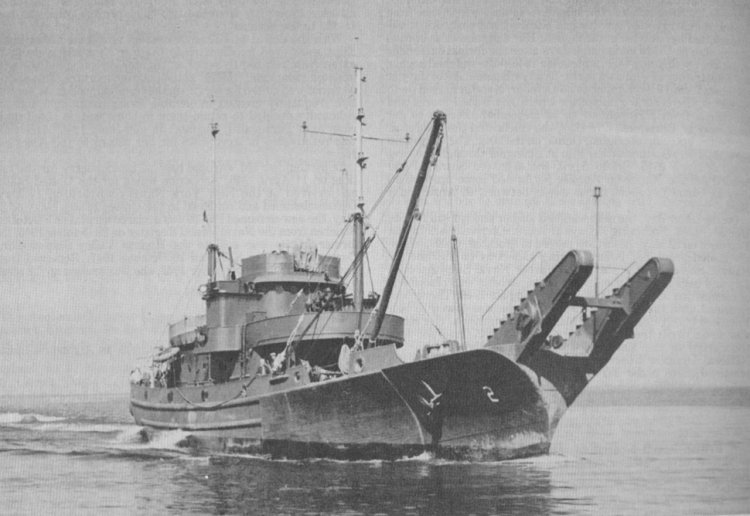
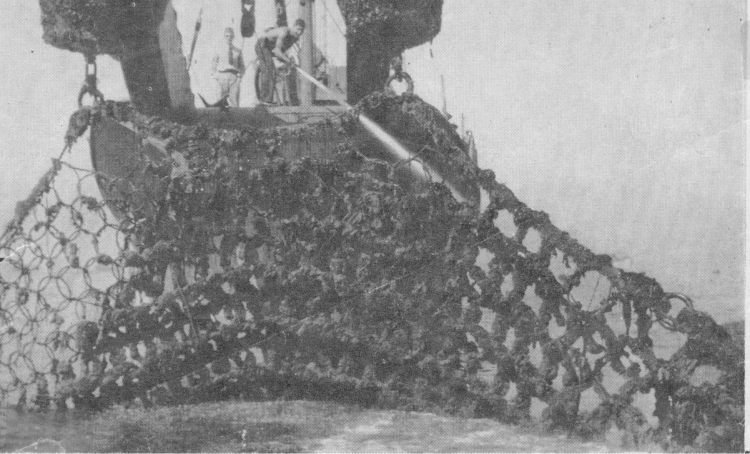
Why does that ship have horns on its bow?

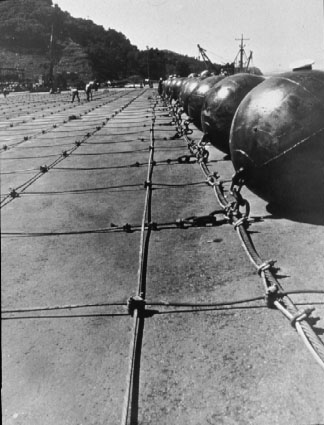
How do you defend ports, harbors and the ships that are contained therein from submarines and torpedoes? Once answer was the development of anti-torpedo nets:
The idea of anti-torpedo nets rapidly followed the introduction of the locomotive torpedo. Experimenting against a hulk, numerous devices were tried out for catching torpedoes and rendering them harmless before they ever reached the ship. The most successful of these was galvanised wire net with an 8 inch mesh weighted at the foot and hung out around the ship from 40 ft booms; the depth of the nets when thrown out in to the water was to corresponded with the ship's keel, with the nets hung vertically whilst at rest and extended about 4ft above the water. In 1874 tests these nets arrested all torpedoes fired.
Eventually, higher speeds and power of torpedoes rendered individual ship net systems obsolete. However, the concept of using nets and booms to block access to harbor entrances continued:
Efforts to block the entrances to harbors against surface vessels date back to the earliest times. The appearance of the high-powered, steel-hulled surface vessel, the submarine, and the torpedo have made the present-day problem of protecting ships at anchor increasingly difficult. The problem has evolved into one of defense against torpedoes. This defense is accomplished in two ways: by preventing the vessel carrying the torpedo from approaching within firing range, or by stopping the torpedo itself.
***
To protect ships at anchor in a harbor either (1) the harbor must be blocked off or (2) each ship must be protected individually. During World War II merely blocking off the harbor did not, in itself, give sufficient protection, because of the torpedo-carrying aircraft. Therefore, valuable ships and floating dry docks may be surrounded by a variation of the Type T net called an ISP (Individual Ship Protection) net.
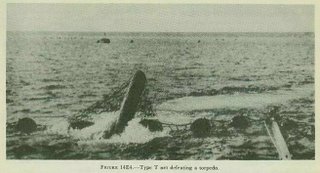

The above quote is from an interesting site Gene Slovers' US Navy Pages at which Mr. Slovers seems to have copied old Naval Academy texts. The illustrations to the left are from one of these texts, NAVAL ORDNANCE AND GUNNERY VOLUME 1, NAVAL ORDNANCE, CHAPTER 14
ANTISUBMARINE WEAPONS.

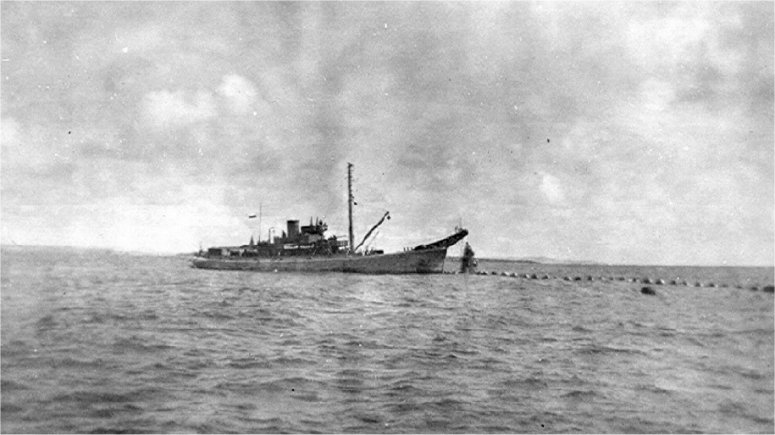
Well, all well and good, but how do you get the nets out there to do their job to begin with? The answer lies in a group of ships devoted to net laying, transportation and maintaining- net tenders (there were also Net Cargo Ships, but today we focus on the net tenders). A little background:
Six ship builders were given contracts to build the first 32 steel Net Tenders in the ALOE class. Most of the keels were laid in October 1940. They were all launched before the attack on Pearl Harbor.
***
Two Net Tenders were at Pearl Harbor on Dec. 7, 1941. They were USS ASH AN-7 (Ex YN-2) and USS CINCHONA AN-12 (Ex-YN-7), also Net Gate Vessel (YNg-17)...
***
After Pearl Harbor more Net Tenders were built. The next 30 ships, in the AILANTHUS class, were wooden and somewhat larger. The first keel was laid down in Oct. 1942, the keels of the last 15 steel ships, in the CAHOES class, were laid down in 1944 and 1945.
How did they lay nets?
Net Laying was usually done by:
1. Net Tender Ships only.
2. Net Tenders assisted by other ships such as Net Cargo Ships, Tugs, Landing Craft (LCM's) or barges.

NET LAYING BY NET TENDERS ONLY:
This was usually done when the following 3 circumstances were combined.
(a) Appreciable distance from Net Depot to point of Installation.
(b) Cold, foul weather where it was especially undesirable to work in small boats with Net Tender.
(c) A situation calling for the installation of a short piece of net in an out of the way place.


Where were nets used? Among other places, San Francisco Bay, where the nets came from the Naval
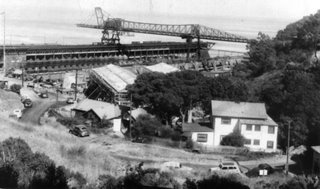
Net Station, Tiburon, California:
Local people still often call it "The Net Depot" much to the discomfort of the current owners. San Francisco Bay was one big Navy base as World War II loomed closer. It would have been wide open to Japanese submarines except for an anti-submarine net constructed at the Tiburon base and stretched across the Golden Gate. This seven mile long net was in place on December 7, 1941. The personnel of the Net Depot not only constructed over 100,000 tons of anti-submarine netting during the war but trained the sailors in the installation and handling of these nets which protected the harbors up and down the Pacific Coast of the U.S. and across the Pacific as well. The huge gantries left over from the coaling station were perfect for handling the giant nets.

After the war the nets were recovered and returned to Tiburon for storage in case of future need. Eventually, they were salvaged, the nets went to scrap dealers, the massive concrete anchors became bulkheads for shoreline protection at the depot and what is now Paradise Park, and many of the huge floats became beehives around California. The gantries were removed, leaving only the tracks on which they ran and a concrete trestle down the center of the base.
Where else? USS Butternut had an interesting career:
The ship departed Seattle on 17 May for a brief visit to San Francisco until 1 June when she got underway for the southwestern Pacific. After escorting SS Eldridge Gerry across the ocean, Butternut arrived in Noumea, New Caledonia, on 27 June. For 18 months, she tended nets in the southwestern Pacific, first at New Caledonia, later in the New Hebrides, and then in the Solomons. Her active service was interrupted only by two repair periods--August and September of 1943 at Port Chalmers, New Zealand, and November 1943 to February 1944 at Pearl Harbor. During her overhaul at Pearl Harbor, Butternut was reclassified a net laying ship and was redesignated AN-9. In January 1945, the ship steamed from the Solomons via Humboldt Bay, New Guinea, to Leyte in the Philippines. She spent the ensuing two years engaged in net and other district craft operations in the waters adjacent to the islands of Leyte and Samar.


Butternut departed Leyte Gulf in convoy on 24 February 1947 and shaped a course for the Marianas. She arrived at Guam on 9 March and began three years of service in the Trust Territories of the Pacific Islands. Based at Apra Harbor on Guam, she carried passengers and cargo among the islands as well as laying and tending nets at various islands. The ship also performed several assignments off Iwo Jima laying mooring buoys and assisting in the recovery, repair and replacement of submarine lines. Butternut departed Guam on 19 June 1950 for repairs at the Pearl Harbor Naval Shipyard. The net laying ship completed repairs and put to sea on 15 September. Steaming via Guam and Iwo Jima, she arrived in Sasebo, Japan, on 28 October. The ship conducted operations at Sasebo and Yokosuka until 7 July 1951 when she set sail for Guam to resume her former duties in the Trust Territories.
Name a spot, and these little ships were there - including Kodiak, Alaska, where the net depot was known as Woody Island:
"On Woody Island, Northeast of St. Paul's Harbor, are located Magnetic Loop and Harbor detection equipment, net depot, and nets for anti-submarine detection and the C.A.A. (Civil Aeronautic Authority) Range Station for air traffic.

In October, 1942, a heavy indicator net for surface and under surface vessels consisting of 200' panels, was stretched from Woody Island to Shahafka Cove. If a 200' section of this net was carried away, the net vessel, equipped with depth charges, went into action. This net was approximately 1500 yards long with a 600' gate in the ship channel. It was opened and shut by two YP boats, one of which was on duty at all times. Equipped with anti-aircraft guns and radio these YP boats signaled the approach of all aircraft to Woody Island signalman, who relayed this information to the aircraft clearance tower on the base.

In November, 1943, anti-torpedo nets, 30' deep, for protection against the torpedo rather than the submarine, were substituted for the heavier nets installed in October, 1942.

In December, 1942, magnetic loop stations were installed at the entrance of the channel leading to Kodiak and at St. Paul's harbor...
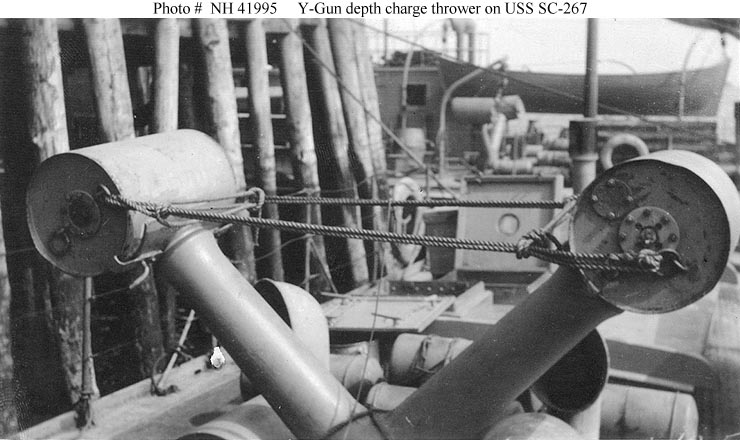
Oh, yes, the net tenders were armed- a 3" gun, 3- 20mm guns and depth charge firing Y guns. And those horns? Look at the picture nearby to see how they were used in net work.

In addition to their net tending duties, these hearty little ships were used for salvage, cargo and other useful activities.

In addition to WWII service, many of these ships also served during the Korean War and a few served nearly 40 years.

One ship was lost when it hit a mine and others were damaged in storms. But all served faithfully and well, as did their crews.

And a special note of thanks to all the old net tander sailors who have shared their memories online and to
Robert (Bob) Cooper,Sr.. who maintains the site for USS Mulberry (AN- 27).

Some old nets have become diving attractions.

UPDATE: A modern approach.

Saturday, January 13, 2007

Iran: What happens when you devote your energy to making nuclear weapons and ignore the other things: " Iran smog 'kills 3,600 in month"


Reported here':
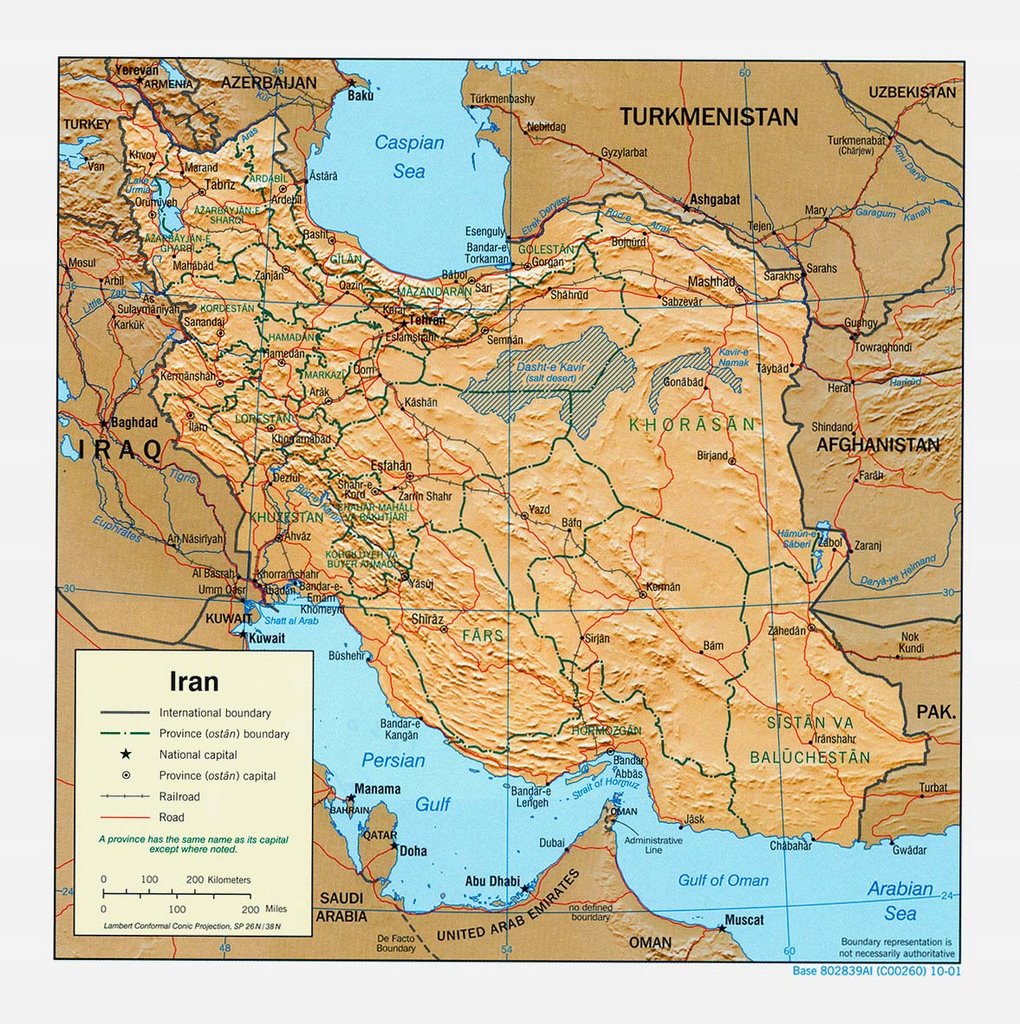
Air pollution is estimated to have killed nearly 10,000 people in Tehran over a one-year period, including 3,600 in a month, Iranian officials say.

Most of the deaths were caused by heart attacks and respiratory illnesses brought on by smog, they said.

The scale of the problem led one senior official to say living in the Iranian capital was like "collective suicide".

Cheap fuel encourages car use in Iran, correspondents say, and many vehicles do not meet global emissions standards.

"It is a very serious and lethal crisis, a collective suicide," the director of Tehran's clean air committee, Mohammad Hadi Heydarzadeh, told an Iranian newspaper.

"A real revolution is needed to resolve this problem."
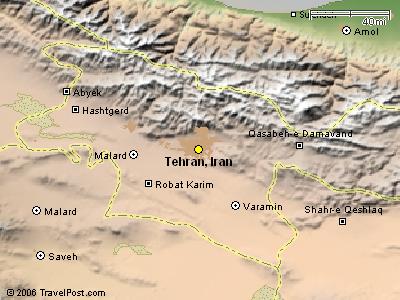
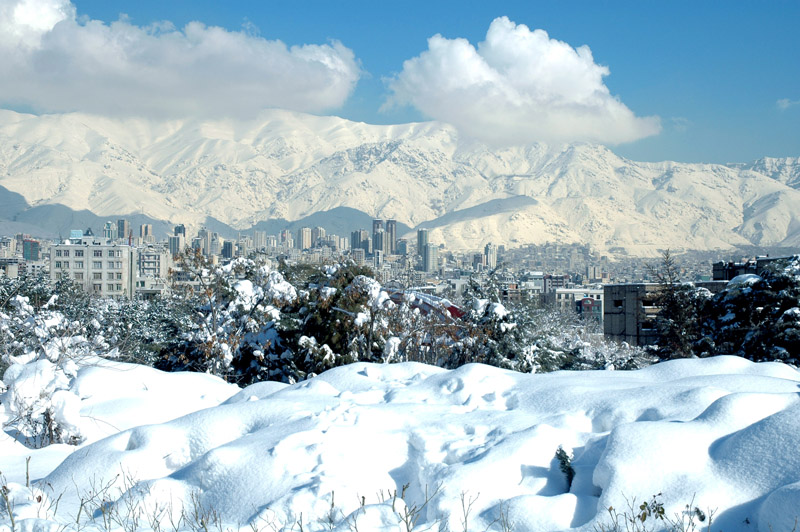
About 12,000,000 people live in the Tehran metro area according to this. Snow photo is, as you might gather, on a clear day, Wikipedia adds:
Tehran, like many big cities, suffers from severe air pollution and the city is often covered by smog making breathing difficult and causing widespread pulmonary illnesses. It is estimated that about 27 people die each day from pollution-related diseases.[2] According to Iranian officials, 3,600 people died in a single month due to the poor air quality. [3]

The air pollution is due to several different reasons: 1) Economical: most Iranian industries are located on the outskirts of Tehran. The city is also overrun with old and aging cars which do not meet today's emission regulations. Furthermore, Iran's busiest airport, Mehrabad International Airport, is located in the west of the city; 2) Infrastructure: Tehran has a poor public transportation network. Buses and metros do not cover every area of the city. Most people are then obliged to either use private cars or hire taxis. This has created severe traffic and congestion; 3) Geographical: Tehran is bound in the north by the massive Alborz mountain range that is stopping the flow of the humid Caspian wind. As a result, thermal inversion that traps Tehran's polluted air is frequently observed. The lack of humidity and clouds makes Tehran a very sunny city. The UV radiations then combined with the existing pollutants significantly raise the level of the ozone.

The government, however, is engaged in a battle to reduce the air pollution. It has for instance encouraged taxis and buses to convert from petrol engines to engines that run on compressed natural gas. Furthermore, since 1979 the government of the Islamic Republic of Iran has setup a "Traffic Zone" (طرح ترافیک) covering the city center during peak traffic hours. Entering and driving inside this zone is only allowed with a special permit. The government is also trying to raise people's awareness about the hazards of the pollution. One method that is currently been employed is the installation of Pollution Indicator Boards all around the city to monitor the current level of particulate matter (PM10), nitrogen dioxide (NO2), ozone (O3), sulfur dioxide (SO2), and carbon monoxide (CO). The board also displays the Pollutant Standard Index (PSI), which is a general indication of air quality based on the measurements of the above-mentioned five pollutants. The Pollution Indicator Boards classify the level of each pollutants as either safe, hazardous or dangerous.

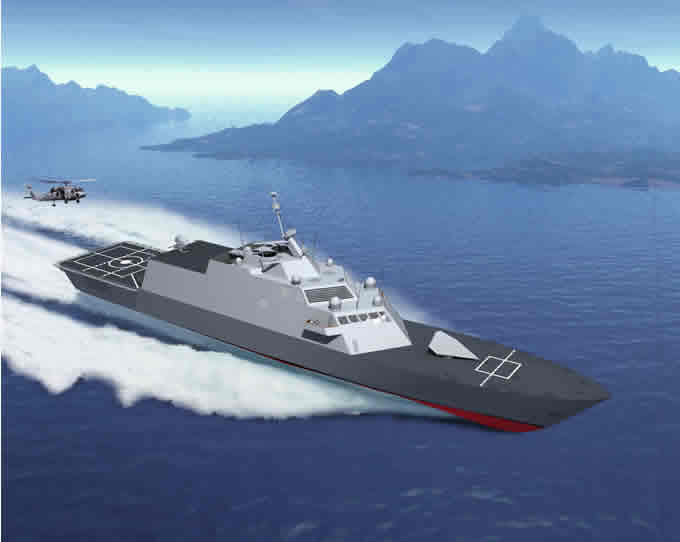
Lockheed Littoral Combat Ships: Stop Order issued


LCS program cost overuns? Surprise, surprise. Press rrelease from DoD: Navy Issues Stop Work Order for Littoral Combat Ship 3 Announced:
The Navy has issued a stop work order today to Lockheed Martin Corp. Maritime Systems & Sensors unit, Moorestown, N.J., for the construction of the third Littoral Combat Ship (LCS). This stop work order will take effect immediately and is for a period of 90 days.

The stop work order was issued because of significant cost increases currently being experienced with the construction of LCS-1 and LCS-3, under construction by Lockheed Martin.

“I determined that at this point in time it was critical to stop work on LCS-3 to assess the LCS program and ensure we understand the program’s cost and management processes before we move forward. It is essential that we complete LCS 1 and get it to sea so we can evaluate this new ship design” said Secretary of the Navy Donald Winter.

The Navy is working closely with the contractor to identify the root cause of the costs growth. The Navy is reviewing the overall acquisition strategy for the LCS program and is working closely with the contractors to keep this program on track.
Root cause? Anyone? Anyone? Bueller? Bueller?

One answer found here:
"We believe these increased costs are due to an underestimation of labor hours," said Lt. John Gay, a spokesman for the Navy, in a telephone interview, noting the Navy had not changed requirements on the initially awarded contract granted in June 2004.
***
According to Lockheed, several issues raised costs including incorrect reduction gears supplied by vendors, a six-month delay in receiving high-grade steal (sic) and the Navy's decision to apply standard vessel production rules when constructing the ships.
Yeah, you gotta pay extra for that "high grade steal."

More here:
A recent cost review of the USS Freedom showed that the estimated price had jumped from a planned $220 million to between $331 million and $410 million, according to a Navy official. That ship is under construction by Lockheed Martin and scheduled to be delivered to the Navy this summer.
***
Another factor in gauging Congressional response to the program’s cost growth, the Congressional naval analyst pointed out, is that the ships are being built at three small shipyards that have not done a lot of Navy work.

“People from the big yards” — the six major shipyards owned by Northrop Grumman and General Dynamics — “have always regarded LCS as a threat,” the analyst said. “This doesn’t help that.”

The pace of acquisition is key to the Navy’s desire to rapidly get the ships in service to perform close-to-shore combat missions.
So, the long knives are out.

Anchors turn out to be weakest links


Two ships, rough seas, two lost anchors. Reported here:
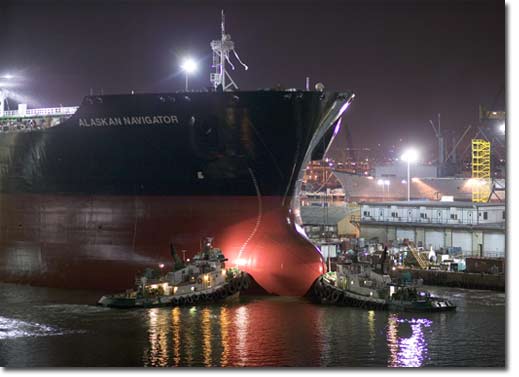
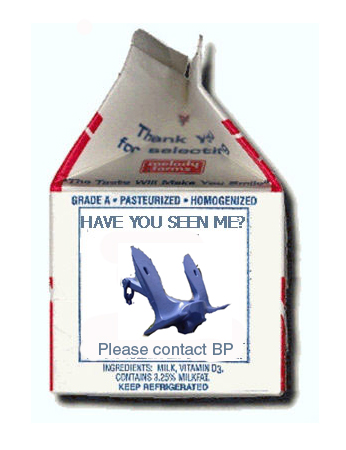
Two of BP's new double-hulled oil tankers are sitting idle off Washington state after each lost an anchor while sailing through rough North Pacific waters, company and Coast Guard officials said Thursday. An investigation into how the anchors got away revealed "material defects" in the enormous steel claws, said Anil Mathur, president of Alaska Tanker Co., a Beaverton, Ore., company that hauls North Slope crude oil for BP. Each anchor weighs 16 tons, stands more than 13 feet tall, and hangs at the bow of one of the identical 941-foot ships. One ship, the Alaskan Navigator, discovered an anchor missing on Dec. 26 and the Alaskan Frontier lost one Dec. 23, Mathur said.
I guess the loss of two anchors proves it was no fluke. I wonder if BP stocks spare anchors or goes stockless.


Delivery press release on ship here.

Friday, January 12, 2007

China begins using Mekong River as oil route


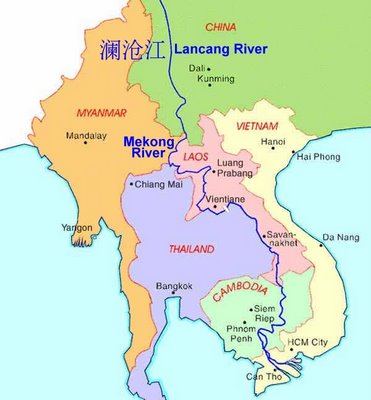
As I noted in April 2006, China is looking for alternate pathways to get oil from source to user. One route is the Mekong River:
China wants to import Mideast oil through the Mekong River to avoid the unsafe Malacca Strait. As an oil shipping route it is already operational but there are strong environmental concerns that accidental spills could adversely affect the livelihoods of nearly 60 million people living along its banks.

Two Chinese ships made their maiden journey on December 29 carrying a total of 300 tons of refined oil up the Mekong. The two vessels arrived at a port in China's south-western province of Yunnan with a cargo that was shipped from a port in Thailand's northern province of Chiang Rai, China's state news agency Xinhua reported.

China’s estimated total annual oil imports have now reached 140 million tonnes per year, and about 75 per cent currently flows through the narrow, pirate-infested Strait of Malacca.

Piracy is not the only perceived vulnerability though. Beijing has also concerns that in a potential conflict with US fuel shipments through the waterway could be choked off, hence the importance of the Mekong. (emphasis added)
Planning ahead in case the U.S. decides to help defend Taiwan by cutting off the Strait of Malacca to them?

Betting that the U.S. would find it hard to put 60 million people at risk by stopping up the river?

Freeing up their hands to take action?

UPDATE: Previous post on Sea lanes. Here is a link to an article titled, "The Oil Weapon: Myth of China's Vulnerability." Another analysis here. More here:
According to the Washington Times, China understands that the principle national security threat facing it is disruption of sea lanes bringing oil and commerce to its shores.
The Bill Gertz piece noted says:
China believes the U.S. military will disrupt China's energy imports in any conflict over Taiwan ... Beijing's leaders see access to oil and gas resources as vital to economic growth and fear that stalled economic growth could cause instability and ultimately the collapse of their nation of 1.3 billion people. Energy demand, particularly for oil, will increase sharply in the next 20 years — from 75 million barrels per day last year to 120 million barrels in 2025 -- with Asia consuming 80 percent of the added 45 million barrels, the report said. Eighty percent of China's oil currently passes through the Strait of Malacca, and the report states that China believes the sea area is "controlled by the U.S. Navy." Chinese President Hu Jintao recently stated that China faces a "Malacca Dilemma" -- the vulnerability of its oil supply lines from the Middle East and Africa to disruption. Oil-tanker traffic through the Strait, which is closest to Indonesia, is projected to grow from 10 million barrels a day in 2002 to 20 million barrels a day in 2020, the report said. Chinese specialists interviewed for the report said the United States has the military capability to cut off Chinese oil imports and could "severely cripple" China by blocking its energy supplies.
See also here.

UPDATE2: Looking at this map, I wonder about the Mekong as an alternate to the Strait of Malacca (since I'm a little fuzzy on how oil tankers get to the Mekong without transiting a couple of major chokepoints). However, it is an excellent alternative to the Taiwan Strait and the South China Sea, if need be.


UPDATE3: Tankers do not actually have to get to the Mekong from the Middle East if there is some sort of transport from Thailand or Burma such as a pipeline, as was proposed at one time. See here.

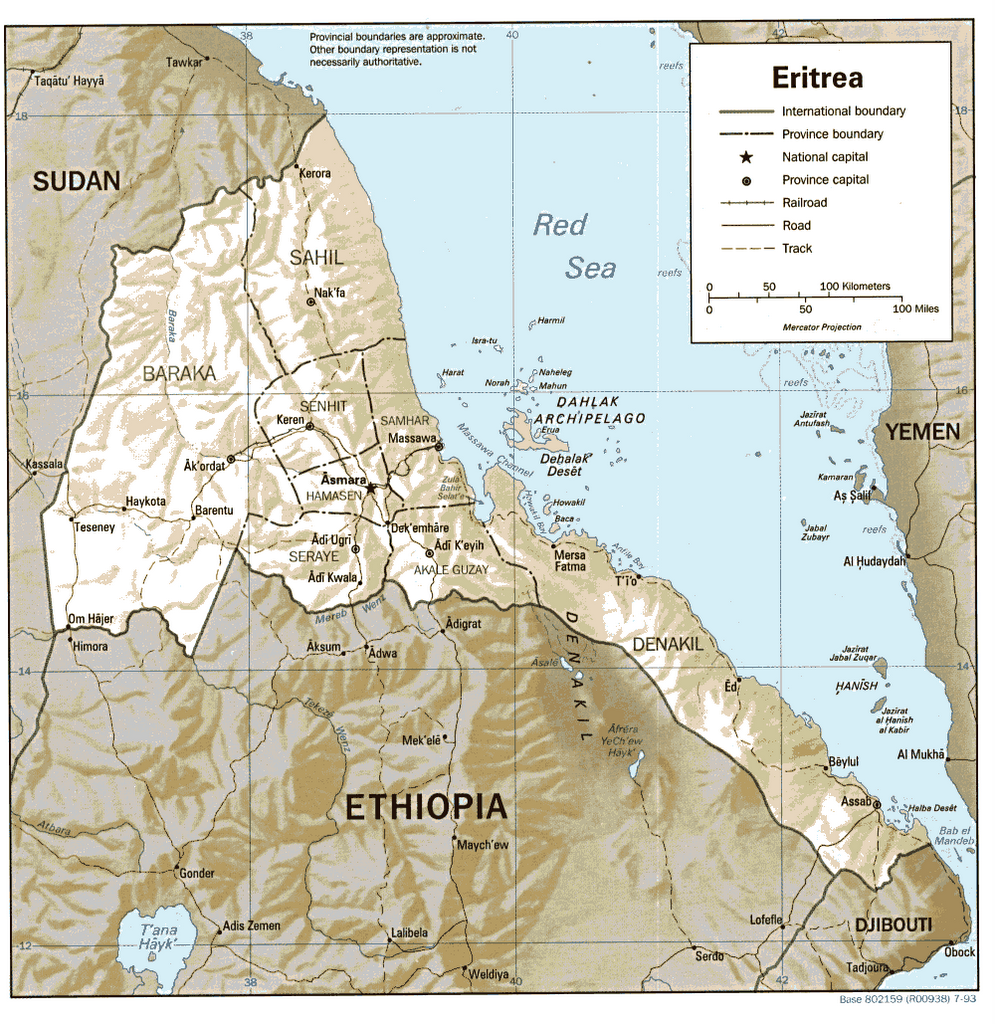
Odd Friday headline: "Eritrea warns US over Somalia"


I am quaking in my boots since Eritrea warns US over Somalia.

Not.

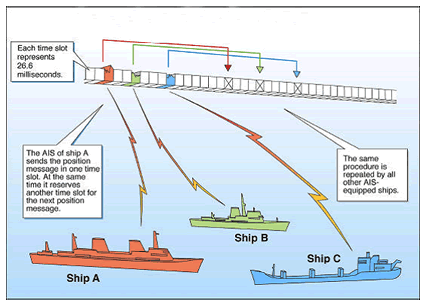
U.S. maritme identification system to go forward


Reported here:
"The nationwide automatic identification system will greatly aid the essential process of identifying, tracking, and communicating with vessels approaching our maritime borders and is a centerpiece in establishing effective maritime domain awareness," said Rear Adm. John P. Currier, the Coast Guard's assistant commandant for acquisitions. "This is an important milestone for the project as it marks the approval to begin contracting for the initial deployment of this powerful capability," said Capt. Kurtis Guth, automatic identification system project manager. "The nationwide automatic identification system will provide numerous key operational benefits to the Coast Guard, including improved maritime security, navigational safety, and vessel traffic planning. The speed, course and location data collected by this system from vessels carrying international automatic identification system equipment will be used to form an overarching view of maritime traffic within or near the U.S. and its territorial waters."

The nationwide automatic identification system [NAIS] is being developed in three acquisition increments primarily to accelerate deployment of mission critical capabilities. The Coast Guard partnered with the Naval Sea Logistics Center under the first increment to establish receive-only automatic identification system coverage in approximately 60 critical U.S. ports and coastal areas during the current fiscal year.
More info on NAIS request for bids here, more on the system here

Rebuilding Iraq

A plan from Giuliani and Gingrich here.

And getting there via counterinsurrgency here.

A review of the Tamil Tiger mess


An end of year look at the Sri Lankan Tamil Tigers (LTTE) here by a retired Indian Intel officer:
To those who do not subscribe to LTTE methodology, LTTE’s overall goal appears murky. LTTE appears to be trying hard to push the clock back to 2001, after shedding the blood of at least 3,000 of its own kind in the years of peace, and complaining to the international community when the fortunes of war went awry. The bottom line is that LTTE strategies of 1996 and 2000-2001 are not working in 2006 as international ambience has changed. In a nutshell the only achievement of ceasefire period appears to be that LTTE had sacrificed the international sympathy the Tamil cause had enjoyed all these years, to crown itself as the sole spokesman for Tamils in Sri Lanka.
***
Armed Sea Tigers seized a Jordanian ship MV Farah III, carrying 14000 tons of rice, which was stranded 8 nautical miles off Mullaitivu due to engine trouble on December 23, 2006. They arrested the 14- member Arab crew and whisked them away to Kilinochi. According the ship’s captain, Sea Tigers also confiscated the ship’s communication equipment and computers. In international terms, this action is called piracy. If LTTE wanted to reassert its claim to legitimacy in 2006, it could not have chosen a worse way of articulating it.
***
The LTTE is perhaps the strongest non-state actor with military capability in Asia. Its falling fortunes in 2006 can be attributed to certain characteristics of Prabhakaran’s leadership conduct of LTTE. These have eroded the organization’s credibility...

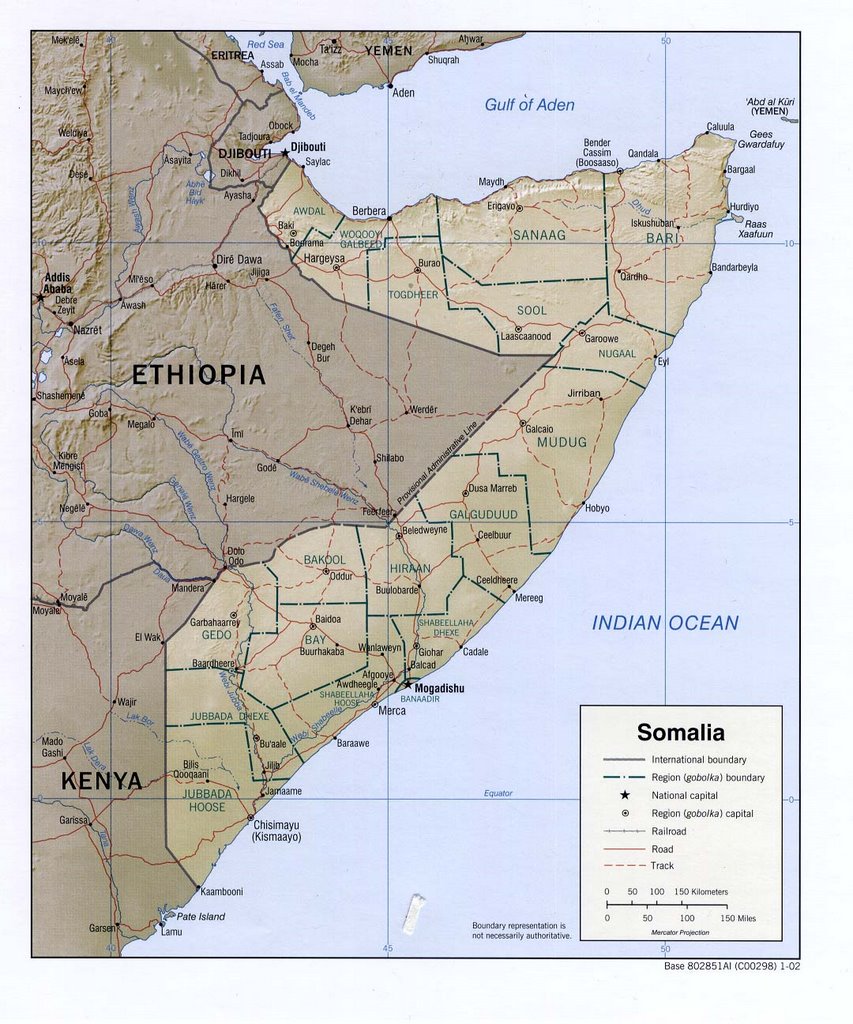
Somalia: Back to the basics of statehood


What next for Somalia? As this piece notes, when you are at the bottom, anything looks like an improvement:
Nearly two decades of war have reduced this country of 9 million to chaotic destitution, making it less a failed state than no state at all. (The U.S. State Department lists the country's government type as "none.")
***
But nailing terrorists is one thing; building a nation where none exists is another. "We are starting from scratch," the head of Somalia's new government, Prime Minister Ali Mohammed Gedi, told me in an interview in Mogadishu. Given Somalia's penchant for clan warfare and inhospitableness toward foreign armies--just go out and rent a copy of Black Hawk Down--it's tempting for Western policymakers to wash their hands and wish Gedi luck. But Somalia's strife has repercussions beyond its borders. The country is victim to the worst ravages of man and nature. Instability there has the potential to engulf the entire Horn of Africa in war, with neighboring countries Ethiopia and Eritrea jockeying for influence and pirates using the lawless coast as a base to launch attacks on the freighter traffic headed for the Suez Canal. Some of the Islamists have vowed a guerrilla war against the new government, which they deride as a puppet of Ethiopia and the U.S. On top of all that, a double disaster of summer drought followed by December floods has left more than 500,000 Somalis dependent on foreign aid for their livelihoods.
If the peace can be kept long enogh, the Barnett's SysAdmin forces need to move in. If...

Why try to fix Somalia? It might be argued that Somalia is a "broken window" on the world scene and that fixing it will help the whole neighborhood get better. Others will argue that there is no compelling U.S. interest in the area to justify the expenditure of any time, treasure or personnel to help the broken state...The underlying question is "who benefits" from the status quo and its future. And who will benefit if Prime Minister Gedi can make his effort work...

Time to choose between clans and chaos or nationhood and realtive peace.

UPDATE: UN Security Council is concerned.

Thursday, January 11, 2007

Oh, Dwat!


Al-Qaida suspects still alive in Somalia
A top U.S. official in the region said Thursday that none of the al-Qaida suspects believed to be hiding in Somalia died in a U.S. airstrike this week, but Somalis with close ties to the terrorist group were killed.

A day earlier, a Somali official said a U.S. intelligence report had referred to the death of Fazul Abdullah Mohammed, one of the three senior al-Qaida members blamed for the 1998 bombings of the U.S. embassies in Kenya and Tanzania.

But the U.S. official in Kenya, who spoke on condition of anonymity because he was not authorized to speak to the media, said that Ethiopian troops and U.S. special forces were still pursuing the three suspects in southern Somalia.
Is it a riddle? Can an official who is not offically allowed to talk to the media, but talks anyway still be an official?

Wednesday, January 10, 2007

Now let the fun begin

The new Congress gets underway with the House passing a bill mandating "six impossible things by breakfast" as reported here:
Lawmakers voted 299-128 to require screening of all cargo on passenger planes within three years, to check cargo ships for nuclear bombs before they leave ports bound for the U.S. and to boost homeland security funding for urban areas most likely to be terrorist targets.
***
The anti-terrorism measure is the first in a series of bills the House is expected to pass this week and next. The list--all part of Democrats' campaign platform--includes an increase in the minimum wage, expansion of federally funded embryonic stem cell research and permission for the federal government to negotiate with pharmaceutical companies for lower drug prices for senior citizens.
Wonder what the Senate will do?

Somalia: Airstrikes take out a bad one


Reported in Embassy bomb planner killed in airstrike:
The suspected al-Qaida militant who planned the 1998 U.S. embassy bombings in east Africa was killed in an American airstrike, a Somalian official said Wednesday.

"I have received a report from the American side chronicling the targets and list of damage," said Abdirizak Hassan, the Somali president's chief of staff. "One of the items they were claiming was that Fazul Abdullah Mohammed is dead."

Mohammed, 32, allegedly planned the attacks on the U.S. embassies in Kenya and Tanzania that killed 225 people.

He is also suspected of planning the car bombing of a beach resort in Kenya and the near-simultaneous attempt to shoot down an Israeli airliner in 2002. Ten Kenyans and three Israelis were killed in the blast at the hotel, 12 miles north of Mombasa. The missiles missed the airliner.

Mohammed, one of the FBIís most wanted terrorists, who has evaded capture for eight years, is thought to have been the main target of an American helicopter attack Monday afternoon on Badmadow island off southern Somalia.
Some, who deny an al Qaeda connection to Somalia, will be surprised. Others of us will be singing "Another One Bites the Dust" -quietly.

Another one bites the dust
And another one gone, and another one gone
Another one bites the dust
Hey, I'm gonna get you too
Another one bites the dust


New target.

UPDATE: 1/11/07 Not so fast!