"We must be ready to dare all for our country. For history does not long entrust the care of freedom to the weak or the timid. We must acquire proficiency in defense and display stamina in purpose." - President Eisenhower, First Inaugural Address
VertRep
Showing posts with label Yemen Civil War. Show all posts
Showing posts with label Yemen Civil War. Show all posts
Of special interest this week -
1. the first ship hijacking off Somalia since 2012 (but note that last week there were reports of small boats with armed men in the vicinity of Somalia);
2. A Yemeni coast guard vessel apparently hit a sea mine and sank with a loss of 8 crew;
3. An attack on a ship off the coast of Nigeria
Somali officials whose forces freed a hijacked oil tanker and its eight Sri Lankan crew said on Sunday that NATO ships must do more to prevent the illegal fishing that locals say sparked the latest attack. Monday's hijacking was the first time that Somali pirates had successfully hijacked a commercial ship since 2012. Unlike previous hijackings, the ship was freed swiftly and with no ransom paid after the Puntland Maritime Police Force intervened. The intervention reassured shipping companies concerned that resurgent pirates could once again threaten one of the world's most important shipping lanes. Officials from the semi-autonomous region of Puntland blamed local anger over illegal fishing by foreign vessels for the attack. They warned that more hijackings might happen unless the problem was tackled. "We requested NATO warships to tackle the illegal fishing, but they replied it was not their mandate," Abdihakim Abdullahi Omar, the vice president of Puntland, told reporters at Bosasso port.
Perhaps those "security forces" should be patrolling their own waters . . . or working to get someone in whose "mandate" it is.
I got to thinking about a discussion we had as part of Midrats yesterday in which we talked about the attack on a Saudi frigate in the Red Sea by some sort of high speed boat or something. I think it began about the 10:09 point.
In any event, today I took the opportunity to closely examine the Saudi video of the attack -
As I viewed the video I noted what appears to be the bow of the attack vessel appearing out of the sea spray. In the screen shot of the video, I've circled the area and placed an arrow pointing at what I believe to be the bow.
That got me thinking about an Iranian video of an alleged "drone" boat attack on a mock up of a U.S. aircraft carrier from a couple of years ago:
Now, the North Koreans have a plethora of small fast semi-submersible craft - at least one version of which has been seen in Iranian hands:
First, from NOSI, a look at such a vessel in NORK yards:
Finally, one of those critters bobbing along with the Iranian fleet:
If I were an Iranian naval or IRGC officer and I had a cool toy, I might want to try it out somewhere against an enemy - not the "A" team probably but perhaps against the "SA" team. So I wonder - was this an application of something akin to what they used in that practice/publicity attack on the fake carrier? Or was this some sort of hybrid attack using something like that Taedong B semi-submersible or one of its ilk?
Or did they steal someone's ski boat?
Given the amount of spray around the attack boat, I have an inclination toward some sort of semi-submersible whose bow came out of the water when it hit the frigates bow wake, but I am open to suggestions.
Freedom of the seas means not letting bad guys take potshots at ships at sea. Nothing like a little firework to celebrate your 241st birthday, U.S. Navy!
The following is a statement released today by Pentagon Press Secretary Peter Cook on U.S. military strikes against radar sites in Yemen: "Early this morning local time, the U.S. military struck three radar sites in Houthi-controlled territory on Yemen's Red Sea coast. Initial assessments show the sites were destroyed. The strikes -- authorized by President Obama at the recommendation of Secretary of Defense Ash Carter and Chairman of the Joint Chiefs General Joseph Dunford -- targeted radar sites involved in the recent missile launches threatening USS Mason and other vessels operating in
The guided missile destroyer USS Nitze (DDG 94) launches a strike against three coastal radar sites in Houthi-controlled territory on Yemen's Red Sea coast.
international waters in the Red Sea and the Bab al-Mandeb. These limited self-defense strikes were conducted to protect our personnel, our ships, and our freedom of navigation in this important maritime passageway. The United States will respond to any further threat to our ships and commercial traffic, as appropriate, and will continue to maintain our freedom of navigation in the Red Sea, the Bab al-Mandeb, and elsewhere around the world."
As a side note, Iran is sending a frigate and a replenishment ship to the Gulf of Aden in what looks to me like one of their routine counter-piracy patrols, as set out here:
Iran’s 44th fleet, comprised of Alvand destroyer and Bushehr logistic warship, has been dispatched to the Gulf of Aden and the Bab el-Mandeb Strait to protect the country’s trade vessels against piracy in the unsafe zone. The Iranian fleet will head for the waters near Somalia and Tanzania afterwards through the Indian Ocean.
After making a port call in Tanzania, the 44th fleet will sail along the eastern coasts of Africa if the weather holds out, and is scheduled to sail even for the western coasts of South Africa, in the South Atlantic Ocean. The presence of the Iranian fleet in the Gulf of Aden coincides with the US decision to directly get involved in a Saudi-led war against Yemen.
Things are pretty much a mess in Yemen as various Shiite and Sunni groups attempt to push the others around in order to gain control of key areas of Yemen. Pretty good explanation from the BBC of Yemen crisis: Who is fighting whom?:
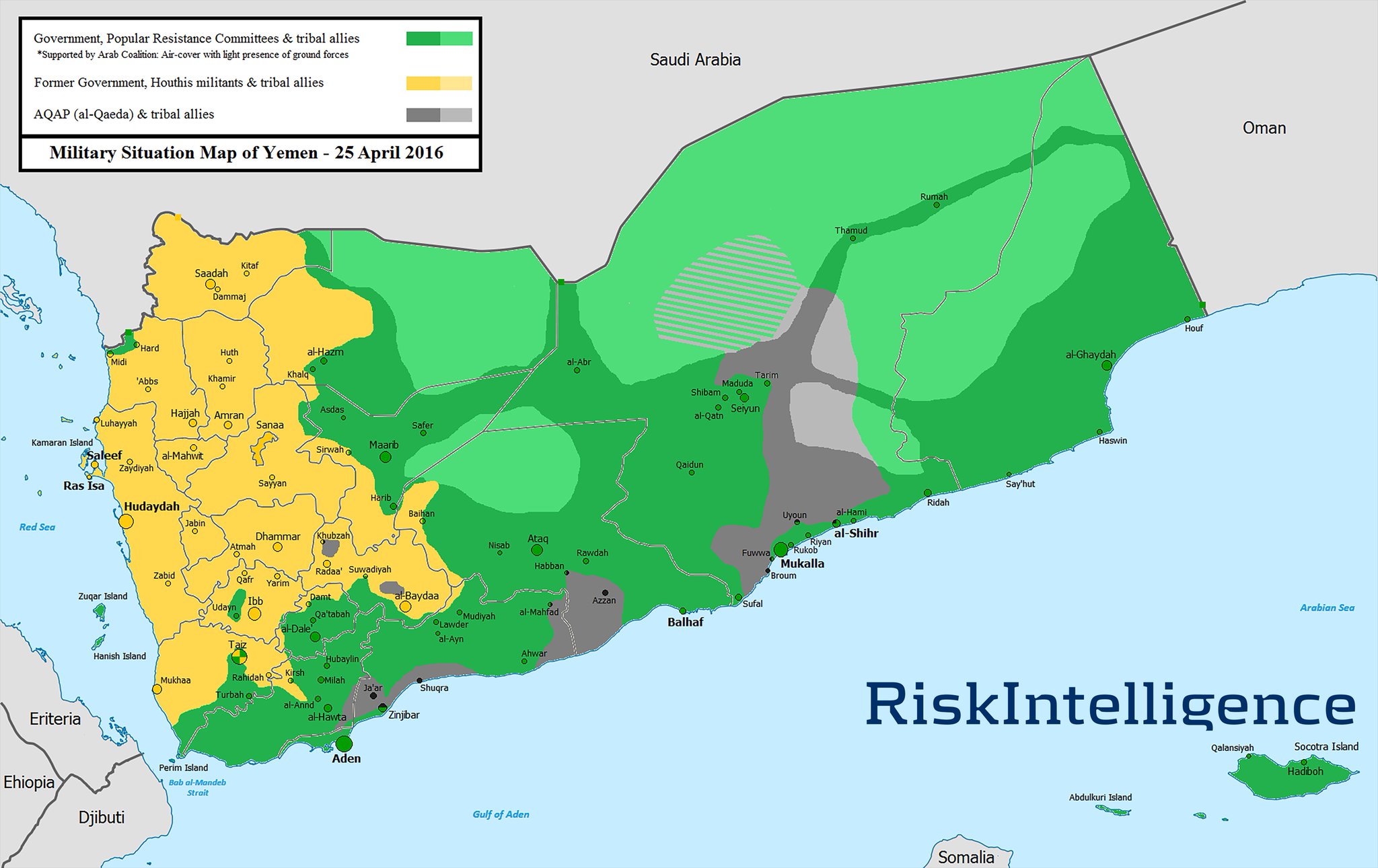
The main fight is between forces loyal to the beleaguered President, Abdrabbuh Mansour Hadi, and those allied to Zaidi Shia rebels known as Houthis, who forced Mr Hadi to flee the capital Sanaa in February. {2015} *** Yemen's security forces have split loyalties, with some units backing Mr Hadi, and others the Houthis and Mr Hadi's predecessor Ali Abdullah Saleh, who has remained politically influential. Mr Hadi is also supported in the predominantly Sunni south of the country by militia known as Popular Resistance Committees and local tribesmen. Both President Hadi and the Houthis are opposed by al-Qaeda in the Arabian Peninsula (AQAP), which has staged numerous deadly attacks from its strongholds in the south and south-east. The picture is further complicated by the emergence in late 2014 of a Yemen affiliate of the jihadist group Islamic State, which seeks to eclipse AQAP and claims it carried out a series of suicide bombings in Sanaa in March 2015. After rebel forces closed in on the president's southern stronghold of Aden in late March, a coalition led by Saudi Arabia responded to a request by Mr Hadi to intervene and launched air strikes on Houthi targets. The coalition comprises five Gulf Arab states and Jordan, Egypt, Morocco and Sudan. *** The conflict between the Houthis and the elected government is also seen as part of a regional power struggle between Shia-ruled Iran and Sunni-ruled Saudi Arabia, which shares a long border with Yemen. Gulf Arab states have accused Iran of backing the Houthis financially and militarily, though Iran has denied this, and they are themselves backers of President Hadi. Yemen is strategically important because it sits on the Bab al-Mandab strait, a narrow waterway linking the Red Sea with the Gulf of Aden, through which much of the world's oil shipments pass. Egypt and Saudi Arabia fear a Houthi takeover would threaten free passage through the strait.
If you feel you need a scorecard to keep track, you are not alone.
But focus on this - Iran is Saudi Arabia's enemy.
Iran would like to control the Saudi outflow of oil. It can do so by shutting down Saudi access through the Strait of Hormuz except that the Saudi's can also export oil from their west coast on the Red Sea and ship it through the Bab el-Mandeb Strait. If the Iranian surrogate Houthis can gain control of the Bab el-Mandeb Strait then Iran could, effectively, throttle Saudi oil flow.
The chokepoint situation had been discussed here many time, but the U.S.Energy Information Administration has a great site, World Oil Transit Chokepoints which lays these routes out well:
World chokepoints for maritime transit of oil are a critical part of global energy security. About 63% of the world's oil production moves on maritime routes. The Strait of Hormuz and the Strait of Malacca are the world's most important strategic chokepoints by volume of oil transit. *** The Strait of Hormuz is the world's most important chokepoint with an oil flow of
17 million barrels per day in 2013, about 30% of all seaborne-traded oil. Located between Oman and Iran, the Strait of Hormuz connects the Persian Gulf with the Gulf of Oman and the Arabian Sea. The Strait of Hormuz is the world's most important oil chokepoint because of its daily oil flow of 17 million barrels per day in 2013. Flows through the Strait of Hormuz in 2013 were about 30% of all seaborne-traded oil. EIA estimates that more than 85% of the crude oil that moved through this chokepoint went to Asian markets, based on data from Lloyd's List Intelligence tanker tracking service.6 Japan, India, South Korea, and China are the largest destinations for oil moving through the Strait of Hormuz. *** At its narrowest point, the Strait of Hormuz is 21 miles wide, but the width of the shipping lane in either direction is only two miles wide, separated by a two-mile buffer zone. The Strait of Hormuz is deep and wide enough to handle the world's largest crude oil tankers, with about two-thirds of oil shipments carried by tankers in excess of 150,000 deadweight tons. *** Pipelines available as bypass options Most potential options to bypass Hormuz are currently not operational. Only Saudi Arabia and the United Arab Emirates (UAE) presently have pipelines able to ship crude oil outside of the Persian Gulf and have additional pipeline capacity to circumvent the Strait of Hormuz. At the end of 2013, the total available unused pipeline capacity from the two countries combined was approximately 4.3 million bbl/d (see Table 2). Saudi Arabia has the 746-mile Petroline, also known as the East-West Pipeline, which runs across Saudi Arabia from its Abqaiq complex to the Red Sea. The Petroline system consists of two pipelines with a total nameplate (installed) capacity of about 4.8 million bbl/d. The 56-inch pipeline has a nameplate capacity of 3 million bbl/d, and its current throughput is about 2 million bbl/d. The 48-inch pipeline had been operating in recent years as a natural gas pipeline, but Saudi Arabia converted it back to an oil pipeline. The switch increased Saudi Arabia's spare oil pipeline capacity to bypass the Strait of Hormuz from 1 million bbl/d to 2.8 million bbl/d, but this is only achievable if the system operates at its full nameplate capacity. Saudi Arabia also operates the Abqaiq-Yanbu natural gas liquids pipeline, which has a capacity of 290,000 bbl/d. However, this pipeline is currently running at capacity and cannot move any additional oil. The UAE operates the Abu Dhabi Crude Oil Pipeline (1.5 million bbl/d) that runs from Habshan, a collection point for Abu Dhabi's onshore oil fields, to the port of Fujairah on the Gulf of Oman, allowing crude oil shipments to circumvent the Strait of Hormuz. The pipeline can transport more than half of UAE's total net oil exports. The government plans to increase this capacity in the near future to 1.8 million bbl/d. *** Suez Canal The Suez Canal is located in Egypt and connects the Red Sea and Gulf of Suez with the Mediterranean Sea. In 2013, total petroleum and other liquids (crude oil and refined products) and LNG accounted for 20% and 3% of total Suez cargoes, measured by cargo tonnage, respectively. The Suez Canal is unable to handle Ultra Large Crude Carriers (ULCC) and fully laden Very Large Crude Carriers (VLCC) class crude oil tankers. The Suezmax was the largest ship capable of navigating through the canal until 2010 when the Suez Canal Authority extended the canal depth to 66 feet to allow more than 60% of all tankers to use the Suez Canal, according to the Suez Canal Authority.15 In 2013, nearly 3.2 million bbl/d of total oil (crude oil and refined products) transited the Suez Canal in both directions, according to the Suez Canal Authority. This is the largest amount ever shipped through the Suez Canal. The majority of the oil was sent northbound (1.9 million bbl/d) toward European and North American markets, and the remainder was sent southbound (1.3 million bbl/d), mainly toward Asian markets. Oil exports from Persian Gulf countries (Saudi Arabia, Iraq, Kuwait, United Arab Emirates, Iran, Oman, Qatar, and Bahrain) accounted for 79% of Suez Canal northbound oil flows. The largest importers of northbound oil flows through the Suez Canal in 2013 were European countries (68%) and the United States (16%). Oil exports from European countries made up the majority (66%) of Suez southbound oil flows, followed by North Africa (Algeria and Libya combined made up 16%). The largest importers of Suez southbound oil flows through the Suez Canal were Asian countries (74%). Total traffic through the Suez Canal fell in 2009, and total oil flows dropped to 1.8 million bbl/d, their lowest level in recent years. The decrease in oil flows during that time reflected the collapse in world oil market demand that began in the fourth quarter of 2008, followed by OPEC production cuts (primarily from the Persian Gulf), which caused a sharp fall in regional oil trade starting in early 2009. Egypt's 2011 revolution did not have any noticeable effect on oil transit flows through the Suez Canal. Over the past few years, oil flows through the Suez Canal have increased, recovering from previous lower levels during the global economic downturn. SUMED Pipeline
The 200-mile long SUMED Pipeline, or Suez-Mediterranean Pipeline, transports crude oil through Egypt from the Red Sea to the Mediterranean Sea. The crude oil flows through two parallel pipelines that are 42 inches in diameter, with a total pipeline capacity of 2.34 million bbl/d. Oil flows north starting at the Ain Sukhna terminal along the Red Sea coast to its end point at the Sidi Kerir terminal on the Mediterranean Sea. SUMED is owned by the Arab Petroleum Pipeline Co., a joint venture between the Egyptian General Petroleum Corporation (50%), Saudi Aramco (15%), Abu Dhabi's International Petroleum Investment Company (15%), multiple Kuwaiti companies (15%), and Qatar Petroleum (5%).16 The SUMED Pipeline is the only alternative route to transport crude oil from the Red Sea to the Mediterranean Sea if ships were unable to navigate through the Suez Canal. Closure of the Suez Canal and the SUMED Pipeline would necessitate diverting oil tankers around the southern tip of Africa, the Cape of Good Hope, adding approximately 2,700 miles to transit from Saudi Arabia to the United States, increasing both costs and shipping time, according to the U.S. Department of Transportation.17 According to the International Energy Agency (IEA), shipping around Africa would add 15 days of transit to Europe and 8-10 days to the United States.18 Fully laden VLCCs going toward the Suez Canal also use the SUMED Pipeline for lightering. Lightering occurs when a vessel needs to reduce its weight and draft by offloading cargo to enter a restrictive waterway, such as a canal. The Suez Canal is not deep enough for a fully-laden VLCC and, therefore, a portion of the crude is offloaded at the SUMED Pipeline at the Ain Sukhna terminal. The now partially-laden VLCC goes through the Suez Canal and picks up the offloaded crude at the other end of the pipeline at the Sidi Kerir terminal. In 2013, 1.4 million bbl/d of crude oil was transported through the SUMED Pipeline to the Mediterranean Sea, which was then loaded onto a tanker for seaborne trade. SUMED crude flows decreased over the past few years, but the decrease has been offset by more oil transiting northbound via the Suez Canal. Total oil flows via SUMED and the Suez Canal were 4.6 million bbl/d in 2013, 0.1 million bbl/d higher compared with the previous year. Total oil flows via the Suez Canal and SUMED pipeline accounted for about 8% of total seaborne-traded oil in 2013. *** Bab el-Mandeb
Closing the Bab el-Mandeb Strait could keep tankers in the Persian Gulf from reaching
the Suez Canal and the SUMED Pipeline, diverting them around the southern tip of Africa.
The Bab el-Mandeb Strait is a chokepoint between the Horn of Africa and the Middle East, and it is a strategic link between the Mediterranean Sea and the Indian Ocean. The strait is located between Yemen, Djibouti, and Eritrea, and connects the Red Sea with the Gulf of Aden and the Arabian Sea. Most exports from the Persian Gulf that transit the Suez Canal and SUMED Pipeline also pass through Bab el-Mandeb.
An estimated 3.8 million bbl/d of crude oil and refined petroleum products flowed through this waterway in 2013 toward Europe, the United States, and Asia, an increase from 2.9 million bbl/d in 2009. Oil shipped through the strait decreased by almost one-third in 2009 because of the global economic downturn and the decline in northbound oil shipments to Europe. Northbound oil shipments increased through Bab el-Mandeb Strait in 2013, and more than half of the traffic, about 2.1 million bbl/d, moved northbound to the Suez Canal and SUMED Pipeline.
The Bab el-Mandeb Strait is 18 miles wide at its narrowest point, limiting tanker traffic to two 2-mile-wide channels for inbound and outbound shipments. Closure of the Bab el-Mandeb could keep tankers from the Persian Gulf from reaching the Suez Canal or SUMED Pipeline, diverting them around the southern tip of Africa, adding to transit time and cost. In addition, European and North African southbound oil flows could no longer take the most direct route to Asian markets via the Suez Canal and Bab el-Mandeb.
So, it's all about the oil. If Iran can control oil flowing out of the Middle East, it can control prices and, I assume it believes, the behavior of those nations dependent upon that oil.