VertRep

VertRep

Tuesday, August 01, 2017

August Battles to Remember

August 27, 1776 Battle of Long Island (Battle of Brooklyn/Brooklyn Heights)
The Battle of Long Island is also known as the Battle of Brooklyn and the Battle of
Brooklyn Heights. It was fought on August 27, 1776 and was the first major battle of the American Revolutionary War to take place after the United States declared its independence on July 4, 1776. It was a victory for the British Army and the beginning of a successful campaign that gave them control of the strategically important city of New York. In terms of troop deployment and fighting, it was the largest battle of the entire war.
After defeating the British in the Siege of Boston on March 17, 1776, commander-in-chief General George Washington brought the Continental Army to defend the port city of New York, then limited to the southern end of Manhattan Island. Washington understood that the city's harbor would provide an excellent base for the British Navy during the campaign, so he established defenses there and waited for the British to attack. In July, the British under the command of General William Howe landed a few miles across the harbor from Manhattan on the sparsely-populated Staten Island, where they were slowly reinforced by ships in Lower New York Bay during the next month and a half, bringing their total force to 32,000 troops. Washington knew the difficulty in holding the city with the British fleet in control of the entrance to the harbor at the Narrows, and he moved the bulk of his forces to Manhattan, believing that it would be the first target.
On August 22, the British landed on the shores of Gravesend Bay in southwest Kings County, across the Narrows from Staten Island and more than a dozen miles south from the established East River crossings to Manhattan. After five days of waiting, the British attacked American defenses on the Guan Heights. Unknown to the Americans, however, Howe had brought his main army around their rear and attacked their flank soon after. The Americans panicked, resulting in twenty percent losses through casualties and captures, although a stand by 400 Maryland troops prevented a larger portion of the army from being lost. The remainder of the army retreated to the main defenses on Brooklyn Heights. The British dug in for a siege but, on the night of August 29–30, Washington evacuated the entire army to Manhattan without the loss of supplies or a single life. Washington and the Continental Army were driven out of New York entirely after several more defeats and forced to retreat through New Jersey and into Pennsylvania.
More here.

August 16, 1780 Battle of Camden, SC, another defeat for the American, but one that could be said to lead to the later victory at King's Mountain:
source
The Battle of Camden was a major victory for the British in the Southern theater of the American Revolutionary War (American War of Independence). On August 16, 1780, British forces under Lieutenant General Charles, Lord Cornwallis routed the American forces of Major General Horatio Gates about 10 km (five miles) north of Camden, South Carolina, strengthening the British hold on the Carolinas following the capture of Charleston.
The rout was a humiliating defeat for Gates, the American general best known for commanding the Americans at the British defeat of Saratoga, whose army had possessed a large numerical superiority over the British force. Following the battle, he never held a field command again. His political connections, however, helped him avoid inquiries and courts martial into the debacle.
***
Gates formed up first on the field. He had about 4,000 troops, of which only 1,500 were Continental regulars. On his right flank he placed Mordecai Gist's 2nd Maryland and the Delaware Regiment (Johann de Kalb was with the Regulars). On his left flank, he placed 2,500 untried North Carolina militia under Maj. Gen. Richard Caswell. Gates stayed with the reserve force, the 1st Maryland Regiment under William Smallwood. Gates placed seven guns along the line. Behind the militia, he placed companies of cavalry and light infantry. With this formation, though a typical British practice of the time, Gates was placing the untested militia, his weakest forces, against the most experienced British regiments, while his best troops would face only the weaker elements of the British forces.
Cornwallis had roughly 2,100 men, of which about 600 were Loyalist militia and Volunteers of Ireland. The other 1,500 were British regulars. Cornwallis also had the infamous and highly experienced Tarleton's Legion, some 250 cavalry and 200 infantry who were formidable in a pursuit situation. Cornwallis formed his army in two brigades. Lord Rawdon was in command of the left, facing the Continental Infantry with the Irish Volunteers, Banastre Tarleton's infantry and the Loyalist troops. On the right was Lt. Col James Webster, facing the inexperienced militia with the 23rd Royal Welch Fusiliers and the 33rd Regiment of Foot. In reserve, Cornwallis had two battalions of the 71st Regiment of Foot and Tarleton's cavalry force. He also placed four guns in the British centre.[4]
While the militia was being routed, and before Gates' flight, he ordered his right flank under de Kalb to attack the opposing British militia forces. Rawdon's troops advanced in two charges, but a heavy fire repulsed his regiments. The Continental troops then launched a counterattack which came close to breaking Rawdon's line, which began to falter. Cornwallis rode to his left flank and steadied Rawdon's men. Instead of pursuing the fleeing militia, Webster wheeled around and launched a bayonet charge into the left flank of the Continental regiments in the center.
The North Carolina militia that had been stationed next to the Delaware regiment held its ground, the only militia unit to do so. The Continental regiments fought a stiff fight for some time, but only 800 Continentals were by this time facing over 2,000 British troops. Cornwallis, rather than fight a sustained fight with a heavy loss, ordered Tarleton's cavalry to charge the rear of the Continental line. The cavalry charge broke up the formation of the Continental troops, who finally broke and fled.
De Kalb, attempting to rally his men was shot eleven times by musket fire. After just one hour of combat, the American troops had been utterly defeated, suffering over 2,000 casualties. Tarleton's cavalry pursued and harried the retreating Continental troops for some 20 miles (32 km) before drawing rein. By that evening, Gates, mounted on a swift horse, had taken refuge 60 miles (97 km) away in Charlotte, North Carolina.[3]
Augues 28-30, 1862 Second Manassas (Second Bull Run):
After the early summer collapse of the Union Peninsula Campaign offensive to capture Richmond, Robert E. Lee sought to move his army north and threaten Washington DC before Union forces could regroup. His trusted and highly capable "wing" commanders, Maj. Gen. "Stonewall" Jackson and Lieut. Gen. James Longstreet, brought Lee's army within 35 miles of the Union capital by the end of August. Jackson, who had burned the Federal supply depot at Manassas Junction on August 27th, waited for the arriving Union army just west of the old Bull Run battlefield. Longstreet, trailing Jackson, fought his way eastward through Thoroughfare Gap the next day. In order to draw Maj. Gen. John Pope’s new Union Army of Virginia into battle, Jackson ordered an attack on a Federal column that was passing across his front on the Warrenton Turnpike late on the 28th. The fighting there at Brawner Farm lasted several hours and resulted in a stalemate. Pope became convinced he had trapped Jackson and concentrated the bulk of his army against him. On the 29th, Pope launched a series of assaults against Jackson’s position along an unfinished railroad grade. The attacks were repulsed with heavy casualties on both sides. At noon, Longstreet arrived on the field and took position on Jackson’s right flank. The afternoon of the 30th, Pope renewed his attacks, seemingly unaware that Longstreet was on the field. When massed Confederate artillery devastated a Union assault by Maj. Gen. Fitz John Porter’s Fifth Corps, Longstreet’s wing of 28,000 men counterattacked in the largest, simultaneous mass assault of the war. The Union left flank was crushed and the army driven back to Bull Run. Only an effective Union rearguard action prevented a replay of the First Manassas disaster.
August 2 -23, 1864 Battle of Mobile Bay:
In late summer 1864, a Union combined force initiated operations to close Mobile Bay to
blockade running vessels from the Gulf of Mexico port city of Mobile, Alabama. On August 3rd, 1,500 Union infantry and cavalrymen under Maj. Gen. Gordon Granger landed on Dauphin Island and laid siege to Fort Gaines west of the ship channel. On August 5th, Admiral David G. Farragut’s Union fleet of eighteen ships, including four ironclad monitors, entered Mobile Bay in a double column and received a devastating fire from both Fort Gaines and Fort Morgan, east of the channel. Farragut's fleet successfully navigated the narrow, torpedo-filled passage, losing only the ironclad USS Tecumseh. After successfully passing both forts, Farragut engaged the small Confederate naval force inside the harbor under Adm. Franklin Buchanan, including the ironclad ram CSS Tennessee, and forced it to surrender. Without naval support, the garrisons of both forts were vulnerable and could not be resupplied. Farragut and Granger next turned their attention to Fort Gaines, forcing it to surrender on August 8th. Fort Morgan, the larger of the two forts, held out longer, finally surrendering on August 23rd. The loss of the Confederate fleet and forts essentially shut down the port, although the city of Mobile would not surrender until three days after Lee's surrender at Appomattox.
Closing Mobile Bay was an important part of placing a sea stranglehold on the Confederacy which was completed later by the capture of New Orleans and taking control of the Mississippi River.

The excellent Cival War maps are from the Civil War Trust, a highly recommended site.

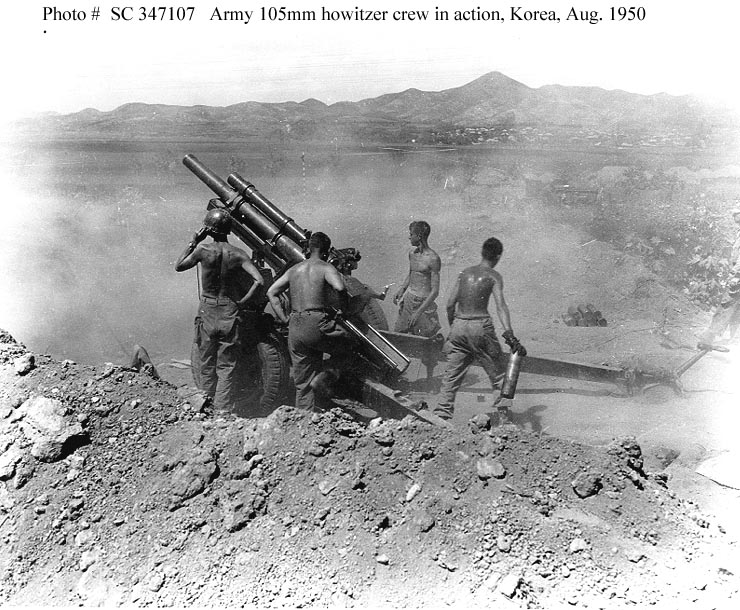
August 4 to September 18, 1950 Battle of the Pusan Perimeter, ROK:
The Battle of Pusan Perimeter took place in the fall of 1950 and was one of the first major conflicts of the Korean War.

The North Korean army was invading South Korea and attacking the forces sent by the United Nations. These troops were composed of those sent by not only the United States and Great Britain but also South Korea, the Netherlands, Canada, New Zealand and Australia.

Eventually, though, the 140,000 United Nations troops were facing defeat at the hands of 98,000 North Koreans. They won the battle during their final stand.

During the battle, the North Koreans managed to drive back the United Nations forces to the Pusan Perimeter. The Pusan Perimeter is a 140-mile stretch of land on the Korean Peninsula that is also home to Pusan, a port.

The North Koreans attacked troops stationed there for six entire weeks, while also
source
striking in other locations. Regardless, the United Nations troops stood firm and managed to outlast the multiple attacks. It was very helpful the United Nations had access to the port of Pusan, which enabled them to ship in extra manpower, equipment and more.


Eventually, after waiting them out, the North Koreans retreated.

The Battle of Pusan Perimeter was the furthest South the North Koreans would make it during the war.
U.S. Army history Establishing the Pusan Perimeter

Good News: "USS Gerald R. Ford Completes First Arrested Landing and Launch"

U.S. Navy's new aircraft carrier makes progress, as reported by the Navy PAO's in USS Gerald R. Ford Completes First Arrested Landing and Launch
Less than one week after Pres. Donald J. Trump commissioned the U.S. Navy's newest aircraft carrier, USS Gerald R. Ford (CVN 78) launched and recovered its first fixed-wing aircraft July 28, 2017, off the coast of Virginia. The first arrested landing, or "trap", occurred at 3:10 PM (EST) and the first catapult launch happened at 4:37 PM (EST). Lt. Cmdr. Jamie Struck of Tallmedge, Ohio piloted the F/A-18F Superhornet from Air Test and Evaluation Squadron (VX) 23 based at Patuxent River, Maryland. The Superhornet caught the number two arresting wire of Ford's advanced arresting gear (AAG) system and was launched from catapult one using the electromagnetic launch system (EMALS). "Today, USS Gerald R. Ford made history with the successful landing and launching of aircraft from VX-23 using the AAG and EMALS," said Adm. Phil Davidson, commander, U.S. Fleet Forces. "Great work by the Ford team and all the engineers who have worked hard to get the ship ready for this milestone." "AAG and EMALS have been successfully tested ashore at Lakehurst, New Jersey, but this is the first shipboard recovery and launch of a fleet fixed wing aircraft," said Capt. Rick McCormack, Ford's commanding officer. "My team has worked closely with industry, Naval Air Systems Command (NAVAIR), and the flight test community to make this historic event in Naval aviation happen. I am very proud of my crew."


Saturday, July 29, 2017

Saturday Is Old Radio Day: Bob and Ray

A couple of short shows from Bob and Ray stars of radio, etc

Wally Ballou with Professor Groggins:


"Welcome Aboard the Orlop" part of the saga of "Mary Backstayge, Noble Wife"


Any similarity with Midrats is accidental.

Friday, July 28, 2017

Friday Film: "USS Wakefield: Story of a Transport" (1944)

An unsung but important necessity of war when you are separated from the rest of the world by oceans (thank goodness):


Thursday, July 27, 2017

Shipping Insurance Fraud? A Great Mystery Story "The Hijacking of a $100 Million Supertanker"

Fascinating read at BloombergBusinesWeek The Hijacking of a $100 Million Supertanker
photo by Chief Intelligence Specialist Raynald Lenieux, USN
"The Hijacking of the Brillante Virtuoso: A Mysterious Assault. An Unsolved Murder. And a Ship That Hasn't Given Up All Its Secrets"
by Kit Chellel and Matthew Campbell
Just read it.

It's a throwback to the old days when some older ships "mysteriously" sank.

Been a couple of movies along these lines, The Wreck of the Mary Deare and Claim.

Hat tip: Saturn 5

Tuesday, July 25, 2017

"Last of the 8-inch Cruiser Guns"

Nice little article from USNI's Naval History by CDR Tyrone G. Martin, USN (ret) about heavy cruiser guns, especially the
Last of the 8-inch Cruiser Guns
Heavy cruisers were a part of the U.S. Navy for about 50 years, until the late 1970s.
Almost all of them were armed with nine 8-inch/55-caliber guns of several different types whose projectiles were fired using bagged powder charges. With the outbreak of World War II in Europe, four cruisers of the Baltimore (CA-68) class were immediately ordered. A total of 24 ultimately would be ordered, with 14 entering service. Combat experience resulted in modifications, which were reflected in the Oregon City (CA-122) class, whose superstructure was more concentrated to widen the antiaircraft batteries’ arcs of fire. Three of the ten cruisers ordered were completed and commissioned.

Shortly after the Oregon Citys were ordered, a startlingly different 8-inch/55 gun became available, one that used semi-fixed ammunition and could repeat firing cycles without human assistance. This was the Mark 16, which required an expansion of the Oregon City design. Twelve ships were programmed, but with the war’s end, only the three hulls well underway were completed: the Des Moines (CA-134), Salem (CA-139), and Newport News (CA-148). These would be the last 8-inch-gun cruisers built by any navy.
Newport News was around for the last legs of the Vietnam War, arriving, I believe, soon after the North Vietnamese Army rolled south in the 1972 "Easter Invasion."

One of the lessons that seems to have been learned out of that was that semi-fixed ammunition for the
8"/55 guns was somewhat of a logistical issue for the force - there was a scarcity of it in theater - and ammunition ships entering the waters off Vietnam had to take on the remaining 8"/55 load of ammunition ships leaving the area to load out other munitions in Subic Bay. As I recall, there was a requirement to document loads of that ammo by message to keep the fleet higher ups in the know on where Newport News 8" was and in what quantities.

In the larger logistical sense it points out the problem of having to cater to one ship's needs while most of the rest of the NGFS force was using 5"/38 or 5"/54 or even 6"/47 rounds.

Standard ammo types make logistics easier.

Newport News was a beautiful ship, though.

Photos from here - USS Newport News Official Website

Saturday, July 22, 2017

On Midrats 23 July 2017 - Episode 394: A Midsummer's Thucydides with Kori Schake

Please join us at 5pm EDT on 23 July 2017 for Midrats Episode 394: A Midsummer's Thucydides with Kori Schake:


For a man who last walked the Earth almost 2,500 years ago, 2017 has been a great year for Thucydides.

The old Greek historian is having quite a renaissance. Of course, he's always been there, but the Whitehouse is interested in him, so everyone else is as well, especially with regard to the often mentioned, "Thucydides’s Trap."

For those not familiar with his work, The History Of The Peloponnesian War, in her article, "The Summer of Misreading Thucydides" earlier this month in The Atlantic, our guest this week outlines where people should focus.


Thucydides is often associated with hard-edged realism, as in the quote “the strong do what they will, the weak suffer what they must.” ... But it’s important to remember that those views are one thread in a tapestry—Thucydides recounts the views of the war's combatants, but he doesn’t endorse them. In fact, the states that profess those hard-edged sentiments are plunged into ruin by them.

When and how they take the plunge has, at the crucial moments of decision, everything to do with rambunctious crowds or ambitious usurpers of their betters egging on policies that result in the destruction of their state’s power.

For this and related topics, please join us this Sunday with our guest
Kori Schake for the full hour.

Kori is a research fellow at the Hoover Institution. She teaches Thinking About War at Stanford, and with Jim Mattis edited Warriors and Citizens: American Views on Our Military. Her book on the Anglo-American hegemonic transition comes out from Harvard in the fall.
Join us live if you can or pick the show up later by clicking here. Or you can pick the show up later by clicking that link or by visiting either our iTunes page or our Stitcher page.

Saturday Is Old Radio Day: Nick Carter, Master Detective "The Case of the Persistant Beggers" (1947)

From the pages of dime novels to the radio - detective Nick Carter with his friends -


Wednesday, July 19, 2017

From the U.S. Navy Office of Naval Research: Updating Flashing Light Transmission to "Text Conversion"

Faster tansmission of needed information during periods of electronic emission control using the old Navy signal lamps - but with a modern twist as described in this ONR press release:
The signal lamp aboard the guided-missile destroyer USS Stout flashed fast light bursts to the USS Monterey, located pierside 250 feet away. Aboard the Monterey, a guided-missile cruiser, its own signal lamp used a mounted GoPro camera to receive the incoming Morse code—which then was converted into text appearing on an accompanying handheld device.

Peering at the device connected to the Monterey’s signal lamp, Scott Lowery chuckled as one word popped up on the screen: “random.”

“I asked them to text me something random, so they signaled the word ‘random,’ ” said Lowery, an engineer at Naval Surface Warfare Center (NSWC) Panama City, Florida. “Simple, but it shows the system is working.”

Lowery recently was at Naval Station Norfolk, Virginia, conducting a demonstration of the Flashing Light to Text Converter (FLTC)—a ship-to-ship communication system that he’s helped develop to enable U.S. Navy vessels to use their signal lamps to text message each other.

Sponsored by the Office of Naval Research’s (ONR) TechSolutions program, FLTC features (1) a camera that can be mounted atop a signal lamp and hone in on Morse code bursts from another lamp within view, and (2) a hand-held device or laptop computer connected to this camera to display text messages sent and received.

Linking the commercially available camera and device is a proprietary converter that uses specialized software algorithms to process incoming light flashes into high-frequency signals—and then convert those into text messages. To reply to a text, a Sailor can use the device to type a response that is sent back as a Morse code message via specially powered LED lights that flash automatically.

Since World War II, the process for sending messages using signal lamps has barely changed. It requires someone trained in Morse code to operate the lamp’s shutter by hand, and involves a lot of time receiving, decoding, and replying to messages. Using FLTC, Sailors can quickly and easily type and send messages—with fewer mistakes—even if they don’t know Morse code.

“The best part of this flashing light converter is how easy it is for Sailors to use,” said Lowery. “It’s very intuitive because it mirrors the messaging systems used on iPhones. You just type your message and send it with the push of a button.”

FLTC also would be useful in certain “communications-denied” scenarios at sea where satellite communications is risky or unavailable, said ONR Command Master Chief Matt Matteson.

“FLTC could be extremely valuable if a ship’s main communications go down or if it needs to maintain a low electronic signature to avoid detection by an adversary,” he said.
Video:

Tuesday, July 18, 2017

Oil and Gas in the South China Sea - Bones of Contention

This might be behind the paywall at the Oil & Gas Journal, but it's an interesting problem surfacing soon in the South China Sea Plan for Philippines bid round escalates drama with China:
Territorial conflict intensifies in the South China Sea.

The Philippines government plans to resume oil, gas, and coal licensing of acreage that includes offshore areas over which China asserts control.
A year ago, in a case brought by the Philippines, the Permanent Court of Arbitration rejected Chinese claims to waters the island nation says lie within its exclusive economic zone.
China’s determination to ignore the ruling will be tested by a bidding round in December.
On July 13, Ismael Ocampo, director of the Department of Energy’s Resource Development Bureau, told reporters in Manila that the offering will include blocks on Rector Bank, the Philippines designation of Reed Bank.
China says history shows Reed Bank is Chinese. The arbitration court
disagreed.
The Philippines suspended exploration in the disputed area late in 2014 but craves domestically produced energy, now far below its expanding requirements.
***
... Vietnam’s largely unchallenged exploration in disputed waters might have emboldened Duterte to test Beijing’s resolve with the bidding round.
Or maybe Duterte felt obliged, for political reasons, to address his allegations of bullying.
In May, Duterte said that at a meeting of the Association of South East Asian Nations, Chinese President Xi Jingping warned him not to implement the arbitration ruling, saying doing so would provoke war ...
Xi, according to Duterte, insisted China would explore for oil and gas where the Philippines government now says it will sanction drilling.
At this stage in an escalating drama, there’s no clear script plotting a tidy finale.
Earlier coverage of this issue at The Diplomat by Jeremy Maxey Philippines Faces Post-Arbitration Dilemma Over Reed Bank:
Considering the risks and tradeoffs, Beijing may instead choose to engage in a potentially less destabilizing option—presenting Manila with a choice between China’s unilateral exploration of Reed Bank or joint development on China’s terms. This could prove a compelling proposition for Manila since Reed Bank (Recto Bank), located approximately 80 nautical miles northwest of Palawan within the Philippine Exclusive Economic Zone (EEZ) but claimed by China, is thought to hold one of the highest concentration of undiscovered resources within the SCS—764 million to 2.2 billion barrels of oil and 7.6 Tcf to 22 Tcf of natural gas.

While Reed Bank’s potential resources are modest relative to China’s massive energy consumption, the area is essential to Philippine future
energy security. In particular, the Philippines is looking to develop Reed Bank to replace the Malampaya gas field, also located offshore west of Palawan, that is expected to be depleted by 2024-2030. The Malampaya gas-to-power project, led by Royal Dutch Shell, currently supplies about 30 percent of the electricity demand of Luzon, the largest and most populous island in the Philippines.

Indeed, geography and economics suggest that the most viable option to monetize Reed Bank gas is the Philippine market. This implies that although China may flagrantly engage in unilateral exploration, it is highly unlikely to unilaterally develop the gas without first locking in the Philippine market. This is politically impossible without Philippine participation, which means that joint development may be the only pragmatic way forward. Manila’s only other option is to hold an offshore licensing round with the expectation of developing Reed Bank through a consortium of international oil majors over Chinese objections.

Saturday, July 15, 2017

Saturday Is Old Radio Day: Mystery Is My Hobby - "Buried Treasure Map"

A fun little show that doesn't seem to take itself too seriously - sort of like a . . . hobby?


I think the show was on in the mid- 1940's. They did love that organ music intro back then.

Friday, July 14, 2017

On Midrats 16 July 2017 - Episode 393: Building the right carrier; heavy, medium, or light with Tal Manvel

Please join us at 5pm (EDT) for Midrats Episode 393: Building the right carrier; heavy, medium, or light with Tal Manvel
U.S. Navy/PH3 Alta I. Cutler 2002

As the USS FORD (CVN 78) delivered to the US Navy, the Royal Navy’s new HMS QUEEN ELIZABETH underway, and many nations either building or wanting built carriers of a variety of sized, the second decade of the 21st Century is an exciting time for those who are interested in carrier design.

With the Senate recently dedicating $30 million to the study of a light carrier design, the discussion has begun again about what is the right size carrier for the requirements of our navy.

We have the perfect guest for the entire hour to discuss, returning guest J. Talbot Manvel, Captain, USN (Ret).

Tal teaches at the US Naval Academy. While on active duty he served as an engineering
officer specializing in aircraft carriers. He served on three, assisted in building two, and ended his career developing the new FORD class of aircraft carriers. He graduated from the U.S. Naval Academy in 1972, earned a masters in mechanical engineering from the Naval Postgraduate School in 1979, a masters in liberal arts from St John’s College in 2008.

J. Talbot Manvel, Captain, USN (Ret) teaches at the US Naval Academy. Wile on active duty he served as an engineering officer specializing in aircraft carriers. He served on three, assisted in building two, and ended his career developing the new FORD class of aircraft carriers. He graduated from the U.S. Naval Academy in 1972, earned a masters in mechanical engineering from the Naval Postgraduate School in 1979, a masters in liberal arts from St John’s College in 2008.
Join us live if you can or pick the show up later by clicking here. Or you can pick the show up later by clicking that link or by visiting either our iTunes page or our Stitcher page.

Friday Film; "The Silent Service" (1946)

Wednesday, July 12, 2017

Yes, It's "I, Pencil" Time Again

First discussed this article some time ago, but when the political class begins discussing how to work their "economic magic" in the marketplace - whether pencils or medical matters, it's good to point out again some underlying issues with their efforts. You may recall that ordinary hard-working Americans did not create the last big economic disaster - that delight was part of the "smartest people in the room" syndrome, which some of our "leadership" can't seem to remember.

You might read Reckless Endangerment: How Outsized Ambition, Greed, and Corruption Created the Worst Financial Crisis of Our Time by Gretchen Morgenson and Joshua Rosner if you need a refresher. Well, not so much a refresher as a slap in the face wake-up call and anger generator. It's amazing what things politicians will do if it's not their money at stake.

In that vein, here is "I, Pencil" thanks to Lawrence W. Reed and to FEE.org where the article was originally published:

I, Pencil

“Eloquent. Extraordinary. Timeless. Paradigm-shifting. Classic. Half a century after it first appeared, Leonard Read’s ‘I, Pencil’ still evokes such adjectives of praise. Rightfully so, for this little essay opens eyes and minds among people of all ages. Many first-time readers never see the world quite the same again.” ~ Lawrence W. Reed
Hundreds of thousands of Americans of all ages continue to enjoy this simple and beautiful explanation of the miracle of the “invisible hand” by following the production of an ordinary pencil. Read shows that none of us knows enough to plan the creative actions and decisions of others.
Leonard E. Read (1898–1983) established the Foundation for Economic Education in 1946. For the next 37 years he served as FEE’s president and labored tirelessly to promote and advance liberty. He was a natural leader who, at a crucial moment in American history, roused the forces defending individual freedom and private property.
His life is a testament to the power of ideas. As President Ronald Reagan wrote: “Our nation and her people have been vastly enriched by his devotion to the cause of freedom, and generations to come will look to Leonard Read for inspiration.”
Read was the author of 29 books and hundreds of essays. “I, Pencil,” his most famous essay, was first published in 1958. Although a few of the manufacturing details and place names have changed, the principles endure.
***
Introduction by Lawrence W. Reed
Eloquent. Extraordinary. Timeless. Paradigm-shifting. Classic. Six decades after it first appeared, Leonard Read’s “I, Pencil” evokes such adjectives of praise. Rightfully so, for this little essay opens eyes and minds among people of all ages. Many first-time readers never see the world quite the same again.
Ideas are most powerful when they’re wrapped in a compelling story. Leonard’s main point—economies can hardly be “planned” when not one soul possesses all the know-how and skills to produce a simple pencil—unfolds in the enchanting words of a pencil itself. Leonard could have written “I, Car” or “I, Airplane,” but choosing those more complex items would have muted the message. No one person—repeat, no one, no matter how smartor how many degrees follow his name—could create from scratch a small, everyday pencil, let alone a car or an airplane.
This is a message that humbles the high and mighty. It pricks the inflated egos of those who think they know how to mind everybody else’s business. It explains in plain language why central planning is an exercise in arrogance and futility, or what Nobel laureate and Austrian economist F. A. Hayek aptly termed “the pretence of knowledge.”
Indeed, a major influence on Read’s thinking in this regard was Hayek’s famous 1945 article, “The Use of Knowledge in Society.” In demolishing the spurious claims of the socialists of the day, Hayek wrote,“This is not a dispute about whether planning is to be done or not. It is a dispute as to whether planning is to be done centrally, by one authority for the whole economic system, or is to be divided among many individuals.”
Maximilien Robespierre is said to have blessed the horrific French Revolution with this chilling declaration: “On ne saurait pas faire une omelette sans casser des oeufs.” Translation: “One can’t expect to make an omelet without breaking eggs.” A consummate statist who worked tirelessly to plan the lives of others, he would become the architect of the Revolution’s bloodiest phase—the Reign of Terror of 1793–94.
Robespierre and his guillotine broke eggs by the thousands in a vain effort to impose a utopian society with government planners at the top and everybody else at the bottom. That French experience is but one example in a disturbingly familiar pattern. Call them what you will—socialists, interventionists, collectivists, statists—history is littered with their presumptuous plans for rearranging society to fit their vision of the common good, plans that always fail as they kill or impoverish other people in the process. If socialism ever earns a final epitaph, it will be this: Here lies a contrivance engineered by know-it-alls who broke eggs with abandon but never, ever created an omelet.
None of the Robespierres of the world knew how to make a pencil, yet they wanted to remake entire societies. How utterly preposterous, and mournfully tragic! But we will miss a large implication of Leonard Read’s message if we assume it aims only at the tyrants whose names we all know. The lesson of “I, Pencil” is not that error begins when the planners plan big. It begins the moment one tosses humility aside, assumes he knows the unknowable, and employs the force of the State against peaceful individuals. That’s not just a national disease. It can be very local indeed.
In our midst are people who think that if only they had government power on their side, they could pick tomorrow’s winners and losers in the marketplace, set prices or rents where they ought to be, decide which forms of energy should power our homes and cars, and choose which industries should survive and which should die. They should stop for a few moments and learn a little humility from a lowly writing implement.
While “I, Pencil” shoots down the baseless expectations for central planning, it provides a supremely uplifting perspective of the individual. Guided by Adam Smith’s “invisible hand” of prices, property, profits, and incentives, free people accomplish economic miracles of which socialist theoreticians can only dream. As the interests of countless individuals from around the world converge to produce pencils without a single “master mind,” so do they also come together in free markets to feed, clothe, house, educate, and entertain hundreds of millions of people at ever higher levels. With great pride, FEE publishes this new edition of “I, Pencil." Someday there will be a centennial edition, maybe even a millennial one. This essay is truly one for the ages.
—Lawrence W. Reed, President
Foundation for Economic Education

***

I, Pencil

By Leonard E. Read
I am a lead pencil—the ordinary wooden pencil familiar to all boys and girls and adults who
can read and write.
Writing is both my vocation and my avocation; that’s all I do.
You may wonder why I should write a genealogy. Well, to begin with, my story is interesting. And, next, I am a mystery —more so than a tree or a sunset or even a flash of lightning. But, sadly, I am taken for granted by those who use me, as if I were a mere incident and without background. This supercilious attitude relegates me to the level of the commonplace. This is a species of the grievous error in which mankind cannot too long persist without peril. For, the wise G. K. Chesterton observed, “We are perishing for want of wonder, not for want of wonders.”
I, Pencil, simple though I appear to be, merit your wonder and awe, a claim I shall attempt to prove. In fact, if you can understand me—no, that’s too much to ask of anyone—if you can become aware of the miraculousness which I symbolize, you can help save the freedom mankind is so unhappily losing. I have a profound lesson to teach. And I can teach this lesson better than can an automobile or an airplane or a mechanical dishwasher because—well, because I am seemingly so simple.
Simple? Yet, not a single person on the face of this earth knows how to make me. This sounds fantastic, doesn’t it? Especially when it is realized that there are about one and one-half billion of my kind produced in the U.S.A. each year.
Pick me up and look me over. What do you see? Not much meets the eye—there’s some wood, lacquer, the printed labeling, graphite lead, a bit of metal, and an eraser.
Innumerable Antecedents
Just as you cannot trace your family tree back very far, so is it impossible for me to name and explain all my antecedents. But I would like to suggest enough of them to impress upon you the richness and complexity of my background.
My family tree begins with what in fact is a tree, a cedar of straight grain that grows in Northern California and Oregon. Now contemplate all the saws and trucks and rope and the countless other gear used in harvesting and carting the cedar logs to the railroad siding. Think of all the persons and the numberless skills that went into their fabrication: the mining of ore, the making of steel and its refinement into saws, axes, motors; the growing of hemp and bringing it through all the stages to heavy and strong rope; the logging camps with their beds and mess halls, the cookery and the raising of all the foods. Why, untold thousands of persons had a hand in every cup of coffee the loggers drink!
The logs are shipped to a mill in San Leandro, California. Can you imagine the individuals who make flat cars and rails and railroad engines and who construct and install the communication systems incidental thereto? These legions are among my antecedents.
Consider the millwork in San Leandro. The cedar logs are cut into small, pencil-length slats less than one-fourth of an inch in thickness. These are kiln dried and then tinted for the same reason women put rouge on their faces. People prefer that I look pretty, not a pallid white. The slats are waxed and kiln dried again. How many skills went into the making of the tint and the kilns, into supplying the heat, the light and power, the belts, motors, and all the other things a mill requires? Sweepers in the mill among my ancestors? Yes, and included are the men who poured the concrete for the dam of a Pacific Gas & Electric Company hydroplant which supplies the mill’s power!
Don’t overlook the ancestors present and distant who have a hand in transporting sixty carloads of slats across the nation.
Once in the pencil factory—$4,000,000 in machinery and building, all capital accumulated by thrifty and saving parents of mine—each slat is given eight grooves by a complex machine, after which another machine lays leads in every other slat, applies glue, and places another slat atop—a lead sandwich, so to speak. Seven brothers and I are mechanically carved from this “wood-clinched” sandwich.
My “lead” itself—it contains no lead at all—is complex. The graphite is mined in Ceylon [Sri Lanka]. Consider these miners and those who make their many tools and the makers of the paper sacks in which the graphite is shipped and those who make the string that ties the sacks and those who put them aboard ships and those who make the ships. Even the lighthouse keepers along the way assisted in my birth—and the harbor pilots.
The graphite is mixed with clay from Mississippi in which ammonium hydroxide is used in the refining process. Then wetting agents are added such as sulfonated tallow—animal fats chemically reacted with sulfuric acid. After passing through numerous machines, the mixture finally appears as endless extrusions—as from a sausage grinder—cut to size, dried, and baked for several hours at 1,850 degrees Fahrenheit. To increase their strength and smoothness the leads are then treated with a hot mixture which includes candelilla wax from Mexico, paraffin wax, and hydrogenated natural fats.
My cedar receives six coats of lacquer. Do you know all the ingredients of lacquer? Who would think that the growers of castor beans and the refiners of castor oil are a part of it? They are. Why, even the processes by which the lacquer is made a beautiful yellow involve the skills of more persons than one can enumerate!
Observe the labeling. That’s a film formed by applying heat to carbon black mixed with resins. How do you make resins and what, pray, is carbon black?
My bit of metal—the ferrule—is brass. Think of all the persons who mine zinc and copper and those who have the skills to make shiny sheet brass from these products of nature. Those black rings on my ferrule are black nickel. What is black nickel and how is it applied? The complete story of why the center of my ferrule has no black nickel on it would take pages to explain.
Then there’s my crowning glory, inelegantly referred to in the trade as “the plug,” the part man uses to erase the errors he makes with me. An ingredient called “factice” is what does the erasing. It is a rubber-like product made by reacting rapeseed oil from the Dutch East Indies [Indonesia] with sulfur chloride. Rubber, contrary to the common notion, is only for binding purposes. Then, too, there are numerous vulcanizing and accelerating agents. The pumice comes from Italy; and the pigment which gives “the plug” its color is cadmium sulfide.
No One Knows
Does anyone wish to challenge my earlier assertion that no single person on the face of this earth knows how to make me?
Actually, millions of human beings have had a hand in my creation, no one of whom even knows more than a very few of the others. Now, you may say that I go too far in relating the picker of a coffee berry in far-off Brazil and food growers elsewhere to my creation; that this is an extreme position. I shall stand by my claim. There isn’t a single person in all these millions, including the president of the pencil company, who contributes more than a tiny, infinitesimal bit of know-how. From the standpoint of know-how the only difference between the miner of graphite in Ceylon and the logger in Oregon is in the type of know-how. Neither the miner nor the logger can be dispensed with, any more than can the chemist at the factory or the worker in the oil field—paraffin being a by-product of petroleum.
Here is an astounding fact: Neither the worker in the oil field nor the chemist nor the digger of graphite or clay nor any who mans or makes the ships or trains or trucks nor the one who runs the machine that does the knurling on my bit of metal nor the president of the company performs his singular task because he wants me. Each one wants me less, perhaps, than does a child in the first grade. Indeed, there are some among this vast multitude who never saw a pencil nor would they know how to use one. Their motivation is other than me. Perhaps it is something like this: Each of these millions sees that he can thus exchange his tiny know-how for the goods and services he needs or wants. I may or may not be among these items.
No Master Mind
There is a fact still more astounding: The absence of a master mind, of anyone dictating or forcibly directing these countless actions which bring me into being. No trace of such a person can be found. Instead, we find the Invisible Hand at work. This is the mystery to which I earlier referred.
It has been said that “only God can make a tree.” Why do we agree with this? Isn’t it because we realize that we ourselves could not make one? Indeed, can we even describe a tree? We cannot, except in superficial terms. We can say, for instance, that a certain molecular configuration manifests itself as a tree. But what mind is there among men that could even record, let alone direct, the constant changes in molecules that transpire in the life span of a tree? Such a feat is utterly unthinkable!
I, Pencil, am a complex combination of miracles: a tree, zinc, copper, graphite, and so on. But to these miracles which manifest themselves in Nature an even more extraordinary miracle has been added: the configuration of creative human energies—millions of tiny know-hows configurating naturally and spontaneously in response to human necessity and desire and in the absence of any human masterminding! Since only God can make a tree, I insist that only God could make me. Man can no more direct these millions of know-hows to bring me into being than he can put molecules together to create a tree.
The above is what I meant when writing, “If you can become aware of the miraculousness which I symbolize, you can help save the freedom mankind is so unhappily losing.” For, if one is aware that these know-hows will naturally, yes, automatically, arrange themselves into creative and productive patterns in response to human necessity and demand— that is, in the absence of governmental or any other coercive master-minding—then one will possess an absolutely essential ingredient for freedom: a faith in free people. Freedom is impossible without this faith.
Once government has had a monopoly of a creative activity such, for instance, as the delivery of the mails, most individuals will believe that the mails could not be efficiently delivered by men acting freely. And here is the reason: Each one acknowledges that he himself doesn’t know how to do all the things incident to mail delivery. He also recognizes that no other individual could do it. These assumptions are correct. No individual possesses enough know-how to perform a nation’s mail delivery any more than any individual possesses enough know-how to make a pencil. Now, in the absence of faith in free people—in the unawareness that millions of tiny know-hows would naturally and miraculously form and cooperate to satisfy this necessity—the individual cannot help but reach the erroneous conclusion that mail can be delivered only by governmental “masterminding.”
Testimony Galore
If I, Pencil, were the only item that could offer testimony on what men and women can accomplish when free to try, then those with little faith would have a fair case. However, there is testimony galore; it’s all about us and on every hand. Mail delivery is exceedingly simple when compared, for instance, to the making of an automobile or a calculating machine or a grain combine or a milling machine or to tens of thousands of other things. Delivery? Why, in this area where men have been left free to try, they deliver the human voice around the world in less than one second; they deliver an event visually and in motion to any person’s home when it is happening; they deliver 150 passengers from Seattle to Baltimore in less than four hours; they deliver gas from Texas to one’s range or furnace in New York at unbelievably low rates and without subsidy; they deliver each four pounds of oil from the Persian Gulf to our Eastern Seaboard—halfway around the world—for less money than the government charges for delivering a one-ounce letter across the street!
The lesson I have to teach is this: Leave all creative energies uninhibited. Merely organize society to act in harmony with this lesson. Let society’s legal apparatus remove all obstacles the best it can. Permit these creative know-hows freely to flow. Have faith that free men and women will respond to the Invisible Hand. This faith will be confirmed. I, Pencil, seemingly simple though I am, offer the miracle of my creation as testimony that this is a practical faith, as practical as the sun, the rain, a cedar tree, the good earth.
***
Afterword
By Milton Friedman, Nobel Laureate, 1976
Leonard Read’s delightful story, “I, Pencil,” has become a classic, and deservedly so. I know of no other piece of literature that so succinctly, persuasively, and effectively illustrates the meaning of both Adam Smith’s invisible hand—the possibility of cooperation without coercion—and Friedrich Hayek’s emphasis on the importance of dispersed knowledge and the role of the price system in communicating information that “will make the individuals do the desirable things without anyone having to tell them what to do.”
We used Leonard’s story in our television show, “Free to Choose,” and in the accompanying book of the same title to illustrate “the power of the market” (the title of both the first segment of the TV show and of chapter one of the book). We summarized the story and then went on to say:
“None of the thousands of persons involved in producing the pencil performed his task because he wanted a pencil. Some among them never saw a pencil and would not know what it is for. Each saw his work as a way to get the goods and services he wanted—goods and services we produced in order to get the pencil we wanted. Every time we go to the store and buy a pencil, we are exchanging a little bit of our services for the infinitesimal amount of services that each of the thousands contributed toward producing the pencil.
“It is even more astounding that the pencil was ever produced. No one sitting in a central office gave orders to these thousands of people. No military police enforced the orders that were not given. These people live in many lands, speak different languages, practice different religions, may even hate one another—yet none of these differences prevented them from cooperating to produce a pencil. How did it happen? Adam Smith gave us the answer two hundred years ago.”
“I, Pencil” is a typical Leonard Read product: imaginative, simple yet subtle, breathing the love of freedom that imbued everything Leonard wrote or did. As in the rest of his work, he was not trying to tell people what to do or how to conduct themselves. He was simply trying to enhance individuals’ understanding of themselves and of the system they live in.
That was his basic credo and one that he stuck to consistently during his long period of service to the public—not public service in the sense of government service. Whatever the pressure, he stuck to his guns, refusing to compromise his principles. That was why he was so effective in keeping alive, in the early days, and then spreading the basic idea that human freedom required private property, free competition, and severely limited government.


This article was originally published on FEE.org. Read the original article.

Tuesday, July 11, 2017

Surface Warfare: "Command" Opportunity for U.S. Navy Lieutenants and Lieutenant Commanders

Per-41 is looking for a few good LTs and LCDRs as set out in their newsletter here
U.S. Navy by MC2 Joshua Scott
NEW EARLY COMMAND OPPORTUNITIES!!
Early Command is an experience that is highly valued by both the Surface Warfare community and those who serve as Commanding Officers in Mine Countermeasures (MCM) or Patrol Coastal (PC) ships. Because Early Command provides some of our finest Surface Warfare Officers with an invaluable experience leading sailors in crucial missions across the world, we’ve teamed up with Navy Expeditionary Combat Command to create more opportunities for top performing Junior Officers to serve as Afloat Commanding Officers.

Beginning in November 2017, officers will have an opportunity to screen for O3 / O4 Command Afloat positions in MKVI Patrol Boats. Lieutenants who have completed their 2nd Division Officer tour will be eligible to command a MKVI Patrol Boat. Post-Department Head Lieutenants and Lieutenant Commanders will be eligible to serve as Company Commander for a Company of three MKVI Patrol Boats.

MKVI Patrol Boats are the newest platform in the NECC inventory and are based out of Little Creek, VA, and San Diego, CA, and deployed to Bahrain and Guam. Over 84 feet in length, the MKVI is a highly capable platform whose primary mission is to provide capability to persistently patrol littoral areas beyond sheltered harbors and bays for the purpose of force protection of friendly and coalition forces and critical infrastructure. These missions include: security force assistance (SFA); high value unit (HVU) shipping escort; visit, board, search, and seizure (VBSS) operations; and theater security cooperation (TSC). The Mark VI program of record is for a total of 12 boats -- six boats have been delivered to the fleet and six more are to be delivered by the end of the 2nd quarter of fiscal year 2018.

Screening for these new opportunities will be conducted at the November 2017 Early Command Board. Previous Early Command opportunities in MCM and PC ships are still available. These more traditional opportunities for Command Afloat provide significant leadership and operational experience while carrying out missions in C4F, C5F, and C7F. While maintaining readiness for a full spectrum of capabilities, MCMs and PCs execute TSC, HVU escort, and Counter Illicit Trafficking (CIT) operations.
***
Info on how to apply is in the newsletter.

Basic info on the Mark VI boats is available here:
Navy Photo by MCCS Joe Kane

General Characteristics, MK VI Patrol Boat
Propulsion: Installed Power: 5,200 HP - 2 x MTU 16V2000 M94 and 2 x Hamilton HM651 Water Jets
Length: LOA: 84.8'
Beam: 20.5'
Displacement: 170,000 lbs (full load displacement)
Draft: less than 5 ft
Speed: Cruise: 25+ Knots; Sprint: 35+ Knots
Range: 600+ Nautical Miles
Crew: 2 Crews, 5 Personnel each, plus 8 Person Visit, Board, Search and Seizure (VBSS) Team (18 Total)
Armament: MK 50 (.50 cal) Gun Weapon System (Qty 4); MK 38 Mod 2 (25 mm) Gun Weapon System (Qty 2); MK 44 Machine Gun System; Multiple Crew Served Weapon & Long Range Acoustic Hailing Device (Qty 6)
I don't know, but if I were a young JO looking for something other than a staff weenie billet for a shore tour, I'd be looking at this - never met a small boy skipper who didn't enjoy the heck out of his tour.

What we need is more boats and more opportunities for young officers to get their experience underway and in charge.

UPDATE: CIMSEC had a nice 2016 article on these boats MK VI: THE NEXT GENERATION OF INTERDICTION