VertRep

VertRep

Saturday, December 16, 2006

Sunday Ship History: Radar Picket Ships and Submarines.


Scouts, whether relying on eyes and ears or electronic devices, have to get out front of that force for which they are scouting. As the use of air search and surface search radar spread during World War II, the job of protecting the fleet began to depend more and more on early detection of threats, the role of some ships became that of forming an "arc of electrons" in advance of the fleet, with each ship providing an overlapping semi-circle of radar coverage. If enemy forces intruded into the zone of coverage, the main body of the fleet was warned. As noted here, the units initially assigned to this mission were "radar picket destroyers" and their use was highlighted during the invasion of Okinawa:
The Invasion of Okinawa, only 350 miles from the Japanese mainland, brought about a new threat to the U S Navy: the Kamikaze Airplanes. They were conceived by the Japanese to stop the Invasion of Okinawa by destroying the invasion fleet and cut off supplies to the troops on shore.

These planes carried only enough fuel to reach the fleet protecting the invasion forces. They were flying bombs, guided by a fanatic pilot determined to crash his plane into a ship. He believed this would insure his immortality and prevent the humility of a Japanese defeat. They were determined to keep our fleet away from their homeland.

This did indeed give Admiral Halsey and other fleet commanders one of their greatest concerns. The 2100 ton Destroyers, were formed in a half circle to the north, about 40 to 70 miles out, to establish an early warning, Radar Picket line. They were deployed in four ship formations and could pick up incoming enemy Kamikazes up to 150 miles north of Okinawa. They became the pigeons, or the first ships of the fleet to be reached by the attacking Kamikazes; and often the fighter planes didn't arrive to intercept and shoot them down before they reached the Destroyers on the picket line.
Which meant that the "radar pickets" paid a heavy price for being out front. An example of attacks on the radar pickets is found here in a description of an attack on the destroyers Drexler and Lowry. And more here concerning the destroyer Cassin Young:
April 1, 1945, was D-day at Okinawa. After escorting assault craft to the beaches and providing shore bombardment, Cassin Young took up the duties of radar picket ship, possibly the most hazardous duty performed by any warship during World War II. The picket's role was to provide early warning of impending air attacks to the main fleet. The ships assigned to the fifteen picket stations bore the brunt of over fifteen hundred kamikaze attacks in the weeks and months ahead. Radar Picket (RP) Stations 1,2, and 3 faced the worst of these attacks. On April 6 the Japanese launched the first of ten massed attacks, sending 355 kamikazes and 341 bombers towards Okinawa. Cassin Young was on duty at RP Station 3. The ship downed three "bogeys" (enemy planes) and picked up survivors from the destroyers assigned to RP Stations 1 and 2 (both were hit and sunk by kamikazes).

Cassin Young was then assigned to RP Station 1 where, on April 12, the ship came under massive attack. Six kamikazes were shot down, but one hit the mast and exploded fifty feet above the ship. One sailor was killed and 59 were wounded. After repairs, Cassin Young returned to Okinawa in July for further duty. Only individual kamikaze attacks were now occurring as the Japanese hoarded 10,000 aircraft to throw against the U.S. fleet in the upcoming invasion of Japan.

Cassin Young's most severe test came just sixteen days before Japan surrendered. At 3:26 a.m. on July 30, a single kamikaze crashed the starboard side of the main deck near the forward smoke stack. There was a tremendous explosion amidships and the ship lay dead in the water. The crew contained the damage, restored power in one engine and got the ship underway within twenty minutes. Casualties were 22 men dead and 45 wounded. Cassin Young was the last ship hit by kamikazes in the vicinity of Okinawa.
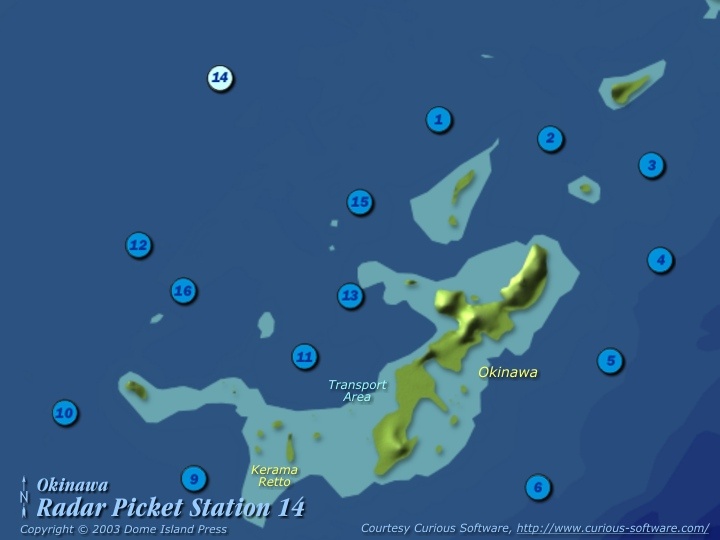
Ships lost to the kamikaze attacks included USS Pringle sunk with 69 hands lost (the map of the "picket stations" is from the Pringle site) and USS Little.

As the risks of using destroyers as radar pickets became evident, the Navy, anticipating that the situation would worsen should Japan itself become the target, thought up some alternatives, including the use of submarines as radar pickets, as set out in
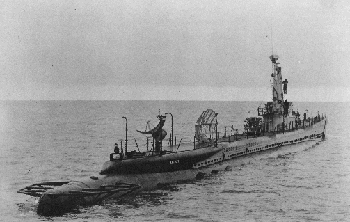
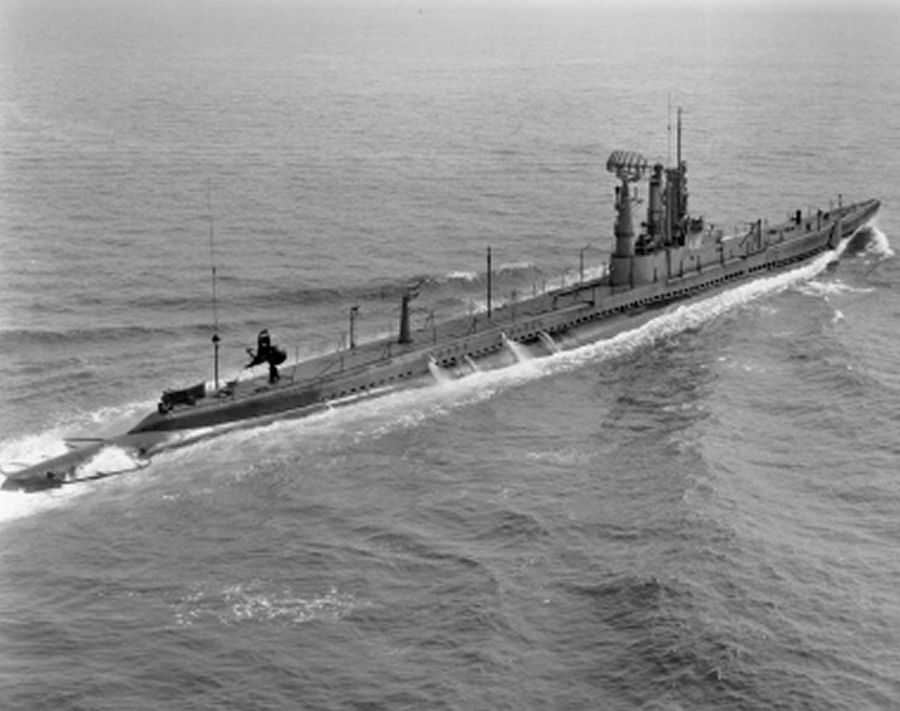


Cold War Curiosities. U.S. Radar Picket Submarines:
In the closing months of the Pacific war, Japan's desperate use of kamikaze aircraft - suicide planes - in its last-ditch defense of the home islands inflicted serious damage on the gathering Allied fleet. In attempting to counter this new threat during the invasion of Okinawa in April 1945, the U.S. Navy deployed lines of destroyers as "radar pickets" across the threat axis at some distance from their task group centers. Although these distant ships provided timely early warning of Japanese air attacks and significantly reduced the toll taken of major combatants, they themselves proved exceptionally vulnerable to kamikaze tactics, and twelve were sunk.

Since the anticipated invasion of Japan itself - scheduled for November 1945 - was expected to attract an even more intense kamikaze onslaught, the Navy high command sought to use submarines as less vulnerable radar pickets and in July 1945 ordered that 24 boats be prepared for that role by installing an approximation of a typical destroyer's radar and air-control capabilities. Since preliminary tests indicated that the standard submarine radar could not detect air targets above 10,000 feet or beyond 27,000 yards, and because there would need to be a combat information center (CIC) and appropriate communications onboard for controlling interceptors, the necessary full-blown conversions would have stretched into 1946, too late for their intended role in the invasion of Japan. As an interim measure, COMSUBPAC modified the SV air-search radars on USS Grouper (SS-214) and USS Finback (SS-230) for periscope mounting and operation at shallow submergence, and similar conversions of four other boats - including rudimentary CICs - had already begun when the Japanese surrendered in August 1945.
Get the idea? You take a submarine. You put it way out in front of the fleet and make it sit on the surface to detect enemy air raids. When the enemy is too close for comfort and safety, the submarine seeks the safety of deep water.

Even though WWII ended, the idea of using of submarines as radar pickets was not immediately abandoned. As reported here there was a lot of experimenting going on:
Faced with an abundance of new and relatively new submarines, the Navy experimented with hastily-converted surface ship radar equipment aboard submarines. REQUIN, after nearly a year in commission, and SPINAX (SS 489), while still on the ways at Portsmouth, became the first radar picket submarines in the US Navy. Envisioned to carry radar capable of controlling friendly aircraft defending against attacking enemy aircraft, directing outbound aircraft, it was envisioned that these radar picket submarines could also provide an early warning capability to the surface fleet.

Faced with problems that would last throughout the life of the radar picket program, REQUIN would encounter overcrowding problems (she retained all ten torpedo tubes until her MIGRAINE conversion) and flooding (the radar mounted on her stern would short out quite frequently), REQUIN was subjected to another more extensive conversion as a radar picket under the somewhat appropriately named MIGRAINE Program. Designated as SSR-481in January of 1948, REQUIN would lose her four stern torpedo tubes, with the space gained in the forward part of the stern room being converted into a full-blown air control center (REQUIN vets who served aboard during the radar picket days would refer to this as the combat information center). The remaining space, where the tubes themselves once were, was converted into berthing space for the extra crew. In addition, REQUIN lost the use of the two bottom tubes in the forward torpedo room, which were converted into storage lockers. Topside, the 40 mm cannon on the aft cigarette deck was removed, with the space being taken up by an SR-2 air search radar. In addition, REQUIN received a YE-3 fighter controller beacon, located above the after engine room on deck, as well as an SV-2 low angle surface search radar. (This radar, because it was located so close to the water line near the screws, often shorted out and was commonly referred to as the "Nodding Idiot".) Finally, REQUIN also received a snorkel, which allowed her to run her four Fairbanks-Morse engines while submerged at periscope depth.
And these boats were worked hard:
Life for REQUIN as a radar picket was tough duty. Many of the normal fleet boats still in service stayed out for two to three months. REQUIN, because of her unique status as a radar picket..., would often stay out much longer, just coming into port to refuel and reprovision.
And the program sort of "faded away" -
Finally, with the advent of airborne early warning aircraft, such as the P2V Neptune and E-2 Hawkeye, the Navy decided to end the radar picket program in the late 1950s.
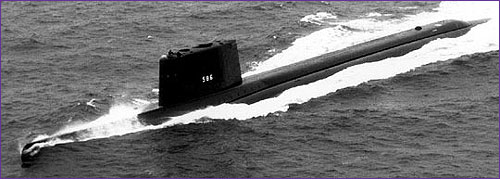

Before it died, at least one nuclear submarine was designed for the radar picket program, USS Triton:
Triton was designed in the mid-1950s as a radar picket submarine able to operate at high speed, on the surface, ahead of a task force, providing intelligence information, electronic surveillance, and to control fighter aircraft interception. Triton would then submerge to avoid attack and operate as a fully operational submarine. To achieve this high speed, Triton was designed with two reactor propulsion plants (the only United States nuclear submarine ever to have been thus built), a knife-like bow, and a high reserve buoyancy. She was the last submarine to have a conning tower (a water-tight compartment built into the sail). She was also the last American submarine to have twin screws or a stern torpedo room.
More:
USS TRITON ( SSN 586) was designed to be fast enough to operate with a fast carrier task force. One of the largest submarines ever built, Triton is 447 feet long, displaces more than 7700 tons submerged, and carries a crew of approximately 170. Her keel was hid 29 May 1956, she was launched 19 Aug. 1958, and was commissioned 10 Nov. 1959. She has two pressurized water reactors, one for each of her two propellers.

Although like the most recent SSRs, Triton mounted her air-search radar on the sail where it could be stowed within the fairwater for submergence, her newer AN/SPS-26 was scanned electronically in elevation, so no separate height-finding radar was required. With three deck levels beneath the sail, there was ample room for dedicated air-control facilities just below the control room/attack center.
Triton was also the first submarine to complete a submerged circumnavigation of the Earth.

Give a salute to the men of the radar pickets who served so well!

LNG: a little reality for Sparrows Point


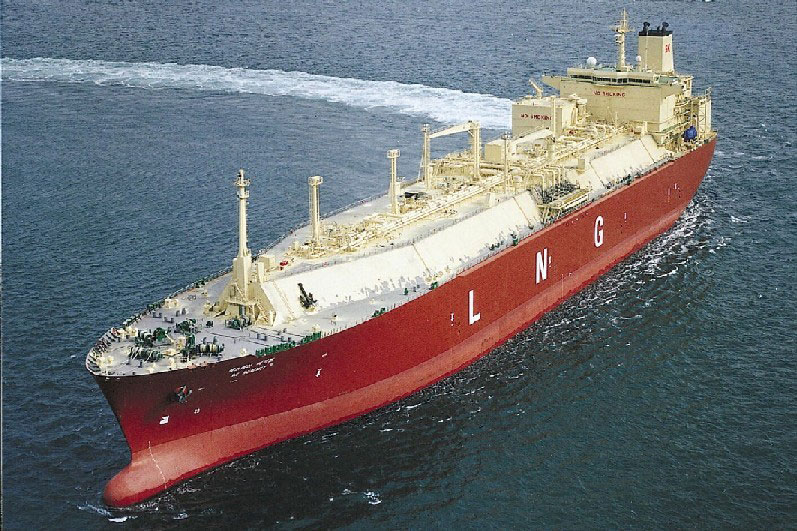
There's been some ado about a proposed Liquified Natural Gas site near Baltimore, like this

A spokesman for AES, the companyy who wants to develop Sparrows Point, Maryland for LNG purposes answers some questions here:

Since January, Virginia-based AES Sparrows Point has been preparing a proposal for a 60-acre, $400 million liquefied natural gas plant to be constructed on the site of the former Sparrows Point Shipyard.
***
Q: How did AES come to choose the Sparrows Point site?

A: We looked at areas of need. There’s a lot of demand for [LNG] in the mid-Atlantic region. Then we looked for a remote site, a place which has a mile radius around the ships and away from a residential area. The Chesapeake allows us a mile away from any ships coming up the bay.
***
Q: How about a terrorist attack? Would the ships explode if punctured or hit with a bomb?

A: This is a legitimate question. It has been wrongly reported [in the video [The Risks and Danger of LNG] that an LNG tanker will explode if impacted. This is false. The tankers are double-hulled. During the Iran-Iraq war [which lasted from September 1980 to August 1988], an Iraqi LNG tanker was hit by an Iranian bomb. The ship did not explode. Only one hull was [breached]. LNG will only explode if the vapors are ignited. You’ll notice that the [LNG Opposition Team] never says “LNG will explode.” They say that an “LNG explosion has the force of several atomic bombs” or something like that. I’ll guarantee that no ship will explode in the harbor.”
***
Q: How do you feel about the Baltimore County law stating that an LNG plant must be constructed no less than five miles from any residential area?

A: [On Sept. 22] we filed a lawsuit in [U.S. District Court] against the law. It’s unfair.
***
Q: Will the construction of the plant bring anything to the local economy?

A: We’ve estimated that direct and indirect impacts during construction [would put] $216 million into the local economy. Impacts during each year the facility is operating would be [about] $48 million. We’re good neighbors, we just need the chance to prove it.
More on the location here

Thursday, December 14, 2006

The Illusion of Wisdom


A couple of days ago I started in on a post about the impact that the "Mediation Generation" was having on our outlook toward conflict. As a trained mediator, I am sometimes amazed that there are people out there who believe that every conflict can be resolved without resort to force (even the threat or use of force through a court decision).

What is mediation? Well, an adequate defintion is found here:
Virtually everyone who has studied negotiation and mediation strategy during the last 20 years has been exposed to Getting to YES: Negotiating Agreement Without Giving In, the widely acclaimed book by Roger Fisher and William Ury of the Harvard Negotiation Project. Getting to YES, along with similar works by those authors and others, helped set the tone for the mediation generation. The book’s central theme is that positional (distributive) bargaining, is a “zero-sum” game in which one party can only gain at the expense of the other, i.e., “one for me is one less for you.” The better approach for negotiators, mediators, and dispute resolution facilitators, Ury and Fisher contend, is interest-based (integrative) bargaining, with the goal of achieving wise outcomes and “win-win” solutions. They stress the role of “principled negotiation” in this process. Other well-known management and ADR experts, such as Seven Habits of Highly Successful People author Steven Covey express similar views.
A shallow understanding of mediation dwells on the "win-win" possibilities. That conditions exist that militate against resolution by mediation are well known to experienced mediators. See here:
There are other problems and limits to mediation. Some disputes are not amenable to mediation. "One cannot negotiate everything. Deeply cherished beliefs and values are simply not negotiable... Either we believe in God, capital punishment, and a woman's right to have an abortion or we do not. These views may change, but they are not negotiable" (Rubin, 135-6). Some disputants are unwilling or unable to employ mediation to resolve their conflict (e.g., the ideologically committed, the mentally ill, substance abusers).
Sometimes it seems to me that the negotiations become an end to themselves and the best interests of the parties involved give way to the desire to "make a deal" instead of seeing that a problem cannot be resolved by, say, giving away Czechoslovakia or attempting to "co-opt" your opponents into becoming part of the solution. As the Rubin quote notes, belief in God is non-negotiable. Not that some won't attempt it - "How about losing one of those Commandments? I mean who needs "Thou shalt not covet?"

As an old military saying puts it ever so delicately in describing the "means/ends? confusion, "When you are up to ass in alligators, it's hard to remember that your goal was to drain the swamp."

And also involves the fantasy that all things can be resolved. This is well set out in a piece that Gina Cobb points to by David Limbaugh
The lynchpin of the ISGR is its recommendation for a "New Diplomatic Offensive." That pivotal recommendation -- No. 1 on a list of 79 -- appears to rely on several highly dubious assumptions.

One -- as many have noted -- is that Iran and Syria perceive a stable Iraq to be in their respective national interests. Another is that resolution of the Israeli-Palestinian issue would disincentivize Islamic terrorists and their sponsoring states from pursuing global jihad. Another is that all global conflicts can be resolved diplomatically.

Could Hitler's or the Soviet's thirsts for world domination have been resolved diplomatically? Shouldn't we recognize that certain regimes, ideologies and radical theologies have no interest in diplomacy other than as a diversion to lull their enemies into concessions or a false sense of security?
***
Wouldn't it be more realistic, sane and in the best interests of the United States for our foreign policy to be conducted from the perspective that evil exists in the world and that it must be confronted, rather than wished away or mollified? Wouldn't that be a more responsible approach, given the lessons of history that are readily available to all but the willfully ignorant?
Or, recognizing that some problems need to be fought out and will never be resolved through talk.

The wise old folks of the ISG offer up the illusion of wisdom, but like all illusions it is based on misdirection and a too willing suspension of disbelief.

Stroke Awareness

Five years ago I was driving along a residential street, turned a corner and the world began to spin. I was able to pull over and stop the car. Eventually the spinning stopped and I was able to drive home, get inside and have my wife drive me to the emergency room. A couple of days of tests later, a CAT scan confirmed that I'd had a stroke, though I have no residual effects.

Looking back, I did have incidents of Transient Ischemic Attacks (TIA) a couple of days before the stroke that should have been a warning, if I'd known the symptoms and known that, even though, I was only 52 at the time of the and not in what I thought was the normal stroke risk category...

I was wrong. And, I was (and am) very lucky.

Learn the symptoms of stroke, which are from here:
Stroke is a medical emergency. Know these warning signs of stroke and teach them to others. Every second counts:

* Sudden numbness or weakness of the face, arm or leg, especially on one side of the body
* Sudden confusion, trouble speaking or understanding
* Sudden trouble seeing in one or both eyes
* Sudden trouble walking, dizziness, loss of balance or coordination
* Sudden, severe headache with no known cause
In some cases, you might experience a Transient Ischemic Attack described as:
A TIA is a "warning stroke" or "mini-stroke" that produces stroke-like symptoms but no lasting damage. Recognizing and treating TIAs can reduce your risk of a major stroke.

Most strokes aren't preceded by TIAs. However, of the people who've had one or more TIAs, more than a third will later have a stroke. In fact, a person who's had one or more TIAs is more likely to have a stroke than someone of the same age and sex who hasn't.

TIAs are important in predicting if a stroke will occur rather than when one will happen. They can occur days, weeks or even months before a major stroke. In about half the cases, the stroke occurs within one year of the TIA.
Symptoms of a TIA? Almost exactly like those of a stroke:
The usual TIA symptoms are the same as those of stroke, only temporary:

* Sudden numbness or weakness of the face, arm or leg, especially on one side of the body
* Sudden confusion, trouble speaking or understanding
* Sudden trouble seeing in one or both eyes
* Sudden trouble walking, dizziness, loss of balance or coordination
* Sudden, severe headache with no known cause

The short duration of these symptoms and lack of permanent brain injury is the main difference between TIA and stroke.
High blood pressure, diabetes, sickle cell disease, high cholesterol are major risk factors. In some cases, Factor V Leiden may be a factor especially if you have other risk factors.

Losing weight, controlling blood pressure and chloestoral are important. Plavix, aspirin, and other modern drugs can help.

So, the news of Senator Tim Johnson's condition from here, is a reminder of the need for stroke awareness. You might also note in the article that Senator Reid had a TIA recently.

I wish Senator Johnson a full recovery.

And I wish that politics would not be a part of this.

Wednesday, December 13, 2006

War thoughts

Two worth reading:
From Lex:
I’ve been hearing a lot of talk lately about how people are tired of the war, tired of looking at the scenes of destruction on TV, tired of the flag-draped caskets and what they represent in human costs, tired of the expense and frankly, tired of talking about it. We want to move on, we want it over, we want to change the channel, talk about something else. Get back to full-time Britney and her sartorial choices, the next news blitz about the next telegenic blonde co-ed that goes missing, single-payer health care and Our Crumbling Infrastructure.

People are war-weary, and that’s only natural - no one likes a long, protracted fight. The lines get blurry, goals are re-defined, eventually someone you care about will get caught behaving very badly, casting doubt on the rightness of the entire enterprise. There is so very much misery. But war weariness can be a dangerous indulgence. Partly for political reasons, people have been lulled into thinking that the choice on whether or not to continue the fight is a simple one. It isn’t.
And from TruePunk:
Political Correctness is the new Black Death. All the topics that can't be discussed are part of the pandemic that's killing America. Feminists so pin-headed they lend their political support to anti-semitic death merchants whose religion defines their sex in terms of slavery. Academics who abandon their subject matter expertise for political rants in support of forces that would exterminate them without a second thought. Minority rights activists who sup with traitors on a daily basis while they demand the extension of exceptional American privileges to those who would rape their wives, subjugate their children, clap them in chains, and entirely eliminate the gravy train on which they have feasted for a generation.
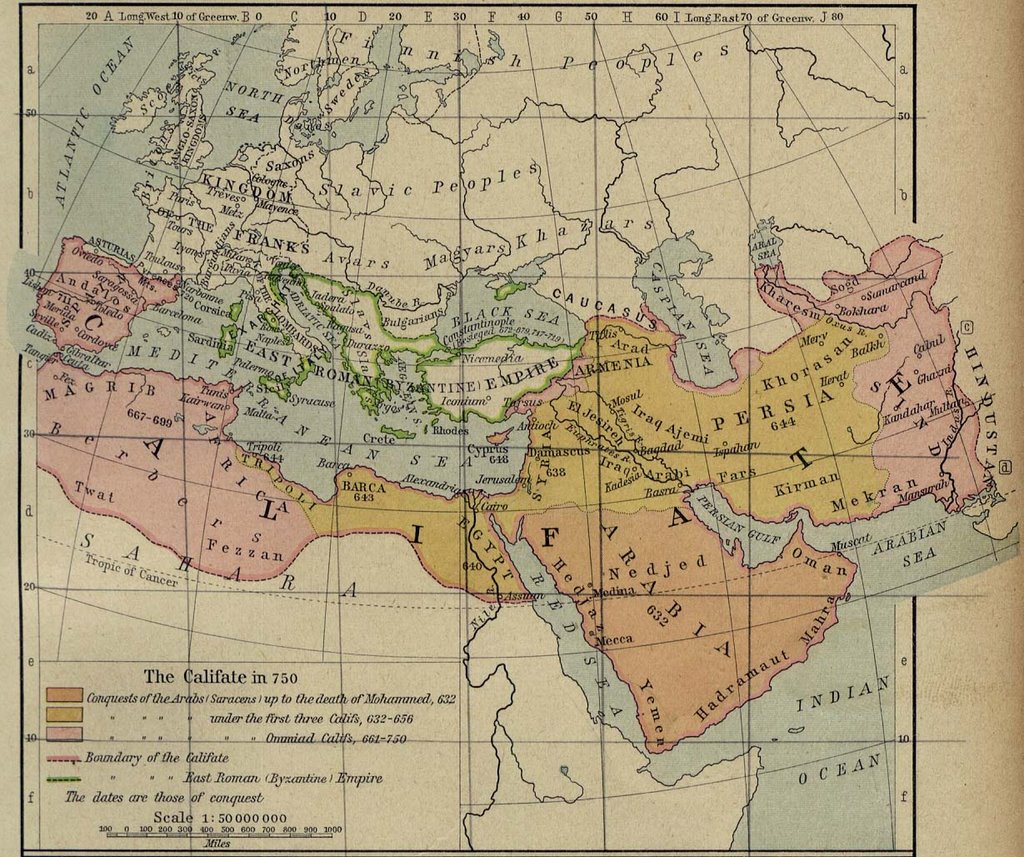
See the map of the Caliphate as it was in 750? The True Believers have a goal and can overcome those with short attention spans and a fear of offending.

UPDATE: Spook86 points to this
The American people need to prepare for a long-duration war against radical Muslims who are set to fight for 50 to 100 years to create an Islamist state in the region, a top Pentagon strategist in the war on terror says.
***
Gen. Schissler said he is concerned that Washington politics is weakening the will of the nation.
"I don't care about the politics. I care about people understanding the facts of what's our enemy is thinking about, what's our strategy to defeat them, and for [Americans] to understand that it will take a long fight, mostly because our enemy is committed to the long fight," he said. "They're absolutely committed to the 50-, 100-year plan."
"One of my concerns is how to maintain the American will, the public will over that duration," he said.
***
Al Qaeda's ultimate goal, the general said, is to set up an extremist "caliphate" stretching from western North Africa through southern Europe and along a path through the Middle East to Central and Southeast Asia.
"We're pretty convinced that the extremists are not ever going to give up the fight," Gen. Schissler said, noting that they are driven by the concept of jihad that makes it a religious duty to wage terrorist war.
UPDATE2: And China Confidential offers up "Terribly Twisted Times.".

Vote for CDR Salamander

First, let me thank all of you who have cast your votes for me in The Weblog Awards. As I now reside in 5th place, and it seems unlikely that I will even catch "Geeky Mom" for 4th, I am asking those of you who have been kind enough to vote for me to take up the cause of CDR Salamander and see if we can push him past The Debate Link and Blue Gal and into first place in The 2006 Weblog Awards: Best of the Top 3501 - 5000 Blogs category.

Please vote!

Tuesday, December 12, 2006

ONI Worldwide Threat to Shipping Report (to 6 Dec 06)

Noted here. Highlights:
1. INDIA: India is putting in place a new monitoring system to track ships off its coast named the national automatic identification system, per 01 Dec reporting. The network is at a conceptual stage and meant to overcome the shortcomings of the current system used to sift merchant and passenger ships from rogue vessels which might approach the coast. The transmission of information will be through satellite links instead of VUHF
transmission used by the present Indian ship position reporting system that and heading. Every six minutes, they will have to broadcast their call sign, name and type. This will be replaced by a long-range identification and tracking (LRIT) system that would provide global coverage through Inmarsat in the future. Position data would be transmitted through regional collaboration centers set up all around the world. New regulations for this system are likely to be announced in January 2008 (LM: hinuonet.com).

Latest ICC CCS Piracy Report (to 12 Dec 06)

Latest ICC Commercial Crime Services Piracy Report (to 12 Dec 06) found here. Highlights:
10.12.2006 0630 UTC in position 14:15N - 059:44E, Arabian Sea. A grey wooden boat 15 metres long approached a general cargo ship underway under the pretext of asking for fresh water. Master suspecting piracy, increased speed and took evasive action. The boat pursued the vessel for 45 mins before abandoning chase. Master advised that he had a similar experience in the area on another ship last year.
***
08.12.2006 2340 LT in position 01:09N – 103:33.93E, Singapore Straits, Singapore. A number of small boats approached an oil tanker underway and attempted to board. Master took evasive action, sounded alarm and mustered crew members. After 10 minutes the boats disappeared. Master reported to Singapore authorities.
***
04.12.2006 1330 UTC in position 01:09.5N - 103:30.0E, off Racon Delta, Singapore Straits. A boat approached a VLCC underway eastbound at high speed. The master altered course violently to avoid the boat. Despite numerous evasive measures the boat continued to close in on the vessel. Alarm was raised, crew were on standby. Finally after 30 minutes the boat aborted attempt to board. VTIS Singapore informed.
Other incidents involving robbers boarding ships at anchor are in the report.

Helicopter dropped "Boat Trap" for port security and ship protection

Reported here:
Designed to bolster US harbor security and protect coastal military bases abroad, Boat Trap is a non lethal, ballistic net that is deployed from a helicopter into the path of a threatening speedboat traveling at high speed. It is designed to entangle the propeller, causing the craft to immediately stop.

Somalia: Iran's footprints, Al Qaeda's fingerprints


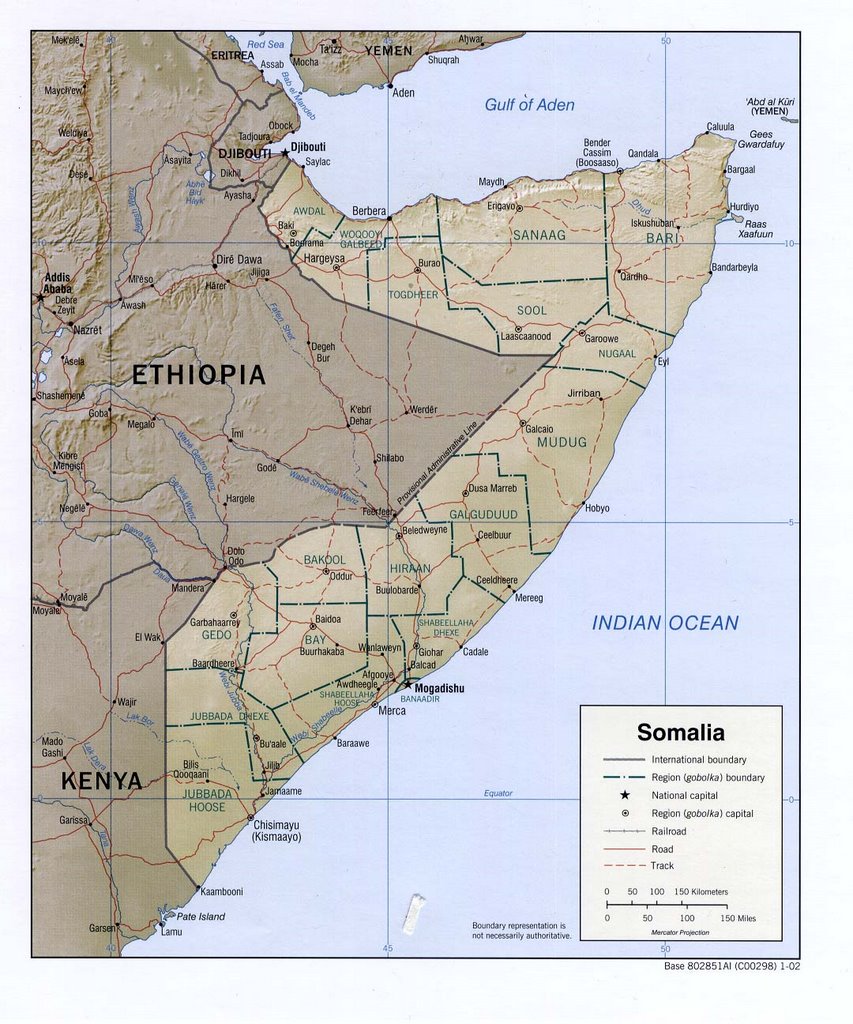
While the Somali Islamic Courts Union seem to have taken piracy off the Somali coast off the board (perhaps because it keeps foreign navies well off the coast?), Daveed Gartenstein-Ross posting at The Counterterrorism Blog has a disturbing report of Iranian Uranium Prospectors in Somalia, which points to his latest Pajamas Media post on Somalia here:
Iran is secretly searching for uranium in war-torn Somalia, according to a confidential United Nations report obtained by Pajamas Media.
***
The report notes that two Iranians were “engaged on matters linked to the exploration of Uranium in exchange for arms” in Dusamareb, Somalia. The arms would be given to the Islamic Courts Union (the ICU), a Taliban-like movement that controls much of Somalia.
The UN report is available for download at the second link.

That the situation in Somalia is developing into another proxy war between the West and Iran should not be surprising. That al Qaeda is involved is a long held belief- see Bill Roggio's report here and Bill's more recent post "Apostate Hell in Somalia" which points to a web video that all but admits the linkage with the Supreme Islamic Courts Council and al Qaeda.

Some background on Somalia here. A grim updater from the International Crisis Group titled "Getting It Wrong In Somalia, Again"here. The ICG solution seems a bit of a pipe dream to me:
The United States should focus on averting a war, not triggering one. Before endorsing a military solution, the United States should work multilaterally to apply targeted sanctions to parties that violate the arms embargo and economic pressure to the council's business partners.

It should also invest in a peace process, which means getting involved in promoting a power-sharing deal between the weak transitional government and the council. Rebuilding a government in Somalia is the only viable way to combat the terrorist threat and prevent violent Islamist extremism from expanding. Delicate diplomacy is required to reconstitute this transitional authority as a government of national unity. Only then will the United States help create an effective counterbalance to the Islamists and an eventual partner in the international struggle against terrorism.
I think the idea of negotiating and talking with people stuck in the 14th Century and whose frame of reference includes the reestablishment of the Caliphate ignores some of the problems faced unless there are boots on the ground to establish the conditions for discussion.

Maybe I've misread Barnett, but it seems to me that the "Leviathan" has to set the stage for the "SysAdmin" types, not vice versa.

Without control over all the players, it's hard to incentivize everyone. A lesson we should have learned in Vietnam and are apparently still learning in Iraq.

Electricity from the motion of the ocean


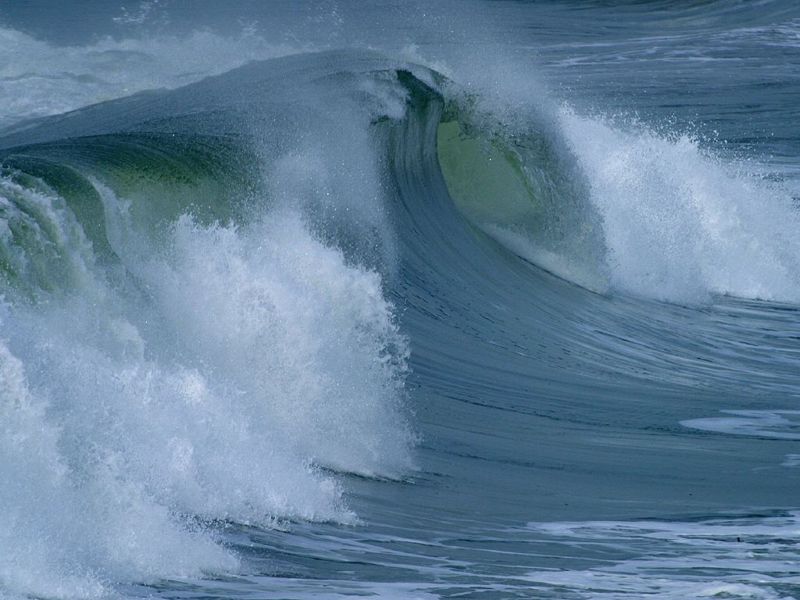
A new technique that makes use of the circular motion of waves to generate electricity is discussed here:
'A wave does not just move up and down,' said Edwards. 'When it moves past it doesn't mean that a lot of water is passing by at the same time. The water actually moves around in a circle, so as well as an up-and-down motion you also get a side-to-side movement. This is why, when you put two objects next to each other in the sea, the gap between them will continually open and close because they are in different wave phases.'

The system uses this phase movement by installing a generator device between two movable walls and harnessing that back-and-forth motion to generate power. Between the three moving walls, piston-like hydraulic pumps convert the horizontal movement into hydraulic pressure which, in turn, powers the generators. These, along with a host of power-conditioning technology, are stored in the device's walls — where they are kept watertight — and produce power that can be linked straight to the power grid via sub-sea power cables.
More on waves here

Dubai Ports World to sell US Port Ops to AIG


Reported here:
Dubai's DP World will make a substantial profit on the forced sale of its US assets after agreeing to sell the business to American International Group, the world's biggest insurer, for more than $1bn.
***
As well as the five container terminals, the business includes several cargo and passenger-handling operations.

The price reflects the soaring valuations of container port assets. Prices have been driven up by enthusiasm for infrastructure investment as well as the readiness of industry players to buy assets when available.
Earlier coverage of this "forced sale" here and here.

New Infrared Seaborne Detection System

Info here:
The system, dubbed Sea Spotter, is a new generation (third generation) infrared staring system that is capable of automatically locating both surface and airborne targets, super sonic and slow, very small targets above and around the vessel, from horizon to zenith and transferring the data to the ship's combat system for interception.

Based on infrared sensors, the Sea Spotter is a completely passive system. Unlike electromagnetic radar systems, it does not emit any signals, so that as part of its situational awareness, it can "see" but not be seen without emitting any beams and without giving away the ship's position.

The overall target and battle arena image that is produced by the Sea Spotter is able to locate such threats as surface-to-surface missiles, super sonic and sub sonic sea skimming missiles, combat aircraft, gliding bombs, ARM weapons helicopters, ships, small target vessels such as a submarine periscope and/or terrorist threats like jet skis.

Monday, December 11, 2006

Bringing out the big guns and skimpy swim wear

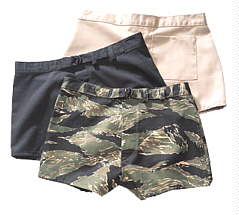
If I show lots of gun p*rn and skimpy swim suits, will you vote for me? (UPDATE: By the way, you can make most of the pictures bigger by clicking on them)

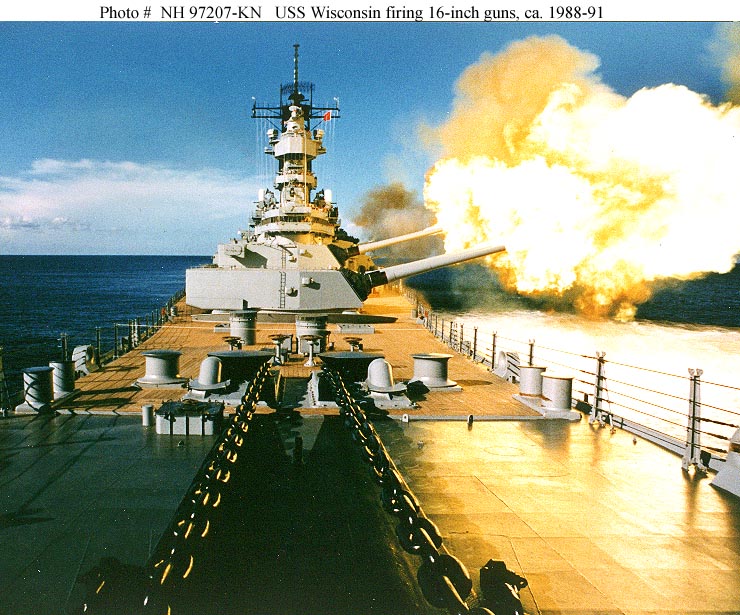
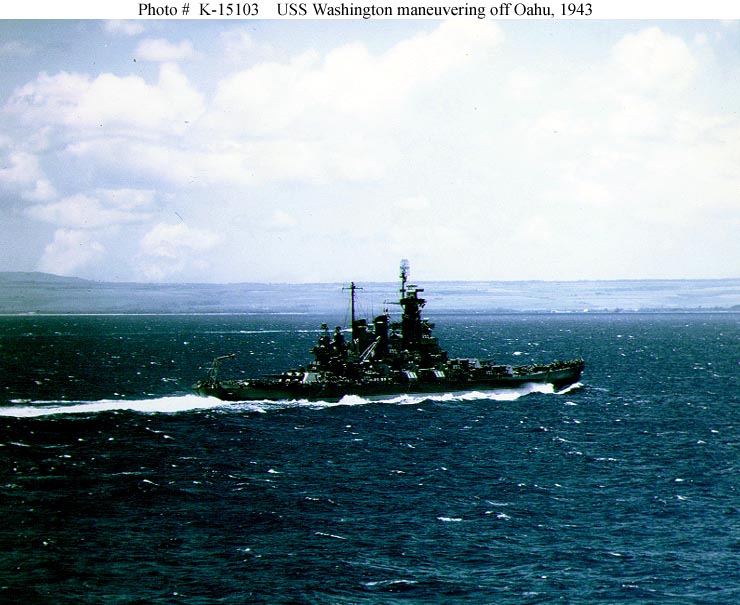
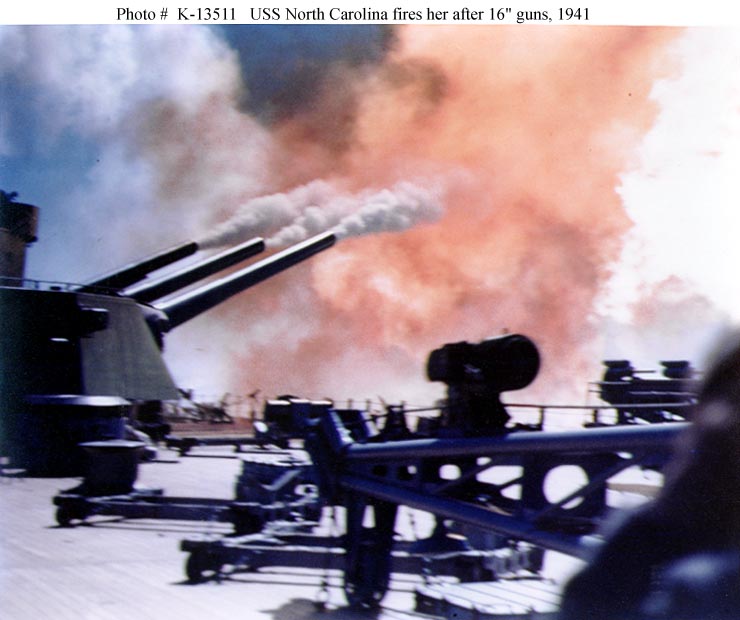
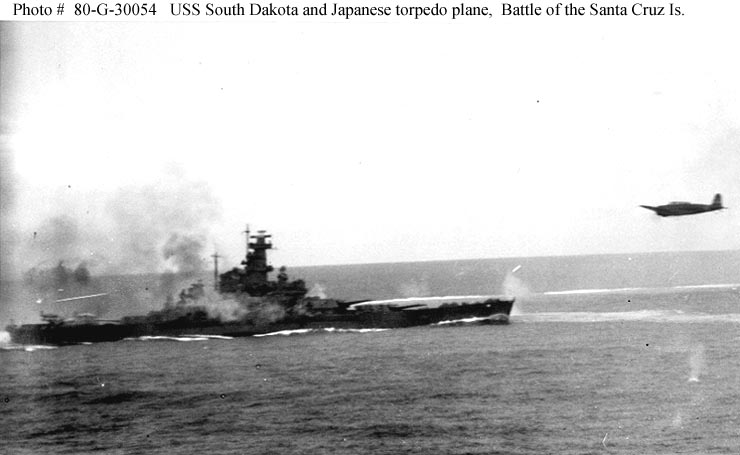
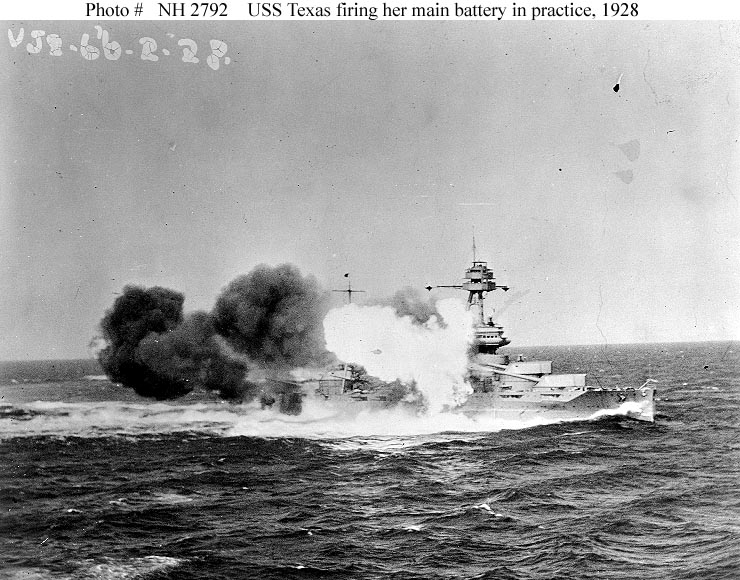
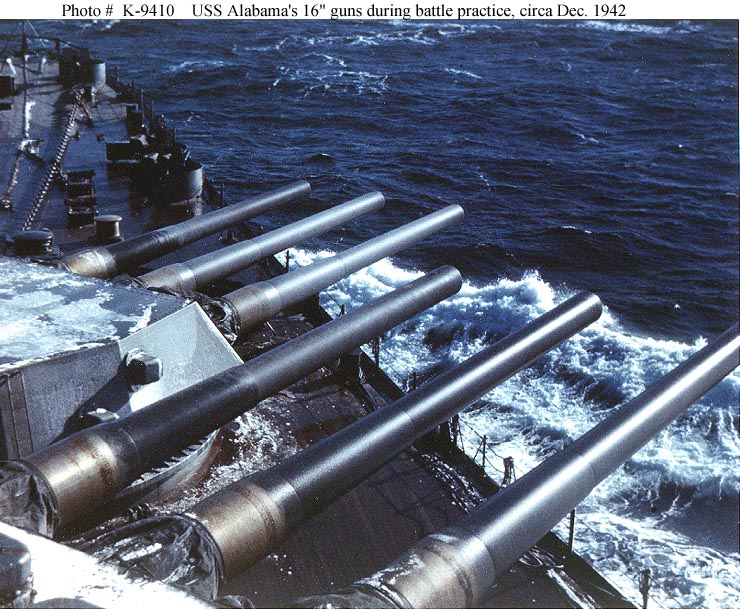
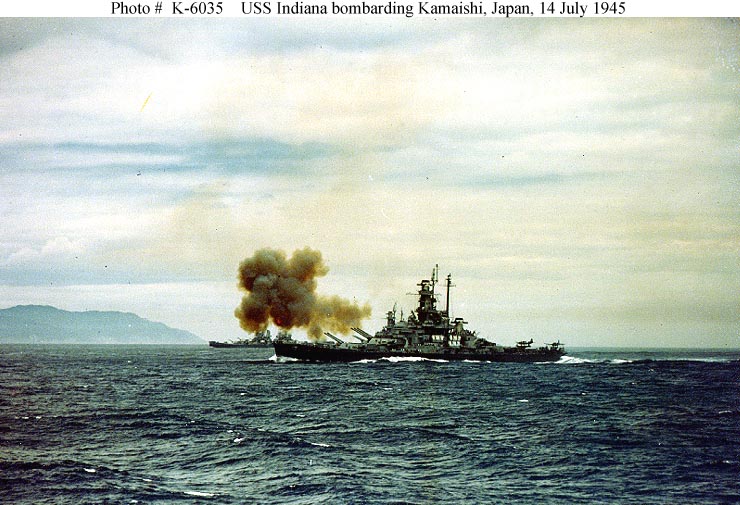
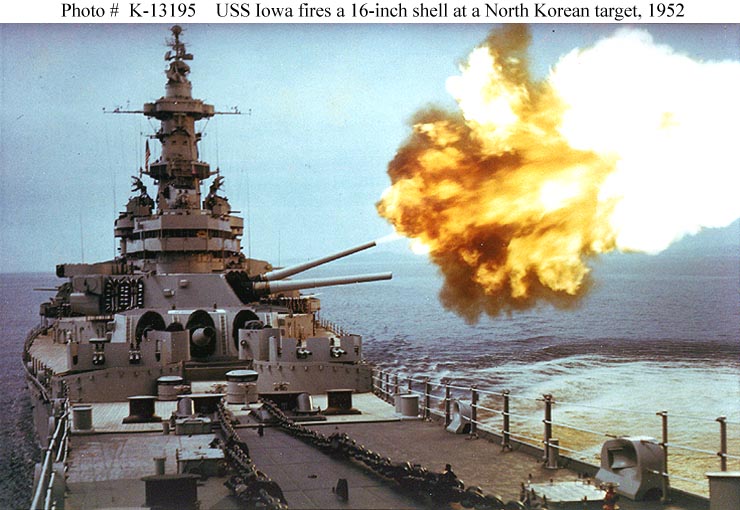
Okay, here's what you like- big guns from real battleships!


Wisconsin

Washington

North Carolina

South Dakota

Texas

Missoui about to catch a kamikaze

New Jersey


Alabama

Missouri 5-inch guns

Indiana

Massachusetts

Iowa


Missouri salvo (see the 6 rounds?)

Now, battleship preverts, please vote here

What? Skimpy swim suits? How about SEAL wear?


UPDATE: Diver added. Wearing warm weather diving gear.


UPDATE2: For Curt- the 20mm. I think I can just barely make out the writing...

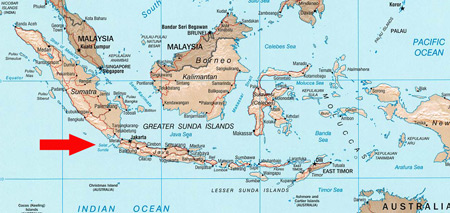
Indonesia can't really monitor the Sunda Strait


Oh, pirates! Oh, terrorists! Here's a weak link, as set out here:
The commemoration of the 61st anniversary of the Indonesian Navy in Banten last week was colored by complaints of poor infrastructure and other supporting facility for monitoring Indonesia's waters such as fleets, monitoring posts and radar equipment.

In his speech, Banten Naval Base commander Col. M. Imron Djunaedi requested financial help to monitor the Sunda Strait.

"The strait is an open sailing line, which means all types of vessels can enter the country's waters. Weak control would facilitate smuggling from and into the country."
***
Currently the naval base only has two small vessels to patrol the waters.

It also has only two posts, one on Sanghiang island in Anyer district and one at Pelabuhan Ratu Port in Sukabumi, West Java.

Banten, Java's western tip, has a large area to protect and therefore it needs a broader radar system because the sole radar equipment placed at Sanghiang monitoring post was unable to cover the vast waters.

The waters are 501 kilometers long from Salira beach in Serang regency to Binuangeun in Lebak regency.

"To help in our work, we work with the Water Police, port administrators and related agencies to maintain security in the strait," Imron said.

"Piracy and smuggling are likely to occur in Banten's waters because hundreds of ships pass through the waters day and night, while we don't have sophisticated technology (to monitor them)," he added.
More on the Sunda Strait here. Info on the WWII battle, at which the cruisers Houston and Perth were sunk, here.

Red arrow on map points to the Sunda Strait.

Iran's Holocaust Convention- if David Duke is there, what more need be said?

Iran wants to deny - er- know "Did the Holocaust really happen?" So it's holding a conference to examine some version of reality or another.

That the answer might be foregone can be judged from the speaker list, which, as set out in Iran Holocaust conference opens includes
Participants include a number of well-known "revisionist" Western academics. American David Duke, a former leader of the Ku Klux Klan, is to present a paper.
Of course the real agenda is to beat up on Israel and its supporters, as might be gathered from this:
But a number of Jewish rabbis are also there. One, British Rabbi Ahron Cohen, said he had come to the conference to put the "Orthodox Jewish viewpoint" across.

"We certainly say there was a Holocaust, we lived through the Holocaust. But in no way can it be used as a justification for perpetrating unjust acts against the Palestinians," he said.

WHOO HOO! Maritime Monday 37 at Fred Fry International

Fred's at it again with Fred Fry International: Maritime Monday 37.

A sunk heavy lifter? Covered.

A wrong-headed ambulance crew? Covered.

Get thee over there.

Vote Navy

If you click on the icon below, you shouild get linked to a page where you can vote for the Best of the Top 3501-5000 Blogs (which were nominated).

The 2006 Weblog Awards


There are some fine nominees in the category, representing the spectrum of left to right, etc. There are two "milbloggers" (military bloggers) nominated. One of which is this humble establishment and the other of which is CDR Salamander.

As you might gather, both of us do or have done the "Navy thing" - the Commander being still on active duty and thus is undoubtedly a hard-charging, go-getter wearing the uniform in his daily pursuit of excellence and confrontation with the paperwork generators from above of which the Navy seems to have more than its fair share.

Salamander's hobbies seem to include libel per se as seen here. He has struggled mightily to overcome his Naval Academy education.

And, for the record, I was not in Subic in 1978 (it was years before that and even then I only went to various chapels on base- the chapels "Chuckwagon," "Main Club," and "Cubi Point" come to mind as places of special devotion, though there was also worship of sorts at the "Golf Course 19th Hole").

I do have some recollection of seeing the pictured squirrel on a visit to the Naval Academy - probably while I was enroute to a meeting of the "Anti-Josephus Daniels League" - oddly enough about the same year the CDR was supposed to have graduated...


As for my interest in pirates, well, don't ask, don't tell.

I am, as noted on the side, but a simple retired reserve officer with a retained interest in things nautical.

Now, in the Best Weblog competition, CDR Salamander is either leading the pack or running neck and neck with a couple of other entrants for the top honor and I am trying to catch "Geeky Mom."

We both need your votes. The rub being, of course, that you can only vote one time per day per computer.

If my preferences be known, I would prefer that the winner be a Navy blogger.
If three hundred of you would suddenly decide to vote for me, I could rise like cream to the top...on the other hand, Salamander is already way up there...

Can you see the dilemma? If you vote for me in great numbers, Navy wins! If you vote for Salamander, Navy wins! If you vote for one of the others...

So, if you like the Underdog, vote for me. But in any event, vote
NAVY!

Sunday, December 10, 2006

Ouch!

Maybe this is why it was "Navy JAG"....

See here.

US to sell military equipment to Pakistan


As reported in an Indian news source:
Amidst the hoopla over the passage of a Bill to implement the Indo-US Civil Nuclear Deal, the Bush Administration has quietly announced the sale to Pakistan of military equipment worth over one billion dollars.

The Defence Security Cooperation Agency (DSCA) has notified the US Congress of possible military sales to Pakistan of the E-2C Hawkeye 2000 Airborne Early Warning (AEW) suite and Associated Equipment and services for refurbishing modifying three excess P-3C Orion maritime patrol aircraft.

The total value of this, if all options are exercised, could be as high as 855 million dollars.

A routine claim has been made to Congress that this sale will not affect the military balance in the region.

The DSCA also notified Congress of another possible military sale to Islamabad of tow 2A missiles and associated equipment and services. The total value, if all options are exercised, could be as high as $185 million.

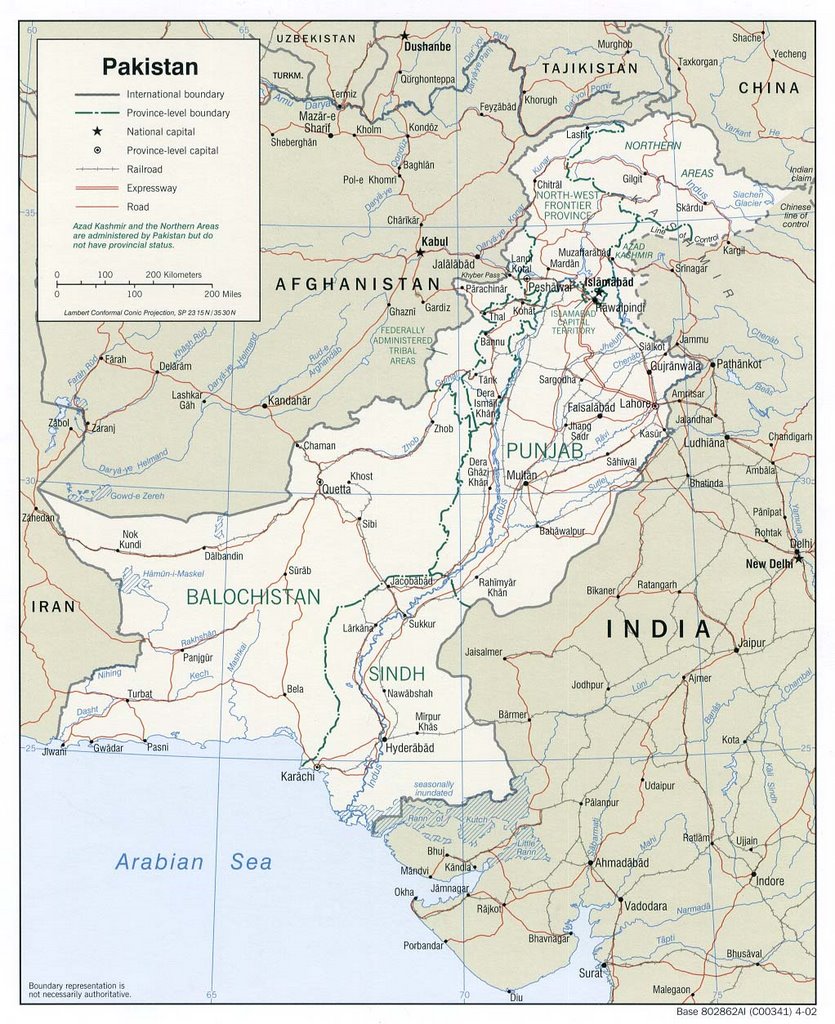
The Pentagon has claimed that the command-and control capabilities of the Orion aircraft will improve Pakistan`s ability to restrict the littoral movement of terrorists along Pakistan`s southern border and ensure Islamabad`s overall ability to maintain integrity of its borders.

"Pakistan intends to use the proposed equipment to develop an effective air defense network for its Naval forces and provide an AEW surveillance and enhanced command, control, and communications capability. The addition of the AEW suites will provide Pakistan with search surveillance, and control capability in support of maritime interdiction operations," the DSCA has said. An Afghanistan angle too has been provided as a part of the justification.

The Pentagon said "these aircraft will also increase Pakistan`s ability to support the US operation enduring freedom operations, and provide anti-ship and antisubmarine warfare capabilities; and a control capability over land against transnational terrorists and narcotics smugglers.

"The modernization will enhance the capabilities of the Pakistani Navy and support its regional influence and meet its legitimate self-defense needs," it added.