Al Qaeda, Hamas, Hezbollah, the Taliban and related fanatics really want to take their homelands (and the rest of the world) back beyond the era of Mohammed - to the grisly ancient days of human sacrifice.Oh, yes, the West has had its own periods of bloodlust - the Nazi era in particular comes to mind. It was wrong then , too.
***
Now Islam is under assault from within, under attack from nominal Muslims who believe their vision supersedes that of Mohammed. They invoke the name of Allah but behave in the manner of ancient priests whose robes were drenched in blood.
***
The blood-cult terrorists piling up corpses in tribute to their darkness-shrouded god have nothing - nothing - to do with the Prophet Mohammed. Their roots go far, far deeper, reaching down into a hellish past of priests with knives and serpent-infested temples.
Track down the terrorist video that made the rounds a few years back in which an executioner licks the blood of his victim from his knife.
That's not piety but cannibalism.
VertRep

Tuesday, January 13, 2009
Ralph Peters on the Perversion of Islam by Radical Death Cultists
Ralph Peter on BLOOD SACRIFICE:


Tuesday Reading
Fred Fry's Maritime Monday 144 over at gCaptain.com. Fred has coverage of the water front above and below the surface. This week includes nice photos of Germany's Orion bul cargo ships and some links to a proposed Russian plan to use nuclear power to explore polar oil areas.
Monday, January 12, 2009
A Weapon to Stop Pirates - from the Air

Ignore the misspelling in the headline, and enjoy reading about a non-lethal weapon that could stop some pirates and terrorists (those without water jet propulsion, at any rate) here. Nice to see that MarineLink has the same gremlins in their keyboards I have:
The program, referred to as Boat Trap, involves dropping an entangling net from a helicopter into the path of a boat. The net entangles in the boat’s propeller, forcing the vessel to a safe stop.
 Dropping a Hellfire missile on a boat will also slow it down, though you lose that "non-lethal" thing.
Monday Reading
CDR Salamander on reasons to worry about national defense.
People keep talking about a military draft. See - Really. Bad. Idea.
What about realigning the forces into sensible form? Defending whose oil fields? Isn't that an arguement in favor of drilling here, drilling now?
The Skeptical Bureaucrat honors Common Sense. Lotsa "sunshine patriots" out there today . . . just as there were then.
Sunday Ship History? Delayed by . . . well, I decided I could replace the leaking water pump in my older car but the sky hooks I needed to unbolt the pulley were in short supply so it took . . .
but I did get it replaced. The book says that a professional mechanic can do the job in two hours. I am not a professional mechanic. Related thought: I remember being about to just about stand in the engine compartment of an old (1962) Caddy I used to work on. Modern cars sure jam a lot of stuff into a small space. . .
People keep talking about a military draft. See - Really. Bad. Idea.
What about realigning the forces into sensible form? Defending whose oil fields? Isn't that an arguement in favor of drilling here, drilling now?
The Skeptical Bureaucrat honors Common Sense. Lotsa "sunshine patriots" out there today . . . just as there were then.
Sunday Ship History? Delayed by . . . well, I decided I could replace the leaking water pump in my older car but the sky hooks I needed to unbolt the pulley were in short supply so it took . . .
but I did get it replaced. The book says that a professional mechanic can do the job in two hours. I am not a professional mechanic. Related thought: I remember being about to just about stand in the engine compartment of an old (1962) Caddy I used to work on. Modern cars sure jam a lot of stuff into a small space. . .
Saturday, January 10, 2009
Gulf of Aden/Somalia NATO Piracy Update as of 7 Jan 09

NATO Shipping Centre: SOMALIA PIRACY UPDATE 7 January 2009:
Following a quiet period during late December pirate activity increased significantly as the new year began. Two new vessels have been hijacked: MV BLUE STAR and MV SEA PRINCESS II were taken on 1st and 2nd Jan in the Gulf of Aden and have subsequently been moved to a position off the coast of Eyl and anchored IVO several other vessels awaiting release. As they arrived in the area the release was announced of Turkish vessel YASA NESLIHAN following the payment of an undisclosed ransom demand. Her 20 crew members are reported as safe and in good spirits.Based on recent release info, 13 vessels remain in pirate hands. I updated the NATO map to reflect the releases.
15 vessels remain hijacked. The current slide displays last known position of hijacked vessels. Over 200 merchant seamen are still held by pirates.
The use of mother-ships seems to be on the rise, and potentially, vessels are hijacked with the sole intention of using them as such.
In short, the trends in latest piracy incidents are as follows: * Targeting larger cargo / oil / gas / chemical tankers * Approaches / attacks conducted from 2-3 small speedboats with 3-5 armed persons each. The number of boats involved in each incident seems to be increasing.
Click on image for clearer picture.
Somali Pirates: Tanker ransom pirates run into trouble?
 The pirates who collected the $3 million ransom for the Saudi oil tanker are reported to have run into trouble with a boating accident... Was it an accident or do fewer pirates to split the take with mean more for those who survive? It appears local beachcombers have gained some benefits... A tale of pirate woe found here:
Five Somali pirates were drown in the sea after having taken fabulous amount of money from a Saudi tanker they have hijacked some two months ago off the coast of Somalia.More reports here and from here, this:
“The pirates were coming towards the shore of Haradhere in Mudug region after having taken 3 million dollars from a Saudi oil tanker which they have set free on Friday afternoon they were on board two speed boats singing in colorful tone, and exchanging some ridiculous words unfortunately one of the boats carrying 9 Somali pirates capsized and five of the pirates who were not simmers were drown in the sea the while the other four swum to the shower” said Ali Yussuf a resident of the pirates invested town of Haradhere speaking to Somaliweyn radio shortly after the tragedy occurred.
The resident also added that there are some great swimmers in the ocean with their boats ransacking for the remains of their fellow pirates drown in the Indian Ocean before making us out of they gained through unlawful means (ransom).
On the other hand some reports we are getting from the ground says that pastoralists traveling along the shore have slowly collected dollars floating on the surface of the sea, and some brought by the ebb tide to shore.
Informed sources in the town of Hobyo said a fast-speed boat carrying nine pirates had capsized in the high seas after powerful winds hit overnight Friday.In an unrelated report, the Iranian ship Delight is reported to have been released by pirates:
Four of the pirates have been found alive, but the remaining five gunmen are missing and believed to have died at sea.
The capsized boat was transporting some of the ransom payment, which was delivered via a parachute yesterday, the sources added.

The Delight, which was hijacked on its way to Iran from Germany carrying 36,000 tonnes of wheat, was freed with its 25 crew late Friday after 53 days in captivity, the Islamic Republic of Iran Shipping Lines (IRISL) said.UPDATE: Photos of airdrop of ransom:
It did not say whether any ransom had been paid. Iran last month said it had dispatched a warship to the Gulf of Aden to protect Iranian vessels against pirates.


Captions:
(upper) 090109-N-5512H-071 SOMALIA (Jan. 9, 2009) A small aircraft is observed by the U.S. Navy as it flies over the MV Sirius Star during an apparent payment via a parachuted container to pirates holding the Sirius Star. The U.S. 5th Fleet conducts maritime security operations to promote stability and regional economic prosperity. (U.S. Navy photo by Air Crewman 2nd Class David B. Hudson/Released)
(lower) 090109-N-5512H-081 SOMALIA (Jan. 9, 2009) A parachute dropped by a small aircraft is observed by the U.S. Navy as it drops over the MV Sirius Star during an apparent payment via a parachuted container to pirates holding the Sirius Star. The U.S. 5th Fleet conducts maritime security operations to promote stability and regional economic prosperity. (U.S. Navy photo by Air Crewman 2nd Class David B. Hudson/Released)
Doesn't look all that rough at the time of the drop...
Friday, January 09, 2009
Somali Pirates: Saudi oil tanker released
 Reported here:
Somali pirates say they have released a Saudi-owned tanker carrying two million barrels of crude oil that they hijacked in the Indian Ocean.UPDATE: Well, now we know the price of a VLCC full of oil. That's a lot of khat for the pirates and their leaders - don't be surprised if the new pirate business model involves more hunting for such "high value units" - even if off the normal, well-beaten sea lanes...
"All our people have now left the Sirius Star. The ship is free, the crew is free," Mohamed Said, the leader of the pirate group, told the AFP news agency on Friday.
Farah Osman, an purported associate of the pirates, told the Reuters news agency that a $3m ransom had been paid for the 330-metre tanker owned by the shipping arm of oil giant Aramco.
"Pirates holding the Saudi ship took $3 million yesterday evening and then released the ship this morning," he said.
NY CIty Police: 'Lessons From the Mumbai Terrorist Attacks'
Testimony of NY City Police Commissioner Raymond Kelly before Senate Homeland Security Committee on the lessons learned from the Mumbai terrorist attack here:
. . .The attackers displayed a sophisticated level of training, coordination, and stamina. They fired in controlled, disciplined bursts. When our liaisons toured the hotels and railways stations, they saw from bullet holes that shots were fired in groups of three aimed at head level. With less experienced shooters, you'd see bullet holes in the ceiling and floor. This group had extensive practice. And the number of casualties shows it. Ten terrorists managed to kill or injure over 500 people. They were experienced in working together as a unit. For example, they used hand signals to communicate across loud and crowded spaces. And they were sufficiently disciplined to continue their attack over many hours. This had the effect of increasing the public's fear and keeping the incident in the news cycle for a longer period of time. These are a few of the differences from what we've seen before.
***
We are also mindful that the attackers approached Mumbai from the water. That's obviously an issue in a major port city like New York. For that reason, our Harbor officers are trained in and equipped with automatic weapons. They have special authority to board any ships that enter the port. Our divers inspect the hulls of cruise ships and other vessels, as well as the piers they use, for underwater explosive devices. We engage in joint exercises with the National Park Service to protect the Statue of Liberty from any waterborne assault and heavily armed Emergency Service officers board the Queen Mary Two at Ambrose Light before it enters New York Harbor to make certain no one tries to take over this iconic ship when it enters city waters. These are a few examples.
As much as we do, the NYPD, even with the Coast Guard's assistance, cannot fully protect the harbor, especially when one considers the vast amounts of uninspected cargo that enters the Port of New York and New Jersey. I have testified before about the urgent need for better port and maritime security. Mumbai was just another reminder.
***
The other issue that we examined in our exercise last month, and that was the subject of a New York Times article yesterday, is the ability of terrorist handlers to direct operations from outside the attack zone using cell phones and other portable communications devices. With this comes a formidable capacity to adjust tactics while attacks are underway.
We also discussed the complications of media coverage that could disclose law enforcement tactics in real time. This phenomenon is not new. In the past, police were able to defeat any advantage it might give hostage takers by cutting off power to the location they were in. However, the proliferation of handheld devices would appear to trump that solution. When lives are at stake, law enforcement needs to find ways disrupt cell phones and other communications in a pin-pointed way against terrorists using them.
Thursday, January 08, 2009
Combined Maritime Forces Counter-Pirate Force CTF-151
Forwarded from a reader:
UPDATE2: A wise cautionary note from C-dore 14 at Salamander's place:
Salamander's comments are also germane and reflect lessons learned by many of us who have served in coalition situations though I am somewhat comforted by the knowledge that the "non-swimmers" seem to be staying out of the deep end and the CTF might be composed of real sharks.
I hope the Flag Officer is ready to whup some pirates and has an aggressive staff JAG officer who has boned up on the law of fighting pirates...
UPDATE3: He needs a good JAG because of stuff like this:
For Immediate ReleaseUPDATE: Biography of RADM McKnight from here:
Jan. 08, 2009
Release #001-09
New Counter-Piracy Task Force Established Commander, Combined Maritime
Forces Public Affairs
MANAMA, Bahrain - The Combined Maritime Forces (CMF) has established
Combined Task Force 151 (CTF-151) specifically for counter-piracy
operations.
Naval ships and assets from more than 20 nations comprise the Combined
Maritime Forces. U.S. Navy Rear Admiral Terence "Terry" McKnight has been
named the commander of the new task force which will be fully operational by
the middle of January.
The CMF created the Maritime Security Patrol Area (MSPA) in the Gulf of Aden
in August of 2008 to support international efforts to combat piracy.
Coalition efforts included CTF-150 assets patrolling the area with ships and
aircraft. However, the charter for CTF-150, established at the outset of
Operation Enduring Freedom, was for the conduct of Maritime Security
Operations (MSO) in the Gulf of Aden, the Gulf of Oman, the Arabian Sea, Red
Sea and the Indian Ocean.
Operations included the deterrence of destabilizing activities, such as drug
smuggling and weapons trafficking. The establishment of CTF-151 will allow
CTF-150 assets to remain focused on those activities, giving CTF-151 the
ability to focus solely on the counter-piracy mission.
"Some navies in our coalition did not have the authority to conduct
counter-piracy missions," said Vice Adm, Bill Gortney, CMF Commander. "The
establishment of CTF-151 will allow those nations to operate under the
auspices of CTF-150, while allowing other nations to join CTF-151 to support
our goal of deterring, disrupting and eventually bringing to justice the
maritime criminals involved in piracy events."
Vice Adm. Gortney highlighted the reduction in piracies in the region due to
merchant mariners' proactive measures. He also continued to caution that
the efforts of Coalition and international navies won't solve the problem of
piracy.
"The most effective measures we've seen to defeat piracy are non-kinetic and
defensive in nature. The merchant ships have been doing a great job
stepping up and utilizing these methods to defeat piracy attempts. That's a
great first step. But the problem of piracy is and continues to be a
problem that begins ashore and is an international problem that requires an
international solution. We believe the establishment of CTF-151 is a
significant step in the right direction."
CTF 151 is a multinational task force that conducts counter-piracy
operations in and around the Gulf of Aden, Arabian Sea, Indian Ocean and the
Red Sea and was established to create a lawful maritime order and develop
security in the maritime environment.
Rear Admiral Terence E. McKnight, a native of Norfolk, graduated from the Virginia Military Institute in May 1978. He completed his master’s degree in International Relations at Salve Regina University in May 1998. Additionally, he graduated from the U.S. Army War College in 1994 and attended the National Security Seminar at Syracuse University in 2001.That degree in international relations might be useful in his new job. And the VMI alumni association will be happy, I would guess. Lots of amphib service so I bet he knows how to speak "Marine."
Rear Adm. McKnight’s early sea duty assignments included USS El Paso (LKA 117), USS John L. Hall (FFG 32), USS Shreveport (LPD 12) and Executive Officer in USS Cayuga (LST 1186). He commanded USS Whidbey Island (LSD 41) from January 1995 until November 1996 and USS Kearsarge (LHD 3) from July 2002 until December 2003.
Duties ashore included the Bureau of Naval Personnel as Assistant Lieutenant Commander Detailer, Aide and Administrative Assistant to the Chief of Naval Personnel, Surface Warfare Officers School, Command Training Department as Head Expeditionary Warfare Instructor, the Office of the Secretary of Defense, Executive Assistant to the Assistant Secretary of Navy (Manpower & Reserve Affairs), the Office of Chief of Naval Operations N6/N7, and Executive Assistant to the Under Secretary of the Navy.
Rear Adm. McKnight served as the 85th Commandant of Naval District Washington, the oldest continuously operated Navy installation in the nation and the Deputy Commander, Joint Force Headquarters National Capital Region.
Rear Adm. McKnight assumed duties as Commander, Expeditionary Strike Group 2, in September 2007.
Rear Adm. McKnight’s personal decorations include the Legion of Merit, Bronze Star, Defense Meritorious Service Medal, Meritorious Service Medal, Navy Commendation Medal, Navy Achievement Medal, as well as various other unit awards and decorations.
UPDATE2: A wise cautionary note from C-dore 14 at Salamander's place:
Call me a cynic but I'd be much more impressed by the implementation of aggressive ROE executed by the forces of committed nations than I am by the assignment of a Flag Officer and the designation of a new CTF.It is hard not to be cynical, but maybe he has some strong guidance to get those Rules of Engagement in place and a plan to have a trial court nearby...
Salamander's comments are also germane and reflect lessons learned by many of us who have served in coalition situations though I am somewhat comforted by the knowledge that the "non-swimmers" seem to be staying out of the deep end and the CTF might be composed of real sharks.
I hope the Flag Officer is ready to whup some pirates and has an aggressive staff JAG officer who has boned up on the law of fighting pirates...
UPDATE3: He needs a good JAG because of stuff like this:
Danish forces in the Gulf of Aden have no clear directive about what to do with five captive pirates
Questions about legal jurisdiction over pirates captured in international waters have again emerged after the crew of the HMS Absalon rescued five Somalis in the Gulf of Aden after their ship was sunk by a cargo ship they were reportedly attempting to board.
On 2 January the pirates attacked the ship, registered in the Netherlands Antilles. An emergency flare fired by the ship struck the pirates' boat, forcing them to abandon ship.
They were fished out of the water by Absalon, but now the Navy finds itself again in a position of having no guidelines on what to do with them.
Although the United Nations gave international forces in the Gulf of Aden permission to pursue pirates on land, criminal prosecution of pirates has become a thorn in the forces' side due to uncertainty over questions of jurisdiction.
On 3 December, Absalon was told by military headquarters in Bahrain not to pursue surrendering pirates - even though the ship's crew was certain the pirates were responsible for the attack on Australian cruise ship MV Athena that day.
Earlier in September, 10 pirates captured by the Navy had to be released because legal experts in Denmark were uncertain they could be prosecuted here and they could not be handed over to Somali authorities due to concerns that they risked capital punishment there.
The Foreign Ministry indicated it has been in contact with Dutch officials about the pirates held by Absalon, but no decision has been made.
Wednesday, January 07, 2009
Somali Pirates: Ransom collected, Turkish ship freed
Reported here:
Somali pirates released a Turkish cargo ship hijacked in October after its owners paid a ransom, Turkey's Anatolian news agency said on Wednesday.
Yasa officials had been negotiating with the ship's captors for its release and had paid an undisclosed amount of money as ransom . . . The 20 Turkish crew were all safe. . .
Tuesday, January 06, 2009
"Oceans filled with nothing but - pirates!'
Best use of "pirates" in a non-ship capturing manner in this report on the collapse of the bulk shipping market here:
The chart depicts a plunge unlike we’ve ever seen, and tells a tale of woe, woe, woe on the water. Essentially, contracts for bulk shipping evaporated, leaving the oceans filled with nothing but – pirates!Nicely done. Though a little depressing for the shipping industry.
Yemen's Messy Status
 Yemen occupies a strategic position in the Middle East and on the Gulf of Aden, and everybody wants to play there, as set out in Jane Novak's post “The presence of Iran in Yemen has helped it to have a real dominance in Iraq, Lebanon and Afghanistan. “.
Nigerian Pirates: Capture a French Ship
 Reported here:
Pirates have seized a ship owned by a French company off the Nigerian coast, taking nine crew members hostage.
***
The hostages are from Nigeria, Ghana, Cameroon and Indonesia. Piracy is common in Nigerian waters, often linked to militants targeting oil companies.
Militants attack vessels and strip them of valuables, taking hostages for ransom.
Latest ICC CCS Weekly Piracy Report (to 5 Jan 2009)

The latest ICC CCS Weekly Piracy Report (to 5 Jan 2009) can be found here. Highlights:
* 04.01.2009: 05:40 UTC: Posn: 13:3.0N – 048:42.5E, Gulf of Aden. Six pirates in one white coloured speed boat attempted to board a bulk carrier underway. Three of these pirates were armed with machine guns and opened fire on the vessel. Master carried out evasive manoeuvres and contacted a coalition warship. Within 15 minutes a helicopter arrived at the location. The speed boats moved away on seeing the helicopter. No injuries to the crew and no damages to the ship.UPDATE: Added Gulf of Aden portion of ICC CCS Live Piracy Map from here.
* 02.01.2009: 0807 UTC: Posn: 13:42N - 050:39E, Gulf of Aden. Pirates in three skiffs attacked a tanker underway. They fired upon the tanker and attempted to board. Master raised alarm, contacted coalition warships, increased speed and took evasive manoeuvres. A coalition helicopter arrived and the pirates aborted the attempt.
* 02.01.2009: 0427 UTC: Posn: 13:11N - 047:32.5E, Gulf of Aden. Pirates in speed boats approached a tanker underway. One speed boat was spotted four nm and the other two were drifting seven nm ahead of the tanker. Master raised alarm, increased speed, took evasive manoeuvres and crew activated anti-piracy measures. The first speed boat came within two meters of the stbd quarter and fired upon the tanker. Master saw five pirates armed with machine guns. Coalition warships contacted. Pirates aborted the attempt after five minutes.
* 01.01.2009: 0747 LT: Posn: 13:55N - 047:58E, Gulf of Aden. Armed pirates attacked and hijacked a general cargo ship underway. 28 crewmembers taken hostage.
* 01.01.2009: 1230 UTC: Posn: 13:53N - 049:29E, Gulf of Aden. Four pirates in a speed boat attacked a bulk carrier underway. They fired upon the ship with automatic weapons and attempted to board. Master raised alarm, increased speed and took evasive manoeuvres. Pirates aborted the attempted attack.
* 01.01.2009: 0337 UTC: Posn: 13:05N – 047:03E: Gulf of Aden. Two skiffs approached a tanker underway and opened fire with automatic weapons. Master increased speed and made evasive manoeuvres, and sent a distress message via VHF radio. A warship and a helicopter were sent to assist the tanker. Upon seeing the warship and helicopter the skiff moved away.
* 31.12.2008: Posn: 13:8.0N – 47:27.0E: 1330 UTC: Gulf of Aden. A bulk carrier underway was chased and fired upon by pirates in speed boat. Naval warships informed and attack was prevented. Further report is awaited.
Somali Pirates: Another one gets away
 Chinese crewed cargo ships escapes pirate capture, as set out here:
A cargo ship with 32 Chinese crew aboard evaded an attack by four pirate boats in the piracy-plagued Gulf of Aden, China's state media reported.
The attack took place on Monday as the Sierra Leone-registered vessel was heading to Djibouti in north-east Africa, Xinhua news agency said, quoting the China Maritime Search and Rescue Centre.
Monday, January 05, 2009
Monday Reading
Fred Fry's Maritme Monday 143, which looks at a British research ship exploring the Antarctic and much, much more.
CDR Salamander on a beat up of the NYTimes over a silly editorial on Navy shipbuilding.
UPDATE: Tax fun for small businesses (like mine). Profit? That money is there to pay costs generated early in the month...
CDR Salamander on a beat up of the NYTimes over a silly editorial on Navy shipbuilding.
UPDATE: Tax fun for small businesses (like mine). Profit? That money is there to pay costs generated early in the month...
Sunday, January 04, 2009
Sunday Ship History: Re-Run
Due to other commitments, Sunday Ship History for January 4, 2009 is a re-run.
Please enjoy this "golden oldie from July 9, 2006: Sunday ship history: Merchant aircraft carriers
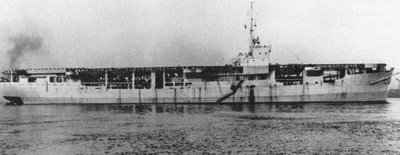 Tough times call for some innovative measures, and converting merchant hulls to use as aircraft carriers in WWII was one such extraordinary effort. As set out here :
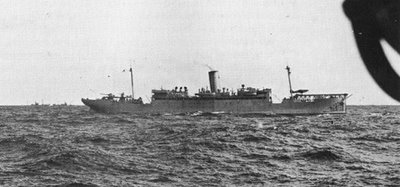 In addition to the merchant aircraft carriers, there were merchant ships equipped with catapults, "CAM" ships (Catapult Aircraft Merchantman":
Photos: MAC "Empire MacCabe", a Swordfish aircraft, CAM ship (see the catapult on the bow?) and a Hawker Sea Hurricane.
UPDATE: About 20 years ago, the US Navy was testing a similar program called ARAPAHO:
Photo is of HMS Reliant, a container ship converted for duty as an experimental helicopter support ship for the Royal (UK) Navy:
Please enjoy this "golden oldie from July 9, 2006: Sunday ship history: Merchant aircraft carriers
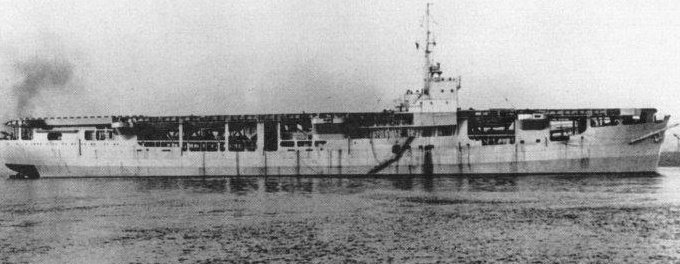 Tough times call for some innovative measures, and converting merchant hulls to use as aircraft carriers in WWII was one such extraordinary effort. As set out here :
 Merchant aircraft carriers (MAC) were minimal aircraft carriers used during World War II by Britain and the Netherlands as an emergency measure ...
They were bulk grain carriers or tankers built with flight decks and small islands, but no catapult or other aircraft support facilities. The nature of the cargoes removed the need for the type of deck mounted cargo-handling gear needed by general freighters. They operated with civilian crews, under merchant colors, and carried their regular cargo while serving as aircraft carriers. Their fighter planes were primarily intended to attack long-range reconnaissance aircraft such as the Fw 200 Condor and the Junkers Ju 290 to prevent tracking of convoys.
The tanker conversions had no hangar, the grain ships did but it was small (four Fairey Swordfish was the limit). Flight decks were around 460 feet long on the tankers and between 413 and 424 for the grain ships, width was 62 feet in all cases. Aircrew accomodation was minimalistic and ammunition and fuel stores were neither armoured nor partitioned.
***
The 'Air Party' consisted of an Air Staff Officer (Lt-Commander), the aircrew, a doctor, a batsman (landing control officer), ten ship's gunners, four signalmen, and three or four Able Seamen. The Merchant Navy part of the crew might have an extra mate and/or wireless operator but was otherwise unchanged.
***
In practice, the MAC ships were successful. The antiquated, but robust, Swordfish aircraft were suited to the conditions and their patrols were very effective. Flying more than 4000 sorties in all, wartime records show that no convoy with an accompanying MAC ship ever lost a vessel to U-boats.
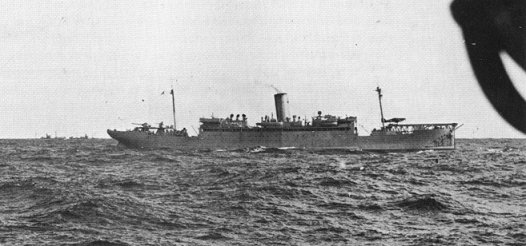 In addition to the merchant aircraft carriers, there were merchant ships equipped with catapults, "CAM" ships (Catapult Aircraft Merchantman":
 ...CAM ship was equipped with a rocket-propelled catapult launching a single Hawker Sea Hurricane, dubbed a "Hurricat" or "Catafighter". The ship was not fitted for landings so the pilot would bail out or ditch in the sea at the end of the flight and the plane would be lost. In 1940-41 35 ships were converted, starting with SS Michael E, and continued to carry their normal cargoes after conversion.Note that all of the ships converted still carried out duties as cargo carriers or tankers.
Photos: MAC "Empire MacCabe", a Swordfish aircraft, CAM ship (see the catapult on the bow?) and a Hawker Sea Hurricane.
UPDATE: About 20 years ago, the US Navy was testing a similar program called ARAPAHO:
In the Arapaho program, the Naval Air Systems Command developed a portable, modularized aviation facility intended for installation aboard container ships. It can be installed in less than twenty-four hours and included all components necessary for V/STOL aircraft operations: flight deck, hangar, fuel, and crew accommodations. It was estimated to cost less than $20 million per set.
ARAPAHO was a research and development project to demonstrate the feasibility of equipping merchant ships with emergency aviation support in wartime and of operating ASW helicopters and other combatant aircraft from these vessels. ARAPAHO at-sea testing was completed 07 October 1982 at the Norfolk International Terminal, Norfolk, Va., when the 18,000-ton container ship Export Leader - configured with a portable modular aviation facility — returned to port after having logged 178 day and 45 night helicopter landings.

Photo is of HMS Reliant, a container ship converted for duty as an experimental helicopter support ship for the Royal (UK) Navy:
A container ship initially chartered as an emergency helicopter support ship for Falklands duties. Later converted with US/UK "Arapaho" project modular helicopter support equipment to test the capabilities of the Arapaho project. This was intended as a pre-manufactured, standardized, modular helicopter support suite to enable merchant ships to serve as helicopter ships in wartime. The project was not found to be a particular success.Regular Sunday Ship History will return next . . . Sunday.
Saturday, January 03, 2009
Latest ONI Worldwide Threat to Shipping Report (to Jan 2, 2009)
Latest ONI Worldwide Threat to Shipping Report (to Jan 2, 2009) can be found
here. Highlights:
here. Highlights:
1. GULF OF ADEN: The French navy has handed over eight suspected pirates captured in the Gulf of Aden to the authorities of Somalia's breakaway state of Puntland, an official said Friday 02 Jan 2009. "The Puntland regional government received eight pirates from the French navy, who intercepted them while they were attacking a commercial vessel," Puntland assistant minister for seaports Abdelkadir Musa Yusuf told reporters. "They will be charged for their crimes according to criminal law. This is the second time the French navy has transferred captured pirates to Puntland," he said. The Premier Maitre L'Her, a French frigate patrolling the waters as part of a European Union taskforce, intercepted the pirates on Thursday after twice responding to a distress call from the Panamanian-flagged S. Venus (LM: AFP).
.
2. GULF OF ADEN: The German frigate FDS KARLSRUHE, assisted a 65,000 ton
Egyptian bulk carrier in fighting off a pirate attack in the Gulf of Aden, 25 Dec 2008. This engagement was initiated after the M/V WADI AL ARAB made an emergency call for assistance after coming under attack at 1100 local time. The KARLSRUHE's helicopter was launched and fired warning shots to deter the attack which was abandoned. The pirates were then stopped and their arms and equipment were thrown into the sea. After the rescue a merchant seaman, who suffered a gun shot wound to the leg during the attack, was transferred to the KARLSRUHE for medical treatment and then flown ashore to hospital where his condition is
described as stable. This was the first engagement a EUNAVFOR vessel has been involved in since Operation ATALANTA was launched 2 weeks ago, and demonstrates how good communication combined with prompt and robust action can thwart piracy attacks. The KARLSRUHE, one of 8 Type 122 Class frigates, joined Operation ATALANTA last Friday as part of Germany's contribution to the EUNAVFOR mission deployed off the coast of Somalia (MSCHOA).
.
3. STRAIT OF MALACCA: Malaysia has sought Indonesia's help to crack down on pirates in military-style uniforms who have been menacing fishing boats in the southern Malacca Strait, a senior police official said Tuesday, 30 Dec 2008. The action came after a fisherman was wounded earlier this month when sea raiders dressed in camouflage gear fired at his vessel, said Isa Munir, commander of Malaysia's maritime police department. "We are investigating it. We are trying to coordinate the operation (to provide security for fishing boats) with Indonesian
authorities. We are intensifying our patrols," he told AFP. Isa said the attack took place in the waters off southern Johor state facing neighboring Indonesia, part of the waterway which is a crucial lifeline to global trade and which just a few years ago was a piracy hotspot. The Star newspaper reported that the pirates were robbing fishermen of their equipment and demanding protection money of 10,000-45,000 ringgit (2,900-12,900 dollars), threatening their livelihoods. Isa said the marine police would investigate the claims and urged fishermen to report attacks
immediately so that a patrol boat could be deployed to nab the pirates (LM: AFP)
.
4. GULF OF ADEN: Indian Navy arrests 23 pirates in the Gulf of Aden, 13 Dec 08
reporting. Pirates on two speed boats had surrounded the general cargo ship (GIBE) at approximately noon local time, when the Indian warship (INS MYSORE) intervened and warded off the attack, according to an Indian Navy spokesperson. The (GIBE) reported two boats were firing small arms at it when it sent out a rescue call. The Indian warship, which was sailing nearby, moved its Marine Commandos on a helicopter to help the cargo ship. Upon seeing the helicopter and the (MYSORE) closing in, the attackers broke off and tried to flee, according to Indian officials. The warship caught up to the boats, the larger which was described as a 24 to
30 foot dhow bearing the name (SALAHADDIN) and towing a small skiff. Indian sailors boarded the dhow and the 23 suspects surrendered peacefully. Upon boarding, they seized seven AK-47 assault rifles, two other rifles, a grenade launcher, and 13 fully loaded magazines of ammunition from the 12 Somali and 11 Yemeni pirates. The (GIBE) was later escorted to safety. All 23 pirates were later handed over to Yemeni authorities (AP, CNN, BBC, IMB, LM: ExpressIndia.com).
***
7. GULF OF ADEN: The Italian NATO warship (ITS DE LA PENNE) prevented the
hijacking of five merchant shipping vessels in the Gulf of Aden. At least 12 and as many as 20 speedboats were reported to be in the area. Alerted by a distress call, the Italian navy destroyer put itself between the ships and the group of pirate speedboats while all the vessels used water hoses to repel the pirates. The warship also launched its helicopter against the pirates causing the pirates to disperse. "There were so many of them, that it was more important to protect the motor vessels than to go after these dispersing boats," the official said, on the sidelines of talks between NATO foreign ministers in Brussels (AFP, 03 Dec 08).
***
.
1. GULF OF ADEN: Vehicle carrier reported suspicious approach 22 Dec 08 at 0530 local time while underway in position 13:44N – 049:05E. An 8 meter white colored skiff approached the vessel from the starboard bow at a speed of approximately 25 kts. The master contacted UKMTO, who then dispatched a coalition helicopter that chased the skiff away (Operator, UKMTO).
.
2. GULF OF ADEN: Vessel reported suspicious approach 27 Dec 08 at 1450 local time while underway in position 13:52N – 049:27E. A suspicious boat approached the vessel from the starboard quarter approximately 3 miles away at a speed of 25 kts. The alarm was raised and the crew mustered. The master conducted evasive maneuvers and attempted to contact coalition forces via VHF CH 16, but received no response. The suspicious boat aborted the chase after approximately 15 minutes (Operator, UKMTO).
.
3. GULF OF ADEN: Vessel (S VENUS) reported being fired upon 31 Dec 08 at 1330 UTC while underway in position 13:09N – 047:29E. A French frigate in the vicinity intercepted the pirates after responding to the distress call from the vessel (MSCHOA, AFP, IMB).
.
4. GULF OF ADEN: Tanker (ABDUL KALAM AZAD) fired upon 1 Jan 09 at 0337 UTC while underway in position 13:05N – 04703E. A small open boat approached the tanker and started firing at the bridge and all around the accommodation areas. The pirates tried boarding and continued firing their weapons. There were seven persons onboard the boat wearing military style uniforms. The tanker conducted evasive maneuvers, maintaining maximum speed, and activated SSAS. Coalition forces were contacted via VHF CH 16. Helicopters were dispatched, forcing the pirates to abort their attack. No injuries to the crew were reported and damages to the tanker were being assessed (Operator, IMB, LM: Economic Times).
.
5. GULF OF ADEN: Vessel reported suspicious approach 1 Jan 09 at 0755 local time while underway in position 14:23N – 051:14E. The vessel was approached by three speed boats that began following the vessel. The vessel increased speed and the boats eventually departed (Operator, IMB).
.
6. GULF OF ADEN: Vessel fired upon 1 Jan 09 at 1530 local time while underway in
position 13:53N – 049:29E. Four armed men in a speed boat approached the vessel and began firing. The vessel conducted evasive maneuvers and the pirates aborted their attempt (Operator, IMB).
.
7. GULF OF ADEN: Vessel fired upon 2 Jan 09 while underway in position 13:07N –
047:27E. Vessel reported coming under attack by pirates. There is no further information to provide at this time (MSCHOA, IMB).
.
8. GULF OF ADEN: Tanker (KRITI EPISKOPI) fired upon 2 Jan 09 at 0807 UTC while underway in position 13:42N – 05039E. Armed men in three skiffs fired at the tanker and attempted to board two times. The master sent out a distress call and EU forces responded, forcing the pirates to flee. The tanker was reported safe and continued its transit (Operator, IMB, Reuters).
.
9. GULF OF ADEN: Vessel (BLUE STAR) hijacked 2 Jan 09 at 0715 local time while
underway, approximately 50 NM southwest of Al Mukalla, Yemen. Fifteen armed pirates overtook the vessel after the ship exited the Red Sea. The vessel was carrying a cargo of 6,000 tons of fertilizer with a crew of 28 Egyptians (IMB, AP).
.
10. GULF OF ADEN: Vessel fired upon 2 Jan 09 at 0727 local time while underway in
position 13:11N – 047:32E. One speed boat was spotted 4 NM away on the starboard quarter, approaching with a speed of 17 kts. Another two were 7 NM ahead drifting. The bridge and engine room were fully manned, the alarm was raised, and the vessel put on high alert. The crew was mustered inside the accommodation, speed was increased to the maximum, and all available sound equipment was activated. Both fire pumps were running, so the hull around the vessel was covered by water spray. The master conducted evasive maneuvers, and coalition forces were contacted. The first speed boat approached until it was at a distance of 1-2 meters on the starboard quarter, and fired five or six times. The boat had a blue hull, with five men onboard,
dressed in dark raincoats. A machinegun was spotted on the forward part of the boat. After five minutes, they aborted the attack. The other two boats ahead began moving toward the vessel with a speed of only 6 kts, so the vessel was able to alter its course to avoid contact. There were no injuries to the crew and no damage to the vessel (Operator, IMB).
.
11. GULF OF ADEN: Vessel (ZHEN HUA 4) boarded, reported attempted hijacking 17 Dec 08 at 0424 UTC while underway in position 14:28N – 051:36E. Nine pirates in two speed boats chased and successfully boarded the heavy lift ship. The pirates were on the main deck and could not enter the accommodation after the crew managed to lock themselves inside. According to the captain of the (ZHEN HUA 4), the crew had received related training and managed to counter attack the pirates by using fire hoses and incendiary bombs when they boarded the vessel. After locking themselves in, the crew sent out a distress message to the IMB Piracy Reporting Centre which was immediately relayed to coalition naval forces to render
assistance. A Malaysian warship in the vicinity sent a helicopter, which arrived on the scene and opened fire on the pirates. Coalition naval forces informed that the warship was on its way to assist the ship. The pirates disembarked from the ship into a speed boat. The crew and vessel are safe and proceeding to destination port (IMB, Crienglish.com).
.
12. GULF OF ADEN: Yacht reported suspicious approach 17 Dec 08 at 0935 local time while underway in position 14:24N – 049:52E. Two high-speed boats converged on the yacht from port and starboard quarters at the same distance. The captain contacted UKMTO and coalition forces. The two approaching vessels headed south away from the yacht. Approximately one hour later, six small speed boats converged on their position off the starboard quarter. Two of them split from the group and headed around the stern, two more pacing the starboard quarter, and the other two staying stationary. After some time, they split off, headed south and seemed to converge on other vessels in the area. Several hours later, the captain noticed a vessel on the starboard bow with its port light showing and no other navigation lights
on display, approximately 2 NM away. The suspicious vessel then adjusted its course and headed straight towards the yacht. A voice then came over the radio CH 16 in english ordering them to stop. Five armed Yemeni Coast Guard soldiers were onboard the yacht to provide security. The captain warned the vessel over the radio to steer clear or they will open fire. The vessel continued on a course directly for them. When the vessel reached 0.25 NM from the yacht, the armed Yemeni Coast Guard fired warning shots into the air while the captain relayed another radio warning. More shots were fired before the suspicious vessel eventually turned
away and left. The yacht continued its voyage without further incident (IMB, Operator).
.
13. GULF OF ADEN: Vessel (WADI AL-ARAB) fired upon 25 Dec 08 at 0815 UTC while underway in position 14:13N – 05050E. Vessel reported coming under fire by a single boat. Another ship passing by alerted the IMB who then requested assistance from coalition forces in the area. A helicopter was dispatched from a German warship, disarming the pirates and confiscating their weapons. The pirates were not detained or arrested. One crew member onboard the (WADI AL-ARAB) was shot in the attack and later airlifted to a coalition vessel by a second helicopter (UKMTO, IMB, BBC).
.
14. GULF OF ADEN: General cargo ship fired upon 12 Dec 08 at 1212 local time while underway in position 13:32N – 048:37E. Eight pirates armed with machine guns and RPGs in a blue colored speed boat doing 17 knots fired upon the vessel and attempted to board twice using a ladder. The crew managed to detach the ladder even though the pirates were firing at the ship. The pirates aborted the attempted attack. Coalition forces were notified. The speedboat then moved toward a tanker that was transiting in the vicinity. The speedboat approached the tanker from the port side at approximately 50 meters distance and began preparing the ladder in an
attempt to board. The tanker began conducting evasive maneuvers and the speedboat aborted the attack, but then headed toward another tanker transiting westbound. The second tanker increased speed to 16.5 kts before the speed boat eventually aborted the chase. UKMTO Comment: All three vessels were within 4 NM of each other. After attacking the first vessel, the speedboat closed in on the second vessel and made an approach. Weapons were observed but no shots were fired and no attempt to board was made. The second vessel reported that the speed boat
made its way to the third vessel, where an approach was made. Coalition warships were informed and a helicopter and surface asset was dispatched (Operator, UKMTO).
.
15. GULF OF ADEN: General cargo ship (GIBE) fired upon 13 Dec 08 at 0300 UTC while underway in position 13:19N – 047:58E. The (GIBE) reported two boats were firing small arms at it when it sent out a rescue call. An Indian warship, which was sailing nearby, intervened, causing the attackers to abort their attack and flee. The pirates were later apprehended by the Indian Navy (AP, IMB, CNN).
.
16. GULF OF ADEN: Vessel reported suspicious approach 13 Dec 08 at 0519 UTC while underway in position 14:33N – 050:16E. Six or seven speed boats going approximately 20 kts with about six or seven persons onboard each boat approached the vessel and attempted to board. Some of the men onboard were armed. The crew mustered on deck. The master increased speed and conducted evasive maneuvers with fire hoses activated. Coalition warships were contacted via VHF Ch. 16 (Operator, UKMTO).
.
17. GULF OF ADEN: Container ship fired upon 13 Dec 08 at 1145 UTC while underway in position 13:43N – 048:17E. One wooden speed boat with five to six persons armed with automatic weapons and RPGs chased and opened fire on the vessel. They attempted to board with a ladder. The master took evasive maneuvers and contacted coalition warships for assistance. A naval helicopter arrived at location. Upon seeing the helicopter, the speed boat aborted the attack (IMB).
.
18. GULF OF ADEN: Tug (MASINDRA 7) and barge hijacked 16 Dec 08 at 0715 local
time while underway in position 13:54N – 049:39E. Owners confirmed that pirates have hijacked the tug with barge in tow. There are 11 crewmembers onboard (IMB).
.
19. GULF OF ADEN: General cargo ship (BOSPHORUS PRODIGY) hijacked 16 Dec 08 at 0904 UTC while underway in position 13:20N – 047:57E. Ten pirates in two speed boats armed with automatic weapons and RPGs boarded the vessel. Three Turkish and eight Ukrainian crewmembers are onboard (Operator, IMB).
.
20. GULF OF ADEN: Tanker reported suspicious approach 28 Oct 08 at 1127 local time while underway in position 12:40N – 045:28E, per 10 Dec reporting. Tanker reported being approached by six speedboats with approximately three to four persons onboard each. Each person appeared to be carrying a gun. Vessel took evasive maneuvers with fire hoses activated (Operator, IMB).
.
21. GULF OF ADEN: Vessel fired upon 2 Dec 08 at 0400 UTC while underway in position 13:57N – 049:35E. A suspicious craft was spotted on the port side at about 2 miles. Approximately 15 minutes later they were able to see 7 persons onboard in military uniforms armed with guns and RPGs. They approached the vessel about 10 meters away and fired at the vessel many times. The security team onboard the vessel responded and fired parachute rockets. The port side lifeboat was hit with one bullet hole. The gunmen aborted their attempt and all
crew including security team is in good condition (Operator, UKMTO).
.
22. GULF OF ADEN: Chemical tanker fired upon 3 Dec 08 at 0419 UTC while underway in position 12:59N – 047:41E. Men armed with automatic rifles in a speedboat fired upon the tanker. The speedboat was white in color with a blue band along the top and appeared to be of metal construction. However, as the boat got closer, it became clear that the hull was made of wood. The boat also had a short bow, similar to a whaling vessel. They tried boarding the tanker twice using a portable ladder, but were unsuccessful due to the evasive maneuvers taken by the tanker that nearly caused the speedboat to capsize. The pirates aborted the attempted
attack after two hours. A coalition helicopter came to investigate (IMB).
.
23. GULF OF ADEN: Two Yemeni fishing vessels, (FALLUJAH) and (KANA), reportedly hijacked 10 Dec 08 while underway from the Mait area near the port of Aden. According to Yemeni Coastguard, 22 men from both vessels were seized by the pirates. Seven men managed to escape from the (FALLUJAH) on a small boat and report the attack to Yemeni authorities, but 12 other crewmembers were seized, as well as the 10 men aboard the (KANA). There has been no further information provided at this time (AFP, IANS, Reuters).
.
24. GULF OF ADEN: Chemical tanker fired upon 3 Dec 08 at 0419 UTC while underway in position 12:59N – 047:41E. Speed boat observed approximately 2-3 NM off forward bow. The number of persons onboard the speedboat is unknown, but were carrying firearms due to the crew hearing three gunshots. The attackers attempted to board by hanging a portable ladder twice, but failed. The crew conducted evasive maneuvering and was able to avoid being boarded. The entire incident lasted approximately two hours. Any damage to the vessel was not
confirmed. No injuries were reported. Incident was reported to UKMTO who sent coalition helicopter to investigate (Operator, IMB).
.
25. INDIAN OCEAN: Container ship fired upon 6 Dec at 1142 UTC while underway in position 06:42S – 046:58E, 450 NM east of Dar es Salaam, Tanzania / 350 NM west of Seychelles Islands. Two pirate skiffs were seen approaching the vessel underway. The 2nd mate increased speed, raised the alarm, activated fire hoses and mustered crew on the bridge. The pirates fired upon the ship with guns and an RPG. The master activated SSAS, DSC distress, and increased speed to maximum. After some time, the pirates stopped firing and the distance increased. The pirates reloaded their weapons and fired again. For some reason, one of the skiffs slowed down and the other boat was just trailing without firing. Finally, the two skiffs
stopped and aborted the attempted attack. No injuries to the crew were reported. A fire broke out onboard the vessel due to the gunfire (IMB).
***
6. PHILIPPINES: Two cargo ships fired upon 8 Dec 08 at approximately 2330 local time in the Sultan Kudarat province. Armed bandits raided two cargo ships in the southern Philippines, wounding two sailors on board. Gunmen onboard pump boats strafed and fired a grenade launcher at the two cargo vessels. A chief engineer and his apprentice on the cargo vessels were hit by shrapnel from an M79 grenade launcher (LM: ABS-CBN news, Xinhua).
China's Sea Lanes
 Interesting catch at CargoNewsAsia.com in the article "China uses ports to protect trade lanes":
A port being built in southern Sri Lanka near the main shipping route across the Indian Ocean is part of a Chinese effort to project influence and protect vital trade lanes, according to a US military study, Asia Pulse reported.You can find the referenced, unclassified Joint Forces Command document, Joint Operating Environment 2008 (JOE2008) here. The analysis of China strategic intentions is well worth reading:
The study lists the commercial-shipping container port at Hambantota being built by Chinese contractors as part of China's so-called "string of pearls" strategy to gain political influence and be able to project power in the Indian Ocean region.
The report, "Joint Operating Environment 2008," was produced by the Norfolk-based US Joint Forces Command.
Yet, one of the fascinating aspects of China’s emergence over the past three decades has been its efforts to learn from the external world. This has not represented a blatant aping nor an effort to cherry pick ideas from history or Western theoretical writings on strategy and war, but rather a contentious, open debate to examine and draw lessons from West’s experience. Two historical case studies have resonated with the Chinese: the Soviet Union’s collapse and the rise of Germany in the late nineteenth and early twentieth centuries. These case studies, written in a series of books, were also made into documentary films and form one of the most popular shows on Chinese television.I've discussed the "String of Pearls" structure China is pursuing in previous posts (see here, here; compare with India's sea lane interests here, here and here).
In the case of the Soviets, the Chinese have drawn the lesson that they must not pursue military development at the expense of economic development – no traditional arms race. That is the path Deng laid out in the late 1970s and one which they have assiduously followed. Indeed, if one examines their emerging military capabilities in intelligence, submarines, cyber, and space, one sees an asymmetrical operational approach that is different from Western approaches, one consistent with the classical Chinese strategic thinkers.
***
In regard to a potential military competition with the United States, what is apparent in Chinese discussions is a deep respect for U.S. military power. There is a sense that in certain areas, such as submarines, space, and cyber warfare, China can compete on a near equal footing with America. One does not devote the significant national treasure required to build nuclear submarines for coastal defense. The emphasis on
nuclear submarines and an increasingly global Navy in particular, underlines worries that the U.S. Navy possesses the ability to shut down China’s energy imports of oil – 80% of which go through the straits of Malacca. As one Chinese naval strategist expressed it: “the straits of Malacca are akin to breathing itself -- to life itself.”
The lengths to which China is willing to go to protect their strategic lifeline is a measure of their measure of its importance. Unspoken of in the Cargoasia piece, is the lesson to be learned from the Japanese in WWII, who had their own "string of pearls" from the resource rich Malaysia/Indochina to protect for their needed oil and other supples. Japan sought to push out their defensive perimeter to better protect these sea lanes, their failure at Midway to destroy the U.S. carrier fleet spelled doom for their plans.
The vital sea lanes of China include much of the same waters Japan sought to control but extend even further to the Middle East and Africa. The success of the U.S. submarine fleet in interdicting the Japanese supply chain in Worl War II must weigh heavy in Chinese military thought.
The analysis of China is but a small portion of the entire JOE2008 and reading it all is highly recommended.
For reference, a map of Japan's WWII defensive plan appears below:

Friday, January 02, 2009
Somali Pirates: Greek Ship Crew Keeps Pirates at Bay Until Help Arrives
 Reported here:
Crewmen fired high pressure water jets to fight off heavily armed Somali pirates trying to board a Greek oil tanker in the dangerous Gulf of Aden on Friday in the fourth such attack since the start of the year, authorities said.
The pirates in three speedboats and armed with guns and rocket-propelled grenades twice tried to board the Greek-flagged Kriti Episkopi but were scared off when the crew turned fire hoses on them and EU aircraft scrambled from a nearby EU naval flotilla to help, company and Greek government officials said.
***
The captain of the Kriti Episkopi spotted the speedboats just before 8 a.m. GMT approaching his ship and took evasive action to try to shake them off.
He contacted the Greek authorities who alerted the EU naval flotilla which swiftly scrambled an airplane and helicopter, the Greek Merchant Marine Ministry said.
"An aircraft and a helicopter reached the ship very quickly, which scared the pirates off," a ministry spokesman said, on customary condition of anonymity. "A frigate also sped to the scene. Everything now seems to be under control, but we remain vigilant."
The 29 crew members were unhurt and the tanker, carrying oil from the Persian Gulf to Greece, was not damaged in the attack off the pirate-infested Somali coast, said a statement by the ship's operating company Avin International.
 Ship photo copyright Mara at Shipspotting.com where a larger image may be viewed.
Somali Pirates: French Navy Stops an Attack on a Cargo Ship
 Reported here:
A French warship has thwarted an attack by Somali pirates on a cargo ship in the dangerous Gulf of Aden on a day when several cargo ships were attacked, the French president's office said.More on the characteristics of frigate PM L'Her here. An earlier article on her.
The warship was patrolling the area Thursday as part of a multinational operation to protect commercial vessels passing through one of the world's most important sea routes.
The crew of the French "PM L'Her" dispatch boat intercepted two speedboats carrying eight Somali pirates as they were preparing to board a Panamanian cargo ship, said a statement that President Nicolas Sarkozy's office released late Thursday. The French navy will hand over the men to Somali authorities.
The French crew seized weapons and munitions from the speedboats, the statement said.
UPDATE: Fred Fry points to the photo of the capture and has more information here.

UPDATE2:
 Attacked ship identified as the Panamanian cargo liner S. Venus.
Thursday, January 01, 2009
For the New Year
A Carl Sandburg poem I've posted before, but it's worth repeating:
From “The People, Yes”
Carl Sandburg
A father sees a son nearing manhood.
What shall he tell that son?
'Life is hard; be steel; be a rock.'
And this might stand him for the storms
and serve him for humdrum and monotony
and guide him amid sudden betrayals
and tighten him for slack moments.
'Life is a soft loam; be gentle; go easy.'
And this too might serve him.
Brutes have been gentled where lashes failed.
The growth of a frail flower in a path up
has sometimes shattered and split a rock.
A tough will counts. So does desire.
So does a rich soft wanting.
Without rich wanting nothing arrives.
Tell him too much money has killed men
And left them dead years before burial:
The quest of lucre beyond a few easy needs
Has twisted good enough men
Sometimes into dry thwarted worms.
Tell him time as a stuff can be wasted.
Tell him to be a fool every so often
and to have no shame over having been a fool
yet learning something out of every folly
hoping to repeat none of the cheap follies
thus arriving at intimate understanding
of a world numbering many fools.
Tell him to be alone often and get at himself
and above all tell himself no lies about himself
whatever the white lies and protective fronts
he may use amongst other people.
Tell him solitude is creative if he is strong
and the final decisions are made in silent rooms.
Tell him to be different from other people
if it comes natural and easy being different.
Let him have lazy days seeking his deeper motives.
Let him seek deep for where he is a born natural.
Then he may understand Shakespeare
and the Wright brothers, Pasteur, Pavlov,
Michael Faraday and free imaginations
Bringing changes into a world resenting change.
He will be lonely enough
to have time for the work
he knows as his own.
Somali Pirates: Happy New Year, Same As Last Year

The pirates of the Gulf of Aden have started off the new year with, naturally, a ship seizure, as reported in Somali pirates seze Egyptian ship, though the good news is that capture of an Indian vessel was thwarted by a helicopter from an Malaysian navy ship:
Somali pirates seized an Egyptian cargo ship and its 28 crewmembers on Thursday while a Malaysian military helicopter saved an Indian tanker from being hijacked in the new year's first attacks by pirates in the dangerous Gulf of Aden.
Fifteen armed pirates snatched the Egyptian vessel, called Blue Star, after the ship exited the Red Sea and entered the gulf, carrying a cargo of 6,000 tons of fertilizer, according to Egyptian Deputy Foreign minister, Ahmed Rizq.
The pirates then steered the ship toward the coast of Somalia, Rizq said.
He said contacts were under way with "international and regional parties" to get the ship released -- which likely meant there were attempts to negotiate with the pirates.
In the other attack Thursday, a Malaysian military helicopter saved an Indian tanker carrying a full load of oil when it was attacked by two skiffs, one of which carried seven pirates dressed in military-style uniforms, said Noel Choong of the International Maritime Bureau's piracy reporting center.
"They came close to the ship and started firing machine guns, hitting the bridge and the accommodation area," Choong told The Associated Press. The pirates, believed to be Somalis, tried to board the vessel several times while "firing repeatedly" but failed, he said.
The captain increased the ship's speed to maximum, made evasive maneuvers and sent an SOS, which was received by a Malaysian frigate, KD Sri Inderah Sakti, 15 nautical miles away, he said.
The frigate sent a light military helicopter, which arrived within minutes, and the pirates stopped firing and fled, said Choong.
Subscribe to:
Posts (Atom)