VertRep

VertRep

Tuesday, January 03, 2017

Fun with Iran: Iran "Naval Ambitions"

I think we've covered Iran's desire to control the flow of oil from the Middle East to the world before, but there is an interesting piece at Foreign Affairs by Yoel Guzansky, Iran's Growing Naval Ambitions: Why It Wants Naval Bases in Syria and Yemen that
In late November, Iran made an unusual announcement: it said it was planning to build naval bases in Syria and Yemen, which, as a state-run paper later posited, “could be ten times more efficient than nuclear power.” Although Iran has long striven to establish itself as a leading regional power, and naval outposts have been key to reaching that goal, this was the first time Tehran officially declared its intentions to build such bases beyond its own borders.
That "building bases" part is partially true because there was that time the Greeks beat the expansionist Persians back a couple of thousand years ago.

Ironic, I suppose that it was Greek sea power that played a key role in those Persian defeats, as it appears sea power is back in the Persian - uh- Iranian Islamic Republic Theocracy/Dictatorship vocabulary.

In any event, Mr. Guzansky notes:
The two bases would fit into Iran’s larger plan to expand its reach both regionally and beyond. Tehran is in the process of building up its presence along the coasts of the Persian Gulf and the Gulf of Oman, a policy that it also announced in November. “We are building two naval zones and three naval bases on the Makran coasts,” saidRear Admiral Habibollah Sayyari, commander of the Iranian navy, at a press conference in Tehran. “This is in line with our policy of making a return to the sea.” Sayyari highlighted plans to equip the Iranian navy with homegrown surface-to-surface missiles, sea-based drones, and intercept radars.

Sayyari also made mention, and not for the first time, of Iran’s goals outside its regional waters. “Beyond a doubt,” he said, “our naval fleets will, in the near future, circle Africa and cross the Atlantic.” He referred to the waters of East Asia as well. To further this goal, Iran is conducting visits to and joint naval exercises with countries in Africa and Asia. In May 2013, Iran’s navy paid a visit to the Chinese port of Zhangjiagang, and later that year, it sent two warships and a submarine to Colombo, Sri Lanka. In 2014, China reciprocated by sending, for the first time, two ships to the Iranian port of Bandar Abbas to conduct joint naval exercises, ostensibly focused on antipiracy operations. And in January of this year, Tehran dispatched an Iranian navy destroyer to the Indian port of Visakhapatnam, also to conduct joint naval drills.
See also Missile Attacks Off Yemen and the Iran- Saudi Proxy War for Oil Shipping Chokepoints:
Iran would like to control the Saudi outflow of oil. It can do so by shutting down Saudi access through the Strait of Hormuz except that the Saudi's can also export oil from their west coast on the Red Sea and ship it through the Bab el-Mandeb Strait. If the Iranian surrogate Houthis can gain control of the Bab el-Mandeb Strait then Iran could, effectively, throttle Saudi oil flow.
Not to mention controlling much of the oil flow to Europe and, if necessary, to the Far East. Useful bargaining chip, that oil/gas flow, as Russia has found out in its dealing with Western Europe.

Mr. Guzansky makes other excellent points:
A base in Syria, if it ever materializes, would stretch Iran's naval arm to the Mediterranean and strengthen the Iranian military presence near Europe’s shores. It would also help Tehran’s allies in Lebanon, Palestine, and Syria—Hezbollah, Hamas, and the regime of President Bashar al-Assad, respectively. A naval base in Syria would enable Iran to transport regular supplies and provide other assistance to Hezbollah without being dependent on overland convoys or aerial transport through Iraq or Turkey. The base would also make Iran less dependent on Sudan. Although Sudan has long served as a port of entry for Iranian weapons into the Mediterranean and Africa, Tehran’s African ally has been changing its policy in recent years and has moved closer to wealthy Saudi Arabia.
***
If left unchecked, Iran could potentially develop the capacity to threaten crucial shipping lanes in the Caspian Sea and the Indian Ocean. As a result, Iran’s recent announcements of its plans to expand its regional presence to the Red Sea and the Mediterranean could spur cooperation between Israel, which is also seeking to curb Iranian influence, and the Arab world. For its part, the United States under President Barack Obama has shied away from confrontation with Iran in almost all instances. The U.S. Navy has chosen not to counter the increasing provocations in the Persian Gulf by Iran’s Islamic Revolutionary Guard Corps Navy. As of September 2016, there had been 31 “unsafe encounters” with Iranian vessels in the Persian Gulf, up from 23 in 2015, according to the U.S. Navy. The lack of action is costing Washington its credibility as a counterforce to Tehran.
Of course, while Iran plots its destruction of Israel and its positioning to threaten Europe, the world's energy picture keeps moving which may damage Iran's ability to pay for a meaningful naval expansion. Though with sufficient anti-ship cruise missiles, it seems easier for a land power to push sea forces further out to sea.

Europe is not without options for example
Norway is the world's third largest exporter of oil and gas after Saudi Arabia and Russia. In 2012, it accounted for about 31% of all the EU's natural gas imports and 11% of its crude oil imports. Norway also produces a large amount of hydroelectric power which can be exported to the EU in greater quantities if new grid connections are built.
There are several reasons for the "greening" of Germany, not the least of which would seem to be to free it from the clutches of either Russia or the Middle East powers.

Once again, the U.S. domestic production of oil and gas is vital to U.S. interests - see OPEC Fights U.S. Shale Oil, U.S. Shale Oil Hangs in There:
The U.S., according to the U.S. Energy Information Administration seems to be sitting pretty on shale:
Does the United States have abundant shale resources?
Yes, the United States has access to significant shale resources. In the Annual Energy Outlook 2014, EIA estimated that the United States has approximately 610 Tcf of technically recoverable shale natural gas resources and 59 billion barrels of technically recoverable tight oil resources. As a result, the United States is ranked second globally after Russia in shale oil resources and is ranked fourth globally after China, Argentina and Algeria in shale natural gas resources.
Nhanks to Mr. Obama, we now seem to be "warehousing" areas of potential development.

You might want to look at National Energy Security Issue: Effects of Cheap Oil
Suppose, for example, Russia decides to cut off natural gas supplies to Europe beginning in late 2016 using that gas as an economic weapon to force the nations dependent on Russian gas to accept Russian claims in the Ukraine or the Baltic States. One way for the West to resist this pressure is to have some assurance that the U.S. and its allies will be able to set into motion a stream of LNG ships carrying gas to replace that of the Russians, ameliorating the gas situation for those affected states. In addition to LNG shipping, a force of air and naval escorts protecting that LNG stream at sea might be required to prevent interference with the flow of gas in competition with that of the Russians.

Or, suppose the Chinese interfere with the flow of gas and oil through the South China Sea sea lanes to Taiwan,South Korea and Japan. Can the U.S. and Canada help mitigate the harm while alternative sea lanes that avoid the South China Sea are developed? Who will protect those shipments and how?

Or, what if Iran or someone else takes the big step of managing to destroy the Saudi oil production - say through using nuclear weapons - can the U.S. and non-Middle East producers step up and provide at least minimal supplies to the world now depending on Middle East oil?
Of course, speaking of naval power, all those shipping lanes would require adequate naval forces to protect them from interruption. Another reason to increase the size of the U.S. and allied naval forces.

UPDATE: Some people find Iran's suggested foreign port concept a "mirage":
Iran is doing enough damage in the Middle East through unconventional methods without requiring a robust navy. That is why an idea floated by a key Iranian military leader to build naval bases in Yemen and Syria makes absolutely no sense.

Mohammad Bagheri, the chief of Iran’s armed forces general staff, suggested last month that Tehran was interested in, “at some point,” establishing naval bases in Yemen and Syria. While such a move would reflect the Islamic Republic’s goal of dominating the region, constructing highly visible and defensible bases far from Iranian shores is not realistic.
I agree that "realism" and Iran's stated goals often vary widely.

U.S. Navy Office of Naval Intelligence Worldwide Threat to Shipping (WTS) Report 29 November - 28 December 2016


Monday, January 02, 2017

China Lies Again and the New Drone War

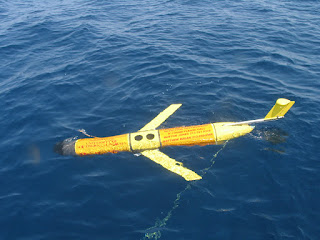
It is time, in the opening days of the new year, to discuss in some depth the Chinese capture of a U.S. UUV off the coast of the Philippines. For those of you caught up in other matters, a good recap of the events can be found at Chris Cavas's Defense News article*, China Grabs Underwater Drone Operated by US Navy in South China Sea:
A Chinese Navy ship intercepted and grabbed a small, unmanned underwater vehicle
U.S. Navy Photo
(UUV) being operated by a US Navy survey ship on Thursday in waters west of the Philippines, US defense officials confirmed Friday.


It is not clear what — if anything — prompted the interception of an ocean glider, described by the National Oceanic and Atmospheric Administration (NOAA) as “an autonomous, unmanned underwater vehicle used for ocean science.”
From the beginning, China has lied about the incident and then has engaged in a disinformation campaign to justify their acts, all the while subtly seeking to expand their power over the South China Sea.

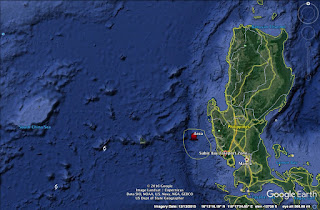
Get the picture as set up by Pentagon spokesman:
Area of incident off Philippines
Pentagon press secretary Peter Cook issued a statement Friday afternoon calling upon the Chinese government to immediately return the drone.

"Using appropriate government-to-government channels, the Department of Defense has called upon China to immediately return an unmanned underwater vehicle (UUV) that China unlawfully seized on Dec. 15 in the South China Sea while it was being recovered by a U.S. Navy oceanographic survey ship," Cook said in the statement.

"The USNS Bowditch (T-AGS 62) and the UUV -- an unclassified "ocean glider" system used around the world to gather military oceanographic data such as salinity, water temperature, and sound speed - were conducting routine operations in accordance with international law about 50 nautical miles northwest of Subic Bay, Philippines, when a Chinese Navy [People's Republic of China] DALANG III-Class ship (ASR-510) launched a small boat and retrieved the UUV.

"Bowditch made contact with the PRC Navy ship via bridge-to-bridge radio to request the return of the UUV," Cook continued. "The radio contact was acknowledged by the PRC Navy ship, but the request was ignored. The UUV is a sovereign immune vessel of the United States. We call upon China to return our UUV immediately, and to comply with all of its obligations under international law."

The Chinese ship was roughly 500 yards away from the Bowditch when the incident occurred, said Capt. Jeff Davis, Pentagon spokesman. Davis added that a crane was used to lift the unmanned system aboard the Chinese vessel.

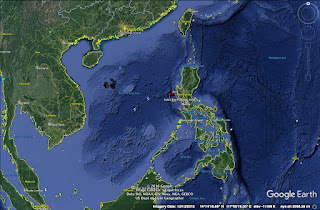
The defense official noted the location in the South China Sea was not in the proximity
Area of incident in South China Sea
of Scarborough Shoal, the site of a disputed Chinese island-building operation. “It’s not even close to Scarborough. It’s about 150 miles away,” the defense official said.


It's unclear what the Dalang 510 did after seizing the ocean glider. The Bowditch, the defense official said Friday, “remains in the area conducting normal operations.”
A few days after pirating the UUV, China returned the glider while lying about its actions, as set out in Sam LaGrone's USNI News piece China Returns U.S. Navy Unmanned Glider:
Chinese officials claimed the glider was a hazard to navigation and they recovered the unmanned vehicle for the safety of the water. The U.S. took issue with Beijing’s interpretation of events.
Interpretation? It was a flat out lie.

Why would China grab a vessel clearly under control of a U.S. Naval vessel - and one that was also clearly in the process of being recovered by USNS Bowditch? Some interesting thoughts from a Japan Times opinion piece by Mark Valencia U.S.-China drone spat: more than meets the eye:
Let’s be clear at the outset. The seizure of the UUV was certainly inappropriate and probably illegal — either as a simple theft or perhaps as a violation of the “sovereign immunity” of warships under the United Nations Convention on the Law of the Sea (UNCLOS).

The U.S. military said the Bowditch — and the UUV — were carrying out scientific research in “international waters.” According to U.S. Navy spokesman Capt. Jeff Davis “the drone was seized while collecting unclassified scientific data.” The U.S. Defense Department said that “the incident was inconsistent with international law and standards of professionalism for conduct of navies at sea.”
***
China’s Defense Ministry explained that the Chinese Navy had taken an “unidentified object” (the UUV) out of the water “in order to prevent the device from causing harm to the safety of navigation and personnel of passing vessels.” Arguably this is a duty of mariners. China criticized U.S. hyping of the incident as a “theft.” China also argued that the activities of drones are a legal “gray area” in which the law is unclear. This is true. Relevant legal questions are whether the “sovereign immunity” clause extends to drones or any “equipment” launched from state vessels; does it apply to “non-ratifiers;” and did the Bowditch, by deploying the drones in the vicinity of another vessel, violate the duty to exercise “due regard” for the rights of other states, e.g. the duty not to present a hazard to navigation? After all the drone was not a “warship” as defined by UNCLOS because it was not “manned by a crew” and it is not a “vessel” because it is not used as a means of transportation.”
***
This analysis is not a justification of China’s action. But it offers possible explanations and background as to why it did what it did. At the least it gives a glimpse of the “cat and mouse” game going on between China and the U.S. in the South China Sea. Both sides are pushing — and even tearing — the legal envelope as they jockey for advantage. (note: "Mark J. Valencia is an adjunct senior scholar at the National Institute for South China Sea Studies in Haikou, China)"
So, Mr. Valencia notes the power struggle while offering up China's weak justifications for its actions. The Chinese rationale was repeated by another scholar in Yan Yan's The US Underwater Drone is not Entitled to Sovereign Immunity, which is set out below in its entirety:
On 20 December, 2016, the unmanned underwater vehicle (UUV) that had been seized by the Chinese Navy was handed back to the US Navy, bringing a conclusion to what US President-elect Donald Trump had labeled as an “unpresidented” event. The Chinese defense spokesman said that the UUV had been removed from the water to ensure the navigational safety of passing ships, but the US asserted that the UUV enjoyed sovereign immunity and that the Chinese action was in violation of international law. Jeff Davis, a Pentagon spokesman, described the UUV as a “sovereign immune vessel, clearly marked in English not to be removed from the water,” and said that it is US property and was lawfully conducting a military survey in the waters of the South China Sea. In a commentary written by James Kraska and Raul “Pete” Pedrozo, the authors hold the same argument that the UUV is a “vessel” that enjoys sovereign immune status, and as such the Chinese activity was a violation of international law.

The US argument is legally flawed if one takes a closer look at the rules of sovereign immunity in the law of the sea and how the US navy applies the UUV to its missions. Two types of ships are granted the sovereign immune status in the oceans according to articles 32, 95, and 96 of the 1982 UNCLOS: “warship” and “other government ships owned or operated by a State and used only on government non-commercial service.” First of all, I agree with Kraska and Pedrozo that the UUV is not a warship as defined by the 1982 UNCLOS. Article 29 of the UNCLOS defines “warship” as “a ship belonging to the armed forces of a State bearing the external marks distinguishing such ships of its nationality, under the command of an officer duly commissioned by the government of the State and whose name appears in the appropriate service list or its equivalent, and manned by a crew which is under regular armed forces discipline.” Although the Pentagon stated that the drone was US property, it was not “manned by crew,” and not clearly listed as a warship on active service.

But is the UUV a government “ship” owned or operated by a State and used only on government non-commercial service?

Kraska and Pedrozo hold that the UUV fits with the definition of “vessel” under Article 3 of the International Regulations for Preventing Collisions at Sea as “every description of watercraft, including non-displacement craft, WIG craft, and seaplanes, used or capable of being used as a means of transportation on water.” But if one looks at the applications of the UUV by the US Navy, it is easy to see that it is not at all used “as a means of transportation on water,” but mostly for purposes of reconnaissance and submarine warfare.

The UUV is a subject that is able to operate underwater without a human occupant, and usually is divided into two categories: remotely operated underwater vehicles (ROVs) and autonomous underwater vehicles (AUVs). For a long time in its history, application of the AUV was highly limited by the available technology. It was not until the last decade that, with more sophisticated processing capabilities and more efficient power supply systems, it could be used for an increased number of tasks.

The US Navy released the Unmanned Underwater Vehicles Master Plan in 2000 and updated it in 2004, describing the missions, capabilities, and technological and engineering issues of the UUV. The Master Plan is chartered by the Deputy Assistant Secretary of the Navy and the Submarine Warfare Division. The nine Sub-Pillar capabilities as identified and prioritized in the UUV Master Plan are: intelligence, surveillance, and reconnaissance; mine countermeasures; anti-submarine warfare; inspection/identification; oceanography; communication/navigation network nodes; payload delivery; information operations; and time-critical strike. Among all, the top-priority mission is intelligence, surveillance, and reconnaissance. In addition to collecting data concerning the ocean surface (like electromagnetic and meteorological conditions) and underwater currents (like salinity and water temperature), the UUV is also capable of performing missions such as offshore surveillance, nuclear/biological detection, and satellite positioning. This is part of the reasons why global military powers have attached great importance to developing UUV-related technology. Highly adaptive to physical conditions and capable of performing multiple tasks in a highly efficient manner, the UUV has been widely viewed as a critical factor in future sea battles. In the wake of the Iraq War, the US began to see it as a primary threat to naval operations, and began to develop new types of UUV-based mine countermeasures.

Therefore, it’s very obvious to the author that the UUV is not used by the US Navy for the purpose of transportation and cannot be classified as a vessel that enjoys sovereign immune status. Rather, considering its functions and applications in the Navy, it is a lot more reasonable to classify it as a “machine,” “robot” or “military device,” which is not entitled to sovereign immunity.

In recent years, the rapid development of China’s Navy, particularly the development of its submarines, has drawn great attention from the US. By conducting intelligence gathering missions, the US has gradually built up an underwater surveillance and detection network covering China’s surrounding waters. It is reported that the US military has completed such networks in the Yellow Sea and East China Sea, and is now trying to build one in the South China Sea. It is predictable that more UUVs will be deployed by the US Navy in the South China Sea in the future. Although there are no definite rules on the application of such a “machine” or “device,” it is reasonable to assert that, like in any other international practice under the framework of the law of the sea, the operators of UUVs shall adhere to the spirit of peaceful use of the sea and ocean, show due regard to navigational safety, respect the coastal states’ laws and regulations, and refrain from using the UUV to perform such missions as undermining or threatening the coastal states’ security. Pointing fingers at each other is not conducive to the bilateral mil-mil relationship, or to the peace and stability in the South China Sea, as China and the US are now the two most important players in the region. (note:"Yan Yan is Deputy Director of the Research Center for Oceans Law and Policy at the National Institute for South China Sea Studies, Haikou, China.")
Ms. Yan repeats the Chinese government misrepresentation of facts, ignores the proximity of the USNS Bowditch to the captured drone and then chooses to quibble about the definition of the term "vessel" as used by two distinguished maritime legal scholars, Kraska and Pedrozo. Their referenced piece is China’s Capture of U.S. Underwater Drone Violates Law of the Sea:
“Vessels” are broadly defined in international maritime law, and are generally synonymous with “ships.” The London Dumping Convention defines a “vessel” as a “waterborne or airborne craft of any type whatsoever.” This expression includes in article 2(3) “air cushioned craft and floating craft, whether self-propelled or not.” Article 1(6) of the 1996 Protocol to the London Dumping Convention also includes “waterborne crafts and their parts and other fittings.” Similarly, article 3 of the International Regulations for Preventing Collisions at Sea defines “vessel” as “every description of watercraft, including non-displacement craft, WIG craft, and seaplanes, used or capable of being used as a means of transportation on water.” This definition includes autonomous and even expendable marine instruments and devices, such as the U.S. drone stolen by the Chinese. The variation between manned systems and unmanned systems, such as size of the means of propulsion, type of platform, capability, endurance, human versus autonomous control and mission set, has not been a defining character of what constitutes a “vessel” or “ship.” Moreover, the seizure of the U.S. drone was a violation of COLREGS itself, which requires mariners to take affirmative steps to avoid closing on other vessels in the water.
Worth noting among the various treaties which define a "vessel" is the International Convention On Salvage, 1989 which contains the following definition:
CHAPTER I

GENERAL PROVISIONS

Chapter I - General provisions
9
Article 1 - Definitions
10
For the purpose of this Convention:
11
(a) Salvage operation means any act or activity undertaken to assist a vessel or any other property in danger in navigable waters or in any other waters whatsoever.
12
(b) Vessel means any ship or craft, or any structure capable of navigation.

***
Article 4 - State-owned vessels
23
1. Without prejudice to article 5, this Convention shall not apply to warships or other non-commercial vessels owned or operated by a State and entitled, at the time of salvage operations, to sovereign immunity under generally recognized principles of international law unless that State decides otherwise.
24
2. Where a State Party decides to apply the Convention to its warships or other vessels described in paragraph 1, it shall notify the Secretary-General thereof specifying the terms and conditions of such application.
Let's look at the type of "glider" UUV-napped by the Chinese. As set out in Slocum Glider,
The Slocum Glider is a uniquely mobile network component capable of moving to specific locations and depths and occupying controlled spatial and temporal grids. Driven in a sawtooth vertical profile by variable buoyancy, the glider moves both horizontally and vertically.
I would assert that being able to move to "specific locations" is a pretty clear indicator that a UUV of the Slocum glider type is capable of "navigation" and is, thereby, a "vessel" as defined by the Convention on Salvage.

Now, Ms. Yan argues that the key element of a "vessel" is that must be "used for transportation" - this assertion represents a rather lengthy legal history of of various court trying to distinguish "vessels" from other things that float but which are not capable of navigation unless towed by or otherwise moved by an outside force. A recent analysis is set out in A Vessel Defined discussing the Lozman case:
A majority of the justices on the US Supreme Court disagreed with the district court and Eleventh Circuit and held the floating home was not a vessel and could not be subject to a maritime lien. It focused its analysis on the meaning of the statutory phrase “capable of being used…as a means of transportation on water”. It declined to interpret the phrase broadly to encompass every item that can float. It reasoned some objects that float such as a wooden washtub, a plastic dishpan, a swimming platform on pontoons, a door taken off its hinges, or “Pinocchio when inside the whale,” are clearly not vessels. Rather, the court held a structure does not fall within the scope of the statutory definition of a vessel unless “a reasonable observer” looking at the structure’s physical characteristics and activities “would consider it designed to a practical degree for carrying people or things over water.”
To quote from the decision itself:
Not every floating structure is a “vessel.” To state the obvious, a wooden washtub, a plastic dishpan, a swimming platform on pontoons, a large fishing net, a door taken off its hinges, or Pinocchio (when inside the whale) are not “vessels,” even if they are “artificial contrivance[s]” capable of floating, moving under tow, and incidentally carrying even a fair-sized item or two when they do so. Rather, the statute applies to an “artificial contrivance . . . capable of being used . . . as a means of transportation on water.” 1 U. S. C. §3 (emphasis added). “[T]ransportation” involves the “conveyance (of things or persons) from one place to another.” 18 Oxford English Dictionary 424 (2d ed. 1989)(OED). Accord, N. Webster, An American Dictionary of the English Language 1406 (C. Goodrich & N. Porter eds. 1873) (“[t]he act of transporting, carrying, or conveying from one place to another”). And we must apply this definition in a “practical,” not a “theoretical,” way. Stewart, supra, at 496. Consequently, in our view a structure does not fall within the scope of this statutory phrase unless a reasonable observer, looking to the home’s physical characteristics and activities, would consider it designed to a practical degree for carrying people or things over water.
So "transportation" includes carrying "things" as well as people.

Again, the glider in question was undoubtedly transporting "things" including sensors and data relating to its navigation.

Ms. Yan's argument is legally insufficient.

Mostly what appears is a disinformation effort by the Chinese to forcefully claim more and more dominance in the South China Sea, even in areas clearly not within any arguable area of Chinese jurisdiction - thus the weak tea assertion of protecting "sea lanes" from a glider - a glider being closely monitored by the USNS ship and, in fact, in the process of being recovered by the US ship.

This aggressive assertion of hegemony over both waters in the high seas and in the EEZ of other countries (in this case the Republic of the Philippines) needs to be forcefully rejected and the Chinese lies about the circumstances of such incidents need to be vigorously countered.

UPDATE: Suggestions that China's own "glider" program is not up to the level of those of the West and a possible motive for why it was grabbed here. Hat tip to Ryan Martinson and to Scott Cheney-Peters.

UDPATE2: Interesting discussion at Hybrid Warfare in the South China Sea: The United States’ ‘Little Grey (Un)Men':
There should be little doubt that the use of unmanned systems sets a strong political signal. Not only does it unambiguously establish the Washington and its allies’ willingness to counter Beijing’s “Little Blue Men,” it demonstrates the United States’ capacity to maintain its presence and reach into highly contested territory. Moreover, while providing additional intelligence to the United States and its allies, it signals an eagerness not only to challenge China’s posture but also to expand in another direction within the framework of hybrid/political warfare.
Perhaps a little overstated, since the UUV in question was not in what most would consider "highly contested territory" unless one grants China's claims to most of the South China Sea, claims already rejected by a tribunal as set out here.


*All emphasis added by me

Sunday, January 01, 2017

New Year Quotes

Let's start the New Year with some quotes from Voltaire:

 
“Let us read, and let us dance; these two amusements will never do any harm to the world.”
***
“‎Life is a shipwreck, but we must not forget to sing in the lifeboats.”
***
“Common sense is not so common.”
***
“It is dangerous to be right in matters on which the established authorities are wrong.”
***
“Think for yourself and let others enjoy the privilege of doing so too.”
***
“Appreciation is a wonderful thing. It makes what is excellent in others belong to us as well.”
***
“Ice-cream is exquisite. What a pity it isn't illegal.”
You can fit a lot of living in those words.


Friday, December 30, 2016

Friday Film: "Resisting Enemy Interrogation" (1944)

About:
Resisting Enemy Interrogation is a 1944 American army training film, directed by Bernard Vorhaus and written by Harold Medford, that was designed to train U.S. Army Air Forces crews to resist interrogation by the Germans.

The film, 62 minutes in length, received an Academy Award nomination for best feature-length documentary for the year 1944. ***The cast includes Arthur Kennedy, Mel Tormé, Lloyd Nolan, Craig Stevens and Peter Van Eyck.


Tuesday, December 27, 2016

Sure they are "Iranian Navy Reveals Plans to Build Aircraft Carrier"

More fake news from Iran's "semi-official" (read blatant propaganda machine) "news" agency, Farsnews: Iranian Navy Reveals Plans to Build Aircraft Carrier:
A senior Iranian Navy commander underlined the country's self-sufficiency to produce different types of weapons, missiles and equipment, and announced plans to construct an aircraft carrier.
"At present, the defense ministry and the Navy are both after building military equipment for naval warfare but the defense ministry is producing different types of missiles indigenously and the Navy's needs to missiles are met using this capacity," Deputy Navy Commander for Coordination Admiral Peiman Jafari Tehrani said on Monday.

"Building an aircraft carrier is also among the goals pursued by the Navy and we hope to attain this objective," he added.

Two years ago, Iranian Navy Commander Rear Admiral Habibollah Sayyari had announced that the country was capable of building aircraft carriers and heavy submarines.

"As we have managed to produce warships and submarines, we also have the capability to build aircraft carriers and heavy submarines," Sayyari said in 2014.

He underlined that building aircraft carriers and heavy submarines can be started upon a relevant decision by high-ranking Iranian officials.
Hahahahahahahahahahahahah!

The photo above accompanies the Fars article, In the past such a flight deck on a ship has caused the Iranians to call that ship a "helicopter carrier" which might be literally true sorta misses the point, doesn't it?

As a friend of mind used to say about a legal brief he was supposed to be writing but hadn't gotten around to, "It's just a matter of putting pen to paper." I guess Iran can plan to build anything. Perhaps even flying aircraft carriers if it so chooses, but there's lot of distance between plans and getting to work welding metal.

I'll help, though, by offering up some secret plans to them:

A stealth fighter for tiny pilots
Another fine faux product
Perhaps they can use their famed "stealth fighter" on their planned carrier. Along with its fake drones. That would double the fun. In short, believe it when you actually see it,

They might as well announce that they have plans for the Death Star, In fact, here they are:


U.S. Navy Office of Naval Intelligence Worldwide Threat to Shipping (WTS) Report 22 November - 21 December 2016


Saturday, December 24, 2016

Merry Christmas!


Luke 2:1-20

1 In those days Caesar Augustus issued a decree that a census should be taken of the entire Roman world.

2 (This was the first census that took place while Quirinius was governor of Syria.)

3 And everyone went to his own town to register.

4 So Joseph also went up from the town of Nazareth in Galilee to Judea, to Bethlehem the town of David, because he belonged to the house and line of David.

5 He went there to register with Mary, who was pledged to be married to him and was expecting a child.
6 While they were there, the time came for the baby to be born,

7 and she gave birth to her firstborn, a son. She wrapped him in cloths and placed him in a manger, because there was no room for them in the inn.

8 And there were shepherds living out in the fields nearby, keeping watch over their flocks at night.

9 An angel of the Lord appeared to them, and the glory of the Lord shone around them, and they were terrified.

10 But the angel said to them, "Do not be afraid. I bring you good news of great joy that will be for all the people.

11 Today in the town of David a Savior has been born to you; he is Christ [a] the Lord.

12 This will be a sign to you: You will find a baby wrapped in cloths and lying in a manger."

13 Suddenly a great company of the heavenly host appeared with the angel, praising God and saying,

14 Glory to God in the highest, and on earth peace to men on whom his favor rests."

15 When the angels had left them and gone into heaven, the shepherds said to one another, "Let's go to Bethlehem and see this thing that has happened, which the Lord has told us about."

16 So they hurried off and found Mary and Joseph, and the baby, who was lying in the manger.

17 When they had seen him, they spread the word concerning what had been told them about this child,

18 and all who heard it were amazed at what the shepherds said to them.

19 But Mary treasured up all these things and pondered them in her heart.

20 The shepherds returned, glorifying and praising God for all the things they had heard and seen, which were just as they had been told.
Merry Christmas!

Holiday routine is in effect.

Update: Holiday header click to enlarge

Saturday Is Old Radio Day: Our Miss Brooks, "The Magic Christmas Tree (1948)


Ho!Ho! Ho!

Friday, December 23, 2016

Friday Fun Film: The Night Before Christmas" (1905)

It's a little early, but here's a golden oldie from Thomas Edison in 1905 in which Santa seems to be working hard, but doesn't seem all that skilled in some of the tasks the undertakes. Probably why he hired all those elves to help him out.


A Visit from St. Nicholas
'Twas the night before Christmas, when all through the house

Not a creature was stirring, not even a mouse;
The stockings were hung by the chimney with care,
In hopes that St. Nicholas soon would be there;
The children were nestled all snug in their beds;
While visions of sugar-plums danced in their heads;
And mamma in her 'kerchief, and I in my cap,
Had just settled our brains for a long winter's nap,
When out on the lawn there arose such a clatter,
I sprang from my bed to see what was the matter.
Away to the window I flew like a flash,
Tore open the shutters and threw up the sash.
The moon on the breast of the new-fallen snow,
Gave a lustre of midday to objects below,
When what to my wondering eyes did appear,
But a miniature sleigh and eight tiny rein-deer,
With a little old driver so lively and quick,
I knew in a moment he must be St. Nick.
More rapid than eagles his coursers they came,
And he whistled, and shouted, and called them by name:
"Now, Dasher! now, Dancer! now Prancer and Vixen!
On, Comet! on, Cupid! on, Donner and Blitzen!
To the top of the porch! to the top of the wall!
Now dash away! dash away! dash away all!"
As leaves that before the wild hurricane fly,
When they meet with an obstacle, mount to the sky;
So up to the housetop the coursers they flew
With the sleigh full of toys, and St. Nicholas too—
And then, in a twinkling, I heard on the roof
The prancing and pawing of each little hoof.
As I drew in my head, and was turning around,
Down the chimney St. Nicholas came with a bound.
He was dressed all in fur, from his head to his foot,
And his clothes were all tarnished with ashes and soot;
A bundle of toys he had flung on his back,
And he looked like a pedler just opening his pack.
His eyes—how they twinkled! his dimples, how merry!
His cheeks were like roses, his nose like a cherry!
His droll little mouth was drawn up like a bow,
And the beard on his chin was as white as the snow;
The stump of a pipe he held tight in his teeth,
And the smoke, it encircled his head like a wreath;
He had a broad face and a little round belly
That shook when he laughed, like a bowl full of jelly.
He was chubby and plump, a right jolly old elf,
And I laughed when I saw him, in spite of myself;
A wink of his eye and a twist of his head
Soon gave me to know I had nothing to dread;
He spoke not a word, but went straight to his work,
And filled all the stockings; then turned with a jerk,
And laying his finger aside of his nose,
And giving a nod, up the chimney he rose;
He sprang to his sleigh, to his team gave a whistle,
And away they all flew like the down of a thistle.
But I heard him exclaim, ere he drove out of sight—
“Happy Christmas to all, and to all a good night!”
BY CLEMENT CLARKE MOORE

Tuesday, December 20, 2016

The Gunboat Navy

Getting the U.S. Navy numbers up faster, sooner while waiting for the longer lead-time construction discussed by Claude Berube and me over at The National Interest in Trump's Gunboats

Instead of continuing to use the wrong tool for the job, it is logical to develop a diverse force of smaller naval ships to handle numerous, smaller missions, leaving the blue water navy to pursue the larger, vital warfighting role that it was designed to do. Smaller navy vessels working in squadrons may be more cost-effective in responding to global maritime incidents, patrolling coasts, and deterring similar forces.
Go take a look.

Update: But wait, there's more - U.S. Navy "Swarm Boats":
The U.S. Navy is getting ready to "swarm" its adversaries.

The Office of Naval Research over the weekend released video of tests conducted in August that showed five "drone" boats swarming a vessel that posed a threat to a Navy ship.
"The U.S. Navy is unleashing a new era in advanced ship protection," the service says in the video.


Can you say, "Force multiplier?"

Saturday, December 17, 2016

On Midrats 18 Dec 2016 Episode 363: The South African Border War and its Lessons, with LT Jack McCain

Please join us at 5pm EST on 18 Dec 2016 for Midrats Episode 363: The South African Border War and its Lessons, with LT Jack McCain
If you define the Cold War as lasting 44 years from 1947 to 1991, then
for over half the Cold War there was a simmering proxy war in southern Africa that involved, to one extent or another, the present day nations of Angola, Namibia, Zambia, and South Africa.

Over the course of time, it would involve nations from other hemispheres such as Cuba, and brought in to conflict two political philosophies of the 20th Century now held in disrepute in the 21st Century; Communism and Apartheid.

The last decade of the Cold War brought the conflict in fresh relief as part of the Reagan administration's push back against Communist aggression in South Africa, Central America, Afghanistan and elsewhere. Acronyms such as UNITA, and SWAPO were as well known then as AQAP and Boko Haram are now.

What does that relatively unknown conflict have to teach us about the nature of war today?

Our guest for the full hour to explore that answer will be Lieutenant Jack McCain, USN.

LT McCain is a helicopter pilot with operational experience in Guam, Japan, Brunei, the Persian Gulf, and the Western Pacific and is a graduate of the United States Naval Academy and Georgetown University’s School of Foreign Service. He is currently assigned as an instructor at the U.S. Naval Academy.

The opinions he expresses are his own and represent no U.S. government or Department of Defense positions.
Join us live if you can (or pick the show up later) by clicking here. Or pick the show later from our iTunes or Stitcher pages.

Saturday Is Old Radio Day: "Shock Troop" from X Minus 1 (1957)

An invasion of Earth and the problems of the invaders.


This episode of Science Fiction (which seems better to me on the radio than on TV) is by Daniel F. Galouye:
Galouye was a test pilot during World War II. From injuries sustained at that time his health deteriorated and eventually led to his early death. His first novel, Dark Universe (1961), was nominated for a Hugo. His 1964 novel Simulacron 3 was filmed in 1999 as The Thirteenth Floor. In 2007 Galouye was honored with the Cordwainer Smith Rediscovery Award, given to those deceased authors whose work deserves to be "rediscovered."

Wednesday, December 14, 2016

Getting Out of the Gulf? Letting the Arabian Gulf Countries Fend for Themselves in Letting Oil Flow

Behind the pay wall at Foreign Affairs is this think piece by Charles L. Glaser and Rosemary A. Kelanic Getting Out of the Gulf: Oil and U.S. Military Strategy which is really not about military strategy, but about national strategy for the Persian Gulf. This means tracing our involvement back to President Jimmy Carter:
In January 1980, U.S. President Jimmy Carter used his State of the Union address to announce that in order to protect “the free movement of Middle East oil,” the United States would repel “an attempt by any outside force to gain control of the Persian Gulf.” Carter and his successors made good on that pledge, ramping up U.S. military capabilities in the region and even fighting the Gulf War to prevent Saddam Hussein’s Iraq from dominating the region’s oil supplies. Although Washington has had a number of interests in the Persian Gulf over the years, including preventing nuclear proliferation, fighting terrorism, and spreading democracy, the main rationale for its involvement has always been to keep the oil flowing.
The authors point out that the world has changed since 1980 and pose a multi-billion dollar question:
Is Persian Gulf oil still worth defending with American military might?
I should note that back in 2004, I posited the need to plan a curtailment of Middle East oil in Contingency Planning 101: Preparing for an world oil shortage:
[A]n oil shortage may impel more rapid adoption of alternative fuel sources, including natural gas, hydrogen, nuclear power. Coal, of which the U.S. has a lot, can be "gasified".
Gasification, in fact, may be one of the best ways to produce clean-burning hydrogen for tomorrow's automobiles and power-generating fuel cells. Hydrogen and other coal gases can also be used to fuel power-generating turbines or as the chemical "building blocks" for a wide range of commercial products.
The authors of the Foreign Affairs article suggest:
First, if the United States ended its commitment, how much likelier would a major disruption of Gulf oil be? Second, how much damage would such a disruption inflict on the U.S. economy? Third, how much does the United States currently spend on defending the flow of Gulf oil with its military? Finally, what nonmilitary alternatives exist to safeguard against a disruption, and at what price? Answering these questions reveals that the costs of preventing a major disruption of Gulf oil are, at the very least, coming close to exceeding the expected benefits of the policy. So it’s time for the United States to give itself the option of ending its military commitment to protecting Gulf oil, by increasing its investment in measures that would further cushion the U.S. economy from major oil disruptions. And in a decade or so, unless the region becomes far more dangerous, the United States should be in a position to actually end its commitment.
They suggest some sort of economic disruption:
Assessments of the U.S. economy’s sensitivity to oil prices also vary widely, but a reasonable estimate is that a doubling of the price of oil would shrink U.S. GDP by three percent—or approximately $550 billion. Of course, smaller disruptions would result in smaller economic losses, and the most catastrophic disruption—a long, complete closing of the Strait of Hormuz—would cause larger ones.

But the actual costs to the United States would be far smaller, because Washington could draw on the Strategic Petroleum Reserve, its emergency underground oil stockpile, to relieve the pressure on prices. The roughly 700 million barrels currently stored in the SPR form part of the more than four billion barrels held by members of the International Energy Agency (IEA), an organization founded in 1974 to coordinate collective responses to major oil disruptions.

What all of this means is that if the world experienced a massive disruption of oil from the Persian Gulf, a coordinated international release of various reserves could initially replace the vast majority of the daily loss. In all but the worst-case scenarios—far more severe than anything seen before—the impact of a severe disruption would be greatly cushioned.
What they do not discuss is the cushioning effect of the U.S.'s increased oil and gas reserves through the use of new drilling techniques and fracking - there is simply no mention in the article that the U.S. is thought by some to be the leader in energy reserves, as set out in in Oil Price.com's "U.S. Has World’s Largest Oil Reserves":
The U.S. holds more oil reserves than anyone else in the world, including Saudi Arabia, Russia, and Venezuela.

That conclusion comes from a new independent estimate from Rystad Energy, a Norwegian consultancy. Rystad estimates that the U.S. holds 264 billion barrels of oil, more than half of which is located in shale. That total exceeds the 256 billion barrels found in Russia, and the 212 billion barrels located in Saudi Arabia.

The findings are surprising, and go against conventional wisdom that Saudi Arabia and Venezuela hold the world’s largest oil reserves. The U.S. Energy Information Administration, for example, pegs Venezuela’s oil reserves at 298 billion barrels, the largest in the world. Rystad Energy says that these are inflated estimates because much of those reserves are not discovered. Instead, Rystad estimates that Venezuela only has about 95 billion barrels, which includes its estimate for undiscovered oil fields.
Some analysis is less aggressive in assessing U.S. reserves, because of a matter of "proven" reserves:
Proven oil reserves are those that have a reasonable certainty of being recoverable under existing economic and political conditions, with existing technology.
Let's parse that a little. The key part of the quote being "existing economic and political conditions," which exactly what we have seen play out with the reserves unleashed by fracking and unconventional technology being applied to the oil patch - as the price of oil from outside the U.S. rose, the ability and affordability of U.S. drillers to develop fields not cost effective under lower prices also rose. Now, as experience in using such techniques has grown, that "price point" has dropped, much to the regret of OPEC, which no longer has real cartel power over oil prices. See Why OPEC can't stop the shale oil industry:
Just as a cartel benefits from cutting output to raise price, it suffers from raising output to lower price. This would not be true if it could permanently eliminate competitors by temporarily lowering prices, but that is not the case here. The shale oil industry is resilient and flexible – just as it can be pushed out of the market by very low prices, it can promptly get back into the market when prices improve. So an extended attempt by OPEC to close down the shale industry is a lose-lose situation, and as such is very unlikely to happen.
Perhaps this is a minor quibble, concerning the article, but the point I am attempting to make is that the economic impact of U.S. withdrawal from the Gulf may not be anything close to what is predicted in the article. In fact, it may further increase U.S. development of its own reserves and in alternatives (hydrogen fuels?) which may not be cost-effective in "existing economic and political conditions, with existing technology" but which may spur new technology and which would certainly increase American jobs for Americans, which, after all, is a pretty important governmental concern.

Now, let's circle back a little.

The U.S. government, in part due to the "Carter Doctrine", has maintained a very expensive presence
in the Arabian Gulf.

The authors of the article pose the right questions - "Is it still in the U.S. interest to expend any effort in guarding those oil sea lines of communication that flow out of the Arabian Gulf? In whose vital national interests is it to keep sending aircraft carriers and other ships to attempt to preserve the status quo in the Arab/Persian Middle East? Is it time for the U.S. to remove itself from the Gulf? Whose interests would be served by our doing so?"

Would Iran establish the regional hegemony it seems to so strongly desire? Would the Chinese rush in to replace the U.S.? Or would the Chinese be concerned that the U.S. might suddenly free up a large portion of its Navy to be deployed to other areas that, 36 years after Mr. Carter's speech, are now of much greater interest to the U.S.?

I would argue that the new administration should take a close look at these issues and at the issues raised by the "You broke it, you fix it" attitudes in Iraq and Afghanistan. We have thrown a lot of time, talent and money into trying to convert those states into something that looks like us. It is time to rethink our goals and leave the inhabitants of the region to sort themselves out? Are we doomed to play Sisyphus and keep trying to push uphill the burden that no one in the area seems ready to take up? Is it time for us to engage in a little "benign neglect" and back off?

Is it time to postulate a policy built more on "punitive expeditions" than on nation building? See Intervention in International Law (1921) (pdf):
When the territorial sovereign is too weak or is unwilling to enforce respect for international law, a state which is wronged may find it necessary to invade the territory and to chastise the individuals who violate its rights and threaten its security.
Had we smashed the Taliban in Afghanistan for their support of al Qaeda and then left with a stern warning that we would come back again should they continue in their evil ways, would we have been better off?

If we had gone after Saddam Hussein in 1991 and punished him for his violations of international law, would we have had to go back?

With a new administration coming, now is the time to ask such questions, and set national strategy accordingly.


Tuesday, December 13, 2016

Things to Read and Consider - Energy Edition

From the U.S. Energy Information Administration, the "Short Term Energy Outlook"
U.S. crude oil production averaged 9.4 million barrels per day (b/d) in 2015, and it is forecast to average 8.9 million b/d in 2016 and 8.8 million b/d in 2017.
From the Peak Oil website, I Was Wrong About Peak Oil:
But two lucky things happened to delay this Peak Oil economic disaster. First, horizontal drilling and fracking allowed drilling companies to pump oil and natural gas out of hard to reach areas. As a result, the supply of oil (and its substitute natural gas) went up, with a commensurate reduction in oil and gas prices. Second, the availability of less expensive alternative forms of energy (particularly wind and solar) — combined with concerns about global warming — have reduced demand for fossil fuels.
I don't think "luck" had much to do with it. Good engineering and science, on the other hand, matter greatly.

An older article from the Audubon Society Will Wind Turbines Ever Be Safe For Birds?:
Wind turbines kill an estimated 140,000 to 328,000 birds each year in
Photo Source
North America, making it the most threatening form of green energy. And yet, it’s also one of the most rapidly expanding energy industries: more than 49,000 individual wind turbines now exist across 39 states.


The wind industry has the incentive to stop the slaughter: Thanks to the Migratory Bird Treaty Act, it’s illegal to kill any bird protected by the Act—even if the death is "incidental," meaning it occurs unintentionally on the part of the wind farm. The Bald and Golden Eagle Protection Act recommends that to avoid eagle deaths, specifically, companies seriously consider where they site their wind developments, and that they also limit turbines’ impact using techniques like radar to detect incoming birds....
Oh, not just birds, bats, too, because of, you know, "unpredictability," (emphasis added)
Professor Fiona Mathews, of Exeter University, said: "The findings highlight the difficulty of establishing with certainty the effect of major developments before they occur.

"This is a real problem for the planning system.

"In most countries the system of Environmental Impact Assessment is based on the assumption accurate assessment of risks can be made in advance and so appropriate steps can be taken to avoid any adverse effects - or if the bad effects cannot be mitigated, then the development should not be permitted to go ahead.

"Our work highlights this can be difficult to achieve in practice as animals do not always behave the way we might anticipate."
While on the topic of wind turbines, there is the question of unintended consequences, even without their bird killing aspect, as set out in this Meteorology News blog post, Could Windmills Alter the Weather?
Photo Source
Scientists Daniel Barrie and Daniel Kirk-Davidoff of the University of Maryland have shown that installation of a massive wind farm covering the bulk of the central United States into central Canada would effectively “steal” energy from the atmosphere. As anyone who has studied basic physics may recall, in a closed system such as the Earth’s atmosphere, energy is conserved, that is, it cannot be created or destroyed. As air flows through the blades of a gigantic, 300-foot wind turbine tower, the wind energy turns the blades. This energy is robbed from the atmosphere, effectively slowing the wind speed proportionally. The greater the array of wind turbines, the more energy is removed from the atmospheric flow and the slower the ambient wind will travel.Slowing wind speeds by 5 or 6 miles per hour – while it sounds negligible, could have significant impacts on the large-scale atmospheric flow and yield consequences we do not yet understand.
I have not really looked at the environmental impact statements required of these "green" turbines, but . . .
Conservative estimates are that it would take at least a quarter-million wind turbines to meet the United States’ energy needs. Installation of such an enormous array of wind turbines would have a profound impact on the atmospheric wind flow over the surface of the United States and perhaps even other nations.
Hmmm. "Could have . . ."

In retrospect, what seems an ironic use of the "butterfly effect" to promote wind power in the HuffPo:
Mathematician, meteorologist and chaos theory pioneer Edward Lorenz was the man behind the butterfly effect. The simple, appealing idea embedded in the analogy that if a distant butterfly flaps its wings a few weeks later you might have a hurricane on your doorstep.
How many hurricanes might a quarter-million wind turbines cause to arrive on your doorstep? What is the impact on taking millions of birds and bats out of our world?

Newton's third law seems applicable "For every action there is an equal and opposite reaction." It seems we don't yet know what all the reactions might be, but as noted above, there are many "laws" of science that apply to windfarms - including the first law of thermodynamics.

So, what is "green?"

Monday, December 12, 2016

Speaking of Fake News, Iran Touts Its War Games

Ah, Iran - never give up a chance to spread misonformation - for example, there is this report about a new Iranian drone, "Iran's Ground Force Unveils New Drone during Massive Drills", featuring this impressive photo, which one might assume is of their new toy:

Well, no, actually it's a photo of a U.S. Predator drone taken by AP's Kirsty Wigglesworth as set out here.

By the way, the "hand launched" Iranian drone is somewhat limited:
The Iranian Ground Force unveiled a new drone named 'Farpad' during the massive wargames codenamed 'Mohammad Rasoulallah (PBUH) 4' in the Southeastern parts of the country on Monday morning.
The hand-launched drone is run by autopilot and can fly maximum 45 minutes to the range of 20km.
Not impressed.

More on the incredible awesomeness of the Iranian wargames here and here. While interesting on several levels, the war games seems mostly to demonstrate a target rich environment. But every country is entitled to practice some sort of self-defense, I suppose.

Of more concern is the Iranian support of Syria with both troops and logistics and its influence in Iraq. Now, if they want to talk about those things, it would be interesting. See Long War Journal for examples:
According to the Saudi newspaper Asharq al Awsat, 80 Iranian military advisors have joined the operation in Fallujah to support the militias in the Iranian-backed Popular Mobilization Forces. At least two members of the Islamic Revolutionary Guard Corps (IRGC) Basij paramilitary have been killed as a result of injuries sustained near Fallujah in the past two months. But there have been no announced casualties of Iranians since the operation to retake Fallujah commenced two weeks ago.


U.S.Navy Office of Naval Intelligence Worldwide Threat to Shipping (WTS) Report 8 November - 7 December 2016


There is also some interesting news from the Caribbean as some of the ramifications of Venezuela's collapse are felt by sea-going peoples. Report from The Guardian of Trinidad and Tobago, "Pirates preying on Venezuela fishermen as industry unravels,"
Pirates are terrorising the coastal state of Sucre, once home to the world’s fourth-largest tuna fleet and a thriving fishing industry.

That trade has collapsed, along with virtually every industry across Venezuela. Gangs of out-of-work fishermen prey upon those who still venture out into the open sea, stealing their catch and their motors, tying them up, throwing them overboard, and sometimes shooting them. The robberies have taken place daily this year, and dozens of fishermen have died.

“People can’t make a living fishing anymore, so they’re using their boats for the options that are left: smuggling gas, running drugs, and piracy,” said Jose Antonio Garcia, leader of the state’s largest union.

Saturday, December 10, 2016

On Midrats 11 Dec 2016 - Episode 362: Towards a 350 Ship Navy, with Jerry Hendrix

Please join us at 5pm EST at 11 Dec 2016 for Midrats Episode 362: Towards a 350 Ship Navy, with Jerry Hendrix:
Even before the election, President-elect Trump mentioned he wanted to get to a 350 ship Navy. The outgoing Secretary of the Navy has put us on a path to 308, and in his waning months is fighting a holding action on the shipbuilding budget giving as good of a turnover in this area to his relief.

What are the viable paths to 350 we could see in the opening years of a Trump Presidency? How long could it realistically take? What would a fleet look like 5, 10 or 20 years down the road?

What will this fleet be built to do? Will we need new designs to meet the evolving maritime requirements of an eventual national strategy?

To discuss this and more Sunday from 5-6pm Eastern will be one of our favorite guests,
Dr. Jerry Hendrix, CAPT USN (Ret.), Senior Fellow and the Director of the Defense Strategies and Assessments Program at the Center for a New American Security.

His staff assignments include tours with the CNO’s Executive Panel, the Office of the Undersecretary of Defense for Policy, and the OSD Office of Net Assessment.

His final active duty tour was the Director of Naval History.

He has a Bachelor Degree in Political Science from Purdue University, Masters Degrees from the Naval Postgraduate School (National Security Affairs) and Harvard University (History) and received his doctorate from King’s College, London (War Studies). He has twice been named the Samuel Eliot Morison Scholar by the Navy Historical Center in Washington, DC, and was also the Center’s 2005 Rear Admiral John D. Hays Fellow. He also held the Marine Corps’ General Lemuel C. Shepherd, Jr. Fellowship. He authored the book Theodore Roosevelt’s Naval Diplomacy and received a number of awards, including the United States Naval Institute’s Author of the Year and the Navy League’s Alfred T. Mahan Award for Literary Achievement.

Join us live if you can (or pick the show up later) by clicking here. You can also get the show later by visiting our iTunes page or from our Stitcher page.

Saturday Is Old Radio Day: The Great Gildersleeve

A spin-off from Fibber McGee and Molly, in which Gildersleeve, played by Harold Peary, often was a foil to Fibber's machinations, but the payoff was a standalone show, The Great Gildersleeve:
In Fibber McGee and Molly, Peary's Gildersleeve had been a pompous windbag and antagonist of Fibber McGee. "You're a haa-aa-aa-aard man, McGee!" became a Gildersleeve catchphrase.
***
"Gildy" grew so popular that Kraft Foods—promoting its Parkay margarine—sponsored a new series featuring Peary's somewhat mellowed and always befuddled Gildersleeve as the head of his own family.
Here's an early episode, "Gildy Arrives in Summerfield"


A great deal more on the series here, and a tip of the hat for the photo of Harold Peary above.