4. SOMALIA: An unidentified bulk carrier was pursued 30 Sep at 2320 UTC while underway in position 05:05N, 051:05E about 150 nm off the Somali coast. A fishing boat came within 1.7 nm while ship’s master undertook evasive maneuvers. Boat pursed the bulk carrier for about 2 hours. ONI NOTE: If this represents a true attempted boarding, it sets a new outer boundary for safe steaming which has previously been set as 120 nm off the Somali coast (IMB).
VertRep

Monday, October 17, 2005
Latest ONI World Wide Threat to Shipping (12 October)
Go here and click on the date. Highlight:


Amphibious Robbery Attempt? Yikes!
Warn the Phibian that someone is taking lessons in amphbious assault as reported here:
THE adoption of amphibious tactics by robbers in their recent raid on a bank in Lagos, warns of new and more disarming robbery techniques on land. Amphibious operation, a strictly military and sea pirates strategy, was hitherto known to have been used by robbers in the creeks of Niger Delta.Any idea where CDR Salamander has been traveling recently?
But the latest bank raid was all-round military. Like a thunderbolt, 12 robbers, in combat fatigue, and armed with high-velocity rifles, disembarked from their speed boat behind the bank on a waterfront and started firing sporadically into the air and at the bank building. Simultaneously, they barricaded access roads to the bank and put road users to flight.
The robbers' swift and dare-devil advance to the bank was temporarily halted by the bank's security outfit, which had earlier, promptly informed the police of the raid. But apparently held back by superior fire-power of the robbers and inadequate manpower, the police could not respond instantly. The Marine Police, of which special responsibility is to patrol coasts and ward off intruders, were no where in sight to halt the robbers' disembarkment or to chase them away, nor were there the Naval personnel who share the same duty with the marine police.
I'm a little confused by the timing...
Read this and see if you can figure out why it is being published now, in President Bush's second term and nearly a year after the last election. I can't.
World Food Program Ships: Released but need escorts to go home
Noted here:
Two ships and 20 crew members released by Somali hijackers will need armed escort to reach Mombasa safely.Since the UN doesn't have any warships, perhaps a real navy might want to help out? Perhaps France?
Mr Karim Kudrati, the managing director of Motaku Shipping Agencies, which owns the two vessels, MV Miltzow and MV Semlow, yesterday expressed fears that the ships might be re-captured by gunmen in the war-torn country if they left El Maan port without escort.
"It would be a risky undertaking for the ships and their crew to leave the Somalia waters without armed security," said Kudrati in Mombasa.
The vessels were released on different dates, but have not been able to travel back due to lack of arrangements for their safe departure and arrival.
Seventeen of the former hostages are Kenyans.
"I do not want my vessels and crew to land in more problems after suffering for over three months," said Kudrati.
He said the two vessels could leave anytime as they had completed discharging their cargo.
They have also refuelled and all they require is security before setting off, said the official. He said he had contacted El Maan port authorities in Somalia to see whether they could provide the escort. When reached for comment, World Food Programme Somalia deputy country director, Mr Leo van der Velden, said it was upon the shipping agent to make an official request to the organisation on the issue.
Two of the ships captured had been chartered by the WFP to ferry relief supplies to Somalia.
Velden said once Motaku made the request, the agency would forward it to the United Nations to see whether they could intervene over the thorny issue.
Hidden Soviet bio-weapons still out there?
Report asks Do KGB agents, recruited by al-Qaeda, still guard the post-Soviet biological weapons hidden in Britain?
And book sales
Nonetheless,
Hmmm.
It’s like in a game "Russian roulette": nobody knows where’s the bullet and when the gun will fire a shot. During the Cold War, the Soviet intelligence hid some WMDs in the West: biological, chemical and nuclear. There’s a lot of evidence that the weapons remain in place, guarded and maintained by Russian spies. Will terrorists use them?There's more - suitcase nukes, overpressure grenades, and .... all just in time fo Halloween.
And book sales
Nonetheless,
Hmmm.
Sea law amended to help stop ships being used in terror attacks
Reported here, some changes to international law to get better control of possible maritime terrorist ships:
More here.
A new treaty makes it illegal for ships to carry weapons of mass destruction and allows states to search in international waters vessels suspected of being used as floating bombs, the U.N.'s maritime body said on Monday.Looks like the US got most of what it wanted...
The law also makes it an offence for merchant ships to be used to transport equipment and individuals involved in carrying out terrorist acts and provides a legal basis for the arrest and extradition of suspects.
The U.N. International Maritime Organisation (IMO) said the treaty, adopted by 126 countries representing 82 percent of the world's fleet, was thrashed out at a conference in London last week and needs to be ratified.
In a statement on Monday, IMO Secretary-General Efthimious Mitropoulos urged governments to ratify the treaty quickly to send "a strong message that the maritime community is eager and willing to protect the industry against acts of terrorism."
Delay would strengthen the hand of those trying to exploit loopholes in existing laws, he said. Mitropoulos said the industry had to be fully armed to counteract the "gravest menace it has ever faced".
Since the attacks on the United States in September 2001, governments have become increasingly concerned that the legal framework surrounding international shipping made maritime traffic vulnerable to use by militants.
In particular, they were worried that countries were unable to order a ship flying another nation's flag to stop and be searched in international waters without running the risk of a major diplomatic incident.
Ships trading far from a country's territorial waters, in the deep ocean, are classed as sovereign entities. Nations have much more power to search a suspect vessel within their own territorial waters extending to 12 nautical miles from shore.
Only last week a U.S. coastguard chief told a maritime security conference in Copenhagen that Washington wanted to be able to search ships as far from its shores as possible to deter a possible attack it fears could come from the sea.
More here.
Malacca Strait Stirrings

For a long time, much of the piracy in the Strait of Malacca was focused on local shipping and simple robbery at sea. But after a couple of seizures or attempted seizures of larger international ships, the focus of the international shipping world and of many of many of the countries that depend on this vital sea lane began to focus on "helping" the littoral states solve their piracy probelm. The underlying concern is, of course, that some terrorist group will find a way to close the Strait, hinder shipping, or do harm to major ports in the area, like Singapore. Such efforts to be helpful have generally been in vain, except with this encouragement and some aid packages, these states have stepped up their own efforts and have begun to engage in joint operations to quell the pirates of Malacca. Japan, Australia, the US, and China have all offered patrol help. All have been rejected for the most part, and issues of sovereignty and territorial waters have dominated the discussions... On the other hand, piracy seems to have slowed in the area.
Now, however, there is this article, which discusses some underwater proposals:
Citing the threat of terrorism, U.S. Navy submariners have been clamoring for years to get permission from neighboring countries to patrol the straits, which have been plagued by piracy around the Singapore Strait section, where the waterway narrows to only 1½ miles wide.Thes Navy students might want to talk to DARPA (and Stanford and Carnegie-Mellon Univeristies) about autonomous vehicles, as they seem to be working on parallel lines for vehicles ashore. There might just be some sharable ideas.
Last year, a proposal by the head of the Navy's Pacific Command suggesting the U.S. could work with surrounding countries to collect intelligence and patrol the straits was met with angry rejection by all except Singapore.
So far, Malaysia and Indonesia have declined to let in the Navy.
Now, the three countries' navies handle the patrols. China is also interested in security in the straits because nearly all of the country's imported oil and 60 percent of its total supply pass through the region.
China has recently been working on military cooperation with Indonesia, and some Asian newspapers have reported China negotiating to build a submarine base there.
The Navy continues to work with Singapore on maritime security systems for the region. Starting in 2004, 21 students at the Naval Postgraduate School began a study focusing on ship and port security in the straits. The group also designed systems to better detect explosive and dangerous materials aboard cargo ships. This year, 26 students came from Singapore to work with the Naval Postgraduate School on the project.
The Defense Department is now interested in using small unmanned submarines in the region. These autonomous undersea vehicles, or AUVs, weigh only about 500 pounds and are especially useful for finding underwater mines.
Since 1987, the Naval Postgraduate School has built three unmanned underwater vehicles, and has tested them in Monterey Bay.
One problem the military has with AUVs is that they don't work well in groups and often crash into each other. This year, Navy school students have been working on finding solutions to that problem.
A Chinese sub base located in Indonesia? It may be part of their "string of pearls" sea lane protection concept.
Sunday, October 16, 2005
Philippines port of Cebu tightens port security for terror attacks

Cebu International Port is taking precautions against "underwater bomb attack," it says here:
Security measures were beefed up at the Cebu International Port (CIP) following intelligence reports that Cebu would likely be a target of underwater bomb attacks by terrorist groups.
Captain Elson Hermogino, Philippine Coast Guard in Central and Eastern Visayas District commander, said they would coordinate with the military and the police to secure the ports and thwart any terrorist attempt.
"For the Coast Guard, we really don't have the technical capability but with the help and coordination of the military and police, we can counter that," Hermogino told the Inquirer.
"Aside from the harbor patrol, we are also checking the physical activities in the waterside area of the port," he added.
Hermogino said that based on the intelligence report, the target of the underwater bomb attacks were the military, naval and commercial vessels.
He, however, declined to give details on the report, especially which group would most likely stage the plan.
Hermogino, however, said the intelligence report was three-months old and came from military sources.

Froggy over at Froggyruminations has previously discounted the underwater threat here, and notes that the "underwater threat" reappears "Every six months..." That was in April 2005, so we seem to be right on track...
My earlier posts (also April 2005) are here and linked therein.
On Philippines map, Cebu is circled in red.
Submarine warfare experts gather
This ought to make the US submarine community feel better as sub experts gather:


UPDATE: An interesting look at China by former SecDef Brown here posted by Simon.
The specter of a war with China over Taiwan was one of several global security issues that drew U.S. submarine officers from around the world to a top-secret meeting at the Naval Postgraduate School this month.Guam, once again, becomes a vital part of the US Defense structure. Below are photos of Apra Harbor and USS Houston (SSN-713) which is homeported there.
The fact that more than two dozen Navy leaders met under the highest security in Monterey puts the Navy school on the front line of a developing Cold War-type scenario in the Pacific. In recent months, military exercises there have been marked by tense diplomacy and saber-rattling between the U.S. and China.
Under security conditions that one Pentagon insider described as "impenetrable," Chief of Naval Operations Mike Mullen was quietly whisked in and out of town Sept. 28 and Sept. 29 to address the admirals on undisclosed military and security topics, said Mullen's spokesman, Cmdr. John Kirby. He said Mullen, the Navy's top officer, was invited by the admirals. During his quick trip to the Peninsula, Mullen visited Fleet Numerical Laboratories.
Kirby said he could not comment on whether Mullen discussed China and the Pacific with the submarine commanders, but he said Mullen talked about the future direction of the Navy and "the crucial role of the submarine forces." In 2006, the Navy plans to rapidly develop its anti-submarine warfare technology, according to a report released Friday by Mullen.


UPDATE: An interesting look at China by former SecDef Brown here posted by Simon.

Saturday, October 15, 2005
Heavy Cruiser
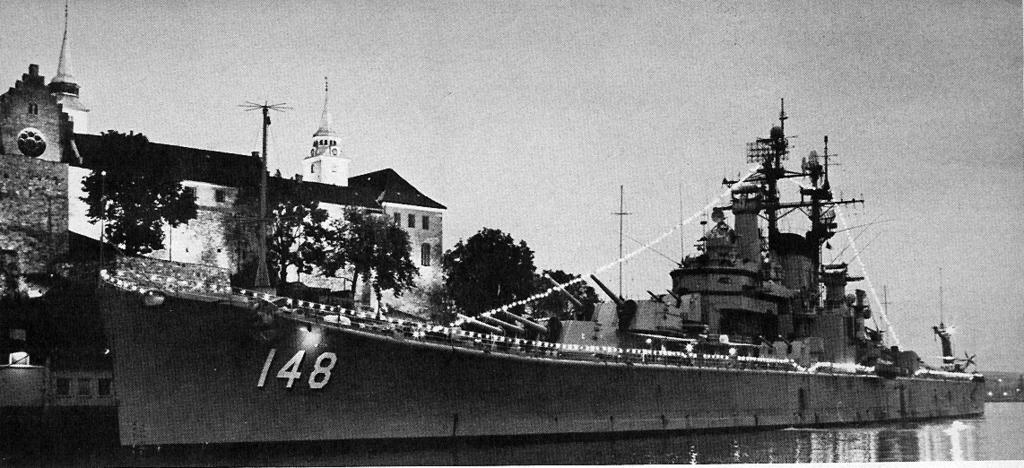
Off the coast of Vietnam in 1972, after the North Vietnamese started the Easter Offensive, the big gun ship that began patrolling the South China Sea was USS NEWPORT NEWS (CA-148), one of the heavy cruisers carrying 8-inch guns.

Such was her importance that ammunition ships on scene transferred deckloads of 8-inch when they met on their rotation to and from Subic so that there was a sufficient supply on station at all times.
And the NEWS undertook some interesting missions, one of which took them into Haiphong for some shore bombardment as set out here. Accompanied by USS PROVIDENCE (CLG-6), USS ROBISON (DDG-12) and USS ROWAN (DD 782), the mission was to be "a naval gunfire strike against targets in Haiphong, Do Son Peninsula and Cat Ba Island."
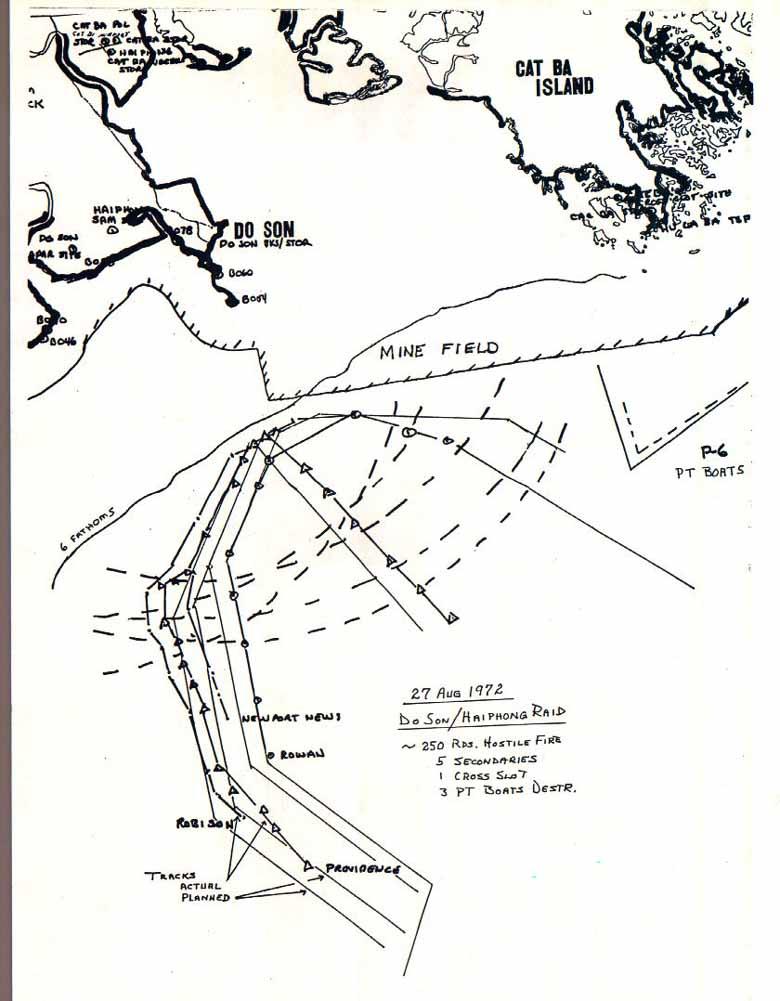
The attack brought retaliation in the form of North Vietnamese PT boats and a "surface action" followed:
Upon commencing retirement after firing at 10 targets, three NVN torpedo boats closed to attack. Initial NEWPORT NEWS' salvos appeared to damage one torpedo boat which slowed and retired from the action. A second was sunk, and after NEWPORT NEWS was joined by the DD, the third was damaged and set afire, and subsequently sunk by tactical aircraft.
Drawing by Captain Charles Farnham (then serving on Flag Staff USS PROVIDENCE CLG-6) and "borrowed" from here.
 USS ROWAN
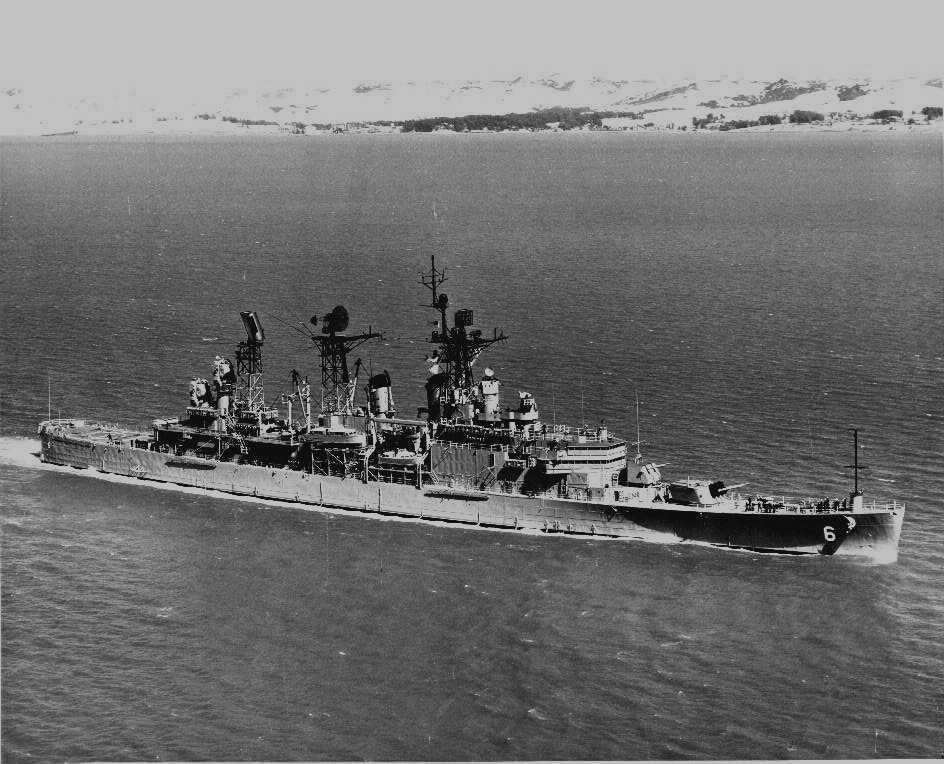 USS PROVIDENCE
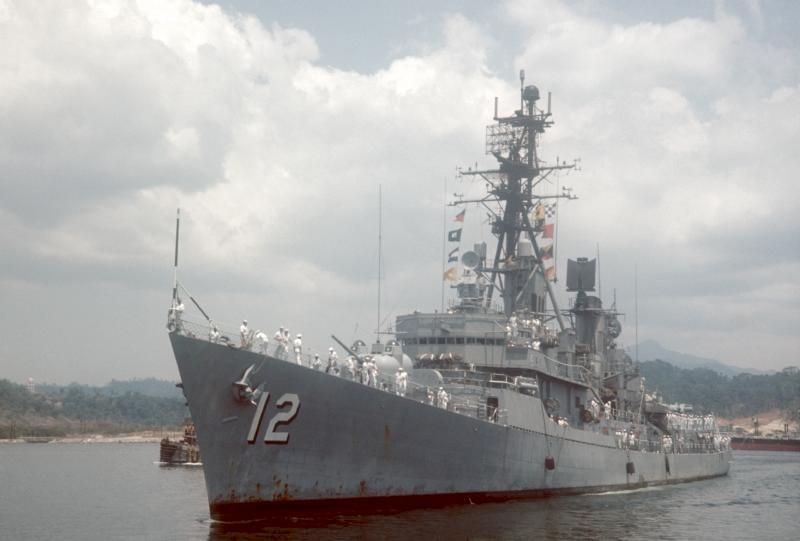 USS ROBISON
 USS PYRO
After all the action, NEWPORT NEWS rearmed from USS PYRO (AE-24) one of the ammunition ships supplying the gun line ships. A day in the life of one of the last heavy cruisers in the US Navy.
Thanks to Mudville Gazette's Open Post!
UPDATE: I forgot to add that NEWPORT NEWS' radio callsign in those days was "THUNDER" and I think they must have had a collection of deep-voiced Combat Information Center radio talkers, because when they called it was a memorable experience:
For example: "Stud Poker, Stud Poker* this is THUNDER, THUNDER, over"
It was a hard act to follow.
*" Stud Poker" was the voice call sign of USS Leonard F. Mason (DD-852).
UPDATE@: USS ROWAN crew view of the engagement here. Close to 300 men served in a Gearing class destroyer like ROWAN. There are many more stories we have yet to hear.
Yemen
Interesting opinion piece on Chemical Weapons, Drug Smuggling, and Other Crimes of the Yemeni Dictator
An ally bites a bullet to help stop terrorism

Although the UN refuses to call a shovel a shovel,the African country of Malawi has stepped up and chewed a bullet to help fight the GWOT as reported here (ironically, a UN website):
Malawi's cancellation of a US $30 million deal to buy fertiliser from a Saudi company because of its alleged links with al-Qaeda could delay a government subsidy plan for poor farmers, a senior official told IRIN.More here at al Reuters:
"We are at the beginning of the rainy season and farmers will start planting anytime now - it is critical that they get the input in time. Unless alternative arrangements are made to source the fertiliser, there would be a delay in the distribution of fertiliser coupons," said Michael Kamphambe-Nkoma, Malawi's High Commissioner to South Africa...
Malawi, reeling from crop failures that have left almost half its people dependent on food aid, has cancelled vital fertiliser imports from Saudi Arabia over reported al-Qaeda links, a minister said on Wednesday.I note the UN reports:
Malawi had planned to import more than 130,000 tonnes of fertiliser at a cost of $38 million through an unidentified Saudi company as part of a universal subsidy programme to help farmers grow food.
But Finance Minister Goodall Gondwe told parliament in the capital Lilongwe on Wednesday that the deal had been cancelled after the American bank involved in the transaction raised concerns that the company had links with al Qaeda.
"Malawi was dealing with a Saudi Arabian company and when we were about to pay through an American bank, Citibank, we were advised against that because they said that the company had al Qaeda links," Gondwe told parliament.
"(The) Citibank investigation also revealed that this company was just a broker for a Ukrainian company," he added.
Gondwe said the government had identified the Saudis because their fertiliser was the cheapest, but the government had not yet paid the firm and the money was still in the country's central bank. "We are now dealing with [fertiliser] firms from Ukraine and Thailand," he noted.So all is not lost. The US might want to help out to reward this type of selflessness from an ally.
UPDATE: For the geographically challenged -the blue arrow points to Malawi.
Read the The Fourth Rail
A couple of days ago one of my kids asked why I don't post much on the war in Iraq. My answer to him was the same as that which I now provide you - there are many others who are handling it so well, and with far better knowledge than I would hope to have, that I mess around in other areas, like boats and things. One of my favorite reads is Bill Roggio and his gang over at The Fourth Rail.
Go there and gain enlightenment.
Come back to read about pirates and other things.
UPDATE: And you might want to read CDR Salamander on the latest Russian resistance to Islamic terrorists and his suggested link to the Gates of Vienna (which, by the way, is also on the track of some Islamists here in the US. Just go visit here. Tell 'em I sent you...
Friday, October 14, 2005
Odd Cars: Dymaxion

An odd design for an automobile?
Explained here
For those that haven't heard of it, the Dymaxion Car was a teardrop-shaped (least air resistance), 3-wheeled, rear-wheel (single) steering, 20 foot long, Aluminum bodied auto, designed by Buckminster Fuller in 1933 to achieve maximum output and service with minimum material input. It was about 6 feet tall (kinda like a big van), seated the driver and 10 passengers, weighed less than 1000 lbs., went 120 miles/hr on a 90 horsepower engine, and got between 30-50 miles to the gallon of gas. Fuller referred to it as the "Dymaxion Car", "Dymaxion Vehicle", and "Omni-Medium Transport" since it was ultimately intended to go by land, water, or sky. Only three were ever built.Quicktime videos of the car in operation here and here,
 More information on Buckminster Fuller here
While you are at it, you might want to look into the Dymaxion House here and ponder why they might not be a good idea for the US Gulf Coast (with modern materials being used, of course).
Somali pirates release latest captured WFP ship
Major innovation: Stanford Wins Robo-Race

Speaking of drones, the DARPA guys offered up a prize and some really smart people took up the challenge - to create a vehicle capable of self-direction over rough terrain from Point A to Point B and the results are impressive as reported here:
It's an incredible feat. Giving robots the intelligence and the vision to manuever over all that rough terrain was considered closer to science fiction than science fantasy not too long ago. I'm beyond impressed. And so is the Pentagon. "I don't know if I'd go 'moon shot,'" Darpa director Anthony Tether told the Merc-News. "It's closer to the Wright brothers."Image from Stanford Racing's website. Carnegie-Mellon is also heavy into this as you can see from their racing team site. Besides, they let their teddy bear wear the 2nd place medal.

Should note that Zoe Brain reported on this race a couple of days ago here.
Unmanned, self-directing vehicles? More safety for troops. Cool.
Tunnel and cave flying UAVs?

Reported here, "US defence research agency wants to develop air vehicle small enough to fly inside caves and tunnels."
“The warfighter needs something that can navigate inside a building, cave or tunnel, where MAVs can’t go,” says NAV programme manager Darryl Pines. “We need something even smaller that can fly through a window and provide situational awareness inside a building.”Gosh, I wonder why tunnels and caves are mentioned?
DARPA’s goal is to “provide a clear direction for development of a system that will be useful to the warfighter,” says Pines. “We understand the fundamental physics. This is about integrating technology into a vehicle that can perform a notional mission.” The requirement is for an air vehicle that can fly more than 1,000m (3,280ft) at 7-10m/s, loiter at 0.5m/s for more than 60s then hover in place for another minute or more, sending video back to the operator. The vehicle could be expendable or reusable, he says.
Hat tip to: UAV Blog
Photo is of a micro UAV or "MAV" from here, but it seems that, as with the IPOD, technology marches on.
Thursday, October 13, 2005
Good reads: Somalia ''Jihad'' Springboard and more
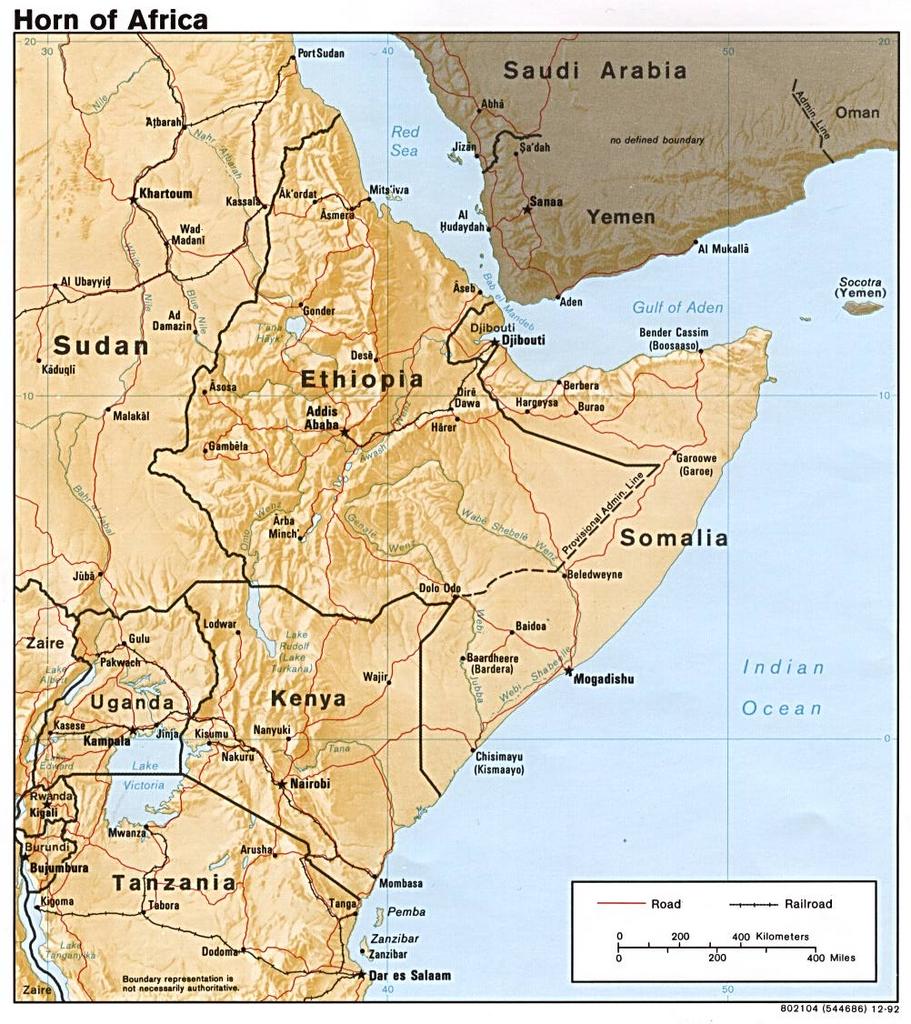
Interesting reading here:
Building up to attack Yusuf’s forces is an array of scary men in Mogadishu. In the lawless city I found that Islamic jihadis of al-Ittihad al-Islamiya (AIAI) have recently gained a significant foothold. Backed by rich businessmen, they have established a network of Islamic courts with up to 3,000 recruits.And more good info here:
AIAI’s leader, Shaykh Hassan Dahir Aweys, has declared jihad against ‘the devil’ Yusuf. Aweys occupies a compound next to the colonial-era Italian cemetery, where his militias dug up the bones, tossed them into the street and then constructed a mosque over the site.
In a bizarre twist the jihadis have now formed a loose alliance with warlord gangs whom the CIA has bankrolled to capture Islamic extremists. These are the thugs that American troops once battled to overthrow, who are making far too much money from the war on terror to want an end to anarchy.
Last month in Somaliland — the relatively stable breakaway region that covers the part of Somalia formerly ruled by Britain — the authorities fought a long gun battle with militants they claim are al-Qa’eda operatives. Eight were arrested and the house they occupied was found to contain explosives and heavy weapons. It appears that their objective was to disrupt the region’s elections and kill poll observers and international aid workers.
This is the latest vindication of Western fears that Mogadishu could grow as a base for Islamic extremists. Al-Qa’eda members used Somalia as a base when they were planning bomb attacks against the US embassies in Kenya and Tanzania in 1998. The same happened when terrorists passed through Somalia on their way to bomb the Israeli Paradise Hotel in Mombasa in November 2002. The same day they also narrowly missed blowing up an Israeli charter flight out of the same city.
In 2003 British Airways suspended flights to Nairobi and Mombasa for six weeks. Reports emerged of a plot hatched by Somali-based al-Qa’eda terrorists to break through the fence of a Kenyan airport with an explosives-laden truck designed to detonate beneath a taxiing BA jumbo jet. Another alleged Somali plot was to fill a Cessna small aircraft with a bomb known as the ‘hippo’, which would be flown out of a Nairobi airport and piloted into the brand new US embassy rebuilt to fortress standards since the last one was demolished.
Now this year, Yusuf’s counter-terrorism chief told me, foreign terrorists were planning fresh attacks throughout eastern Africa. He said they felt so secure and protected in Mogadishu that they had even married local girls and were raising families. ‘They will kill anybody who disagrees with them.’ He pointed at me. ‘And they will kill any white people they find like you, too. They will know you have arrived as soon as you land at the airstrip.’
A hulking UN-chartered cargo ship, docked at a port in Somalia this week, was halfway finished unloading its 850 tons of corn and rice when a band of gun-toting bandits stormed aboard and forced the crew to take the ship to sea.And more from the Kenyan point of view :
It was the second hijacking of a UN food-aid ship in four months in Somalia. Some 78,000 people may go hungry if the situation isn't resolved soon. But more than that, it's an example of how difficult it is becoming to get food to Africa's hungry masses in ways that are safe, efficient, and effective. And it's one more reason why there's growing pressure for major changes to the massive global food-aid system, which is funded by US and other wealthy-nation taxpayers.
Some foreign governments used to police the Coast of Somalia near Al Maan, but their withdrawal is reported to have worsened the situation.And this article:
Since the Somali waters became dangerous, the International Maritime Bureau, through its Piracy Report Centre based in Malaysia, posts regular warnings to ship owners globally.
The IMB has frequently warned ships on transit to keep 50 miles away from the Somali Coast.
But reports from Somalia indicate that the organised gangs have powerful boats that go out as far as 100 nautical miles away from the shore.
It is suspected that warlords from Puntland in Somalia are behind sea piracy as a major source of revenue.
Assistant minister for Immigration, Anania Mwaboza, says the Government is seeking the release of Mv Torgelow and investigate why Kenyans have been the target.
Kenya is also investigating whether the captors are linked to the transitional government or are criminal element taking advantage of the lawlessness in that country.
The MV Miltzow was sighted yesterday off the small fishing port of Brava, about 50 miles south of Merca, which is a known refuge of a local militia gang. The hijackers usually demand a hefty ransom for the return of the crew and vessel, but always keep the cargo. If the owners do not pay, the crew may be held hostage for months and even killed.Kinda makes you think something is going on.
Three Taiwanese fishing vessels and their crews have been held hostage on an island off the southern port of Kismayu for nearly six months.
The increased number of attacks is blamed on previous pay-offs and a decline in opportunities for criminal activity elsewhere as aid organisations have reduced their onshore operations because of the lack of security.
The International Maritime Bureau describes Somalia’s piracy problem as “the most serious in the world”. It reports that there have been 21 incidents off the Somali coast since March 15, making it as dangerous a stretch of water for piracy as the infamous Strait of Malacca in the Far East.
Since the fall of the dictator Mohamed Siad Barre in 1991, Somalia territory has been carved up between rival warlords and their militias. And since the start of the US-led war against terrorism, radical Islamic fugitives, some from Yemen and Afghanistan, have made Somalia even more dangerous for Westerners.
Weapons used in bomb attacks in Kenya and elsewhere in East Africa have been identified as having come from Somalia. Three East African suspects in the attempted London bombings of July 21 all had links with the country. Recent violence on the Indian Ocean island of Zanzibar has also been linked to Somalia.
Unscrupulous fishing companies, many with connections to Japan, China and Taiwan, have for years paid backhanders to Somalia’s regional warlords for the right to fish the waters off their respective fiefdoms. Flush with easy pickings from that trade, warlords recently began seizing commercial vessels.
The MV Torgelow, a cargo ship, was seized on Monday off the southern Somali coast as it headed north towards the ruined capital and main port of Mogadishu. Its fate is not yet known.
UPDATE: A couple more - a United States Institute for Peace report on "Terrorism in the Horn of Africa" here. And the recent comments by Marine Corps Major General Timothy Ghormley, commander, Combined Joint Task Force Horn of Africa here:
And then, of course, you have the threat. Those are the challenges. You have your sovereign boundaries, you have your tribal, you have your religious, and then, of course, you have your terrorist threat. Coming from Yemen you have the al Qaeda. Down into Somalia you have the al Qaeda network and associated movements. Then you have AIAI. And I blow this constantly -- it's al-Ittihad al-Islami; and then put an "O" at the end of it for Ogaden, and now you have the AIAI, AIAIO. And within the Ogaden, you also have the ONLF, which is Ogaden National Liberation Front. A little bit to the left there you have Oramean, which is the OLF, the Oramean Liberation Front. Up into Darfur you have the Jinjaweit; you have the Lord's Resistance Army, and of course you have the unrest along the Eritrean-Ethiopian border. You also have the seam that exists, which is the 12-mile limit. If you were to stand at high tide and let the water lap up at your ankles and then face about, I own all of that; what's behind me, I don't own. You're not allowed within 12 nautical miles of land; therefore, there's that gap that exists. That's -- the lower right-hand corner is the embassy, 1998.
Next slide, please. This is my mission statement. I have operations and training. I conduct CMOs, Civil Military Operations and Civil Affairs Operations. And I also conduct training within the CJTF-HOA. It's to combat terrorism, and to establish a secure environment and regional stability. You can't have any type of peace, you can't have any type of prosperity without security and stability, and that's our goal.
Philippine lawmaker: "Seize US military vessel off Zamboanga"

Reported here, a member of the Philippine house has decided to take on the United States:
Bayan Muna Representative Joel Virador urged local officials of Zamboanga City Thursday to seize a US military vessel found there Tuesday.Others seem less troubled:
Virador said no foreign vessel is allowed to enter the Philippine coastal territory, adding that even local security officials were unaware there was a US ship in Philippine territory.
"What is the US ship doing here? I believe that even the Philippine security officials are unaware of its arrival. Is this part of the anti-terror campaign of the government? Or is this another covert operation between the US and the government which the Filipino people are not aware of?" asked Virador.
Last Tuesday, a US military ship, escorted by a small gunboat, was spotted off Zamboanga. However, spectators failed to identify what class the vessel was except that a US flag was hoisted on the deck.
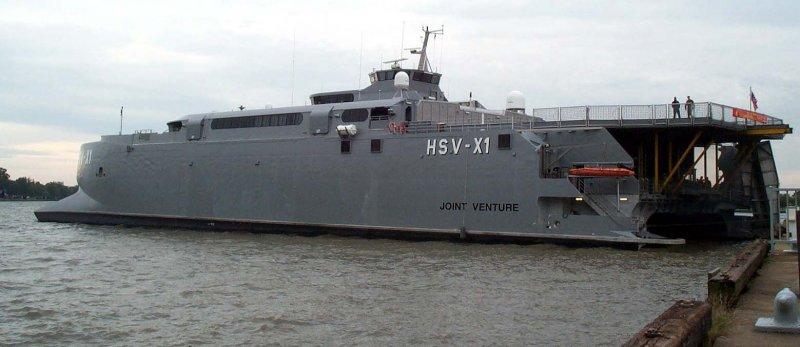
The Department of Foreign Affairs (DFA) and the Armed Forces of the Philippines gave different explanations about the mission of the US military ship.Info on the HSVs here. Top photo is USS Swift (HSV-2). Bottom photo is USAV Joint Venture (HSV-X1).
But both agree there was nothing unusual or illegal about the presence of the US ship in Philippine waters.
DFA spokesman Gilberto Asuque identified the ship as the USS Joint Venture, a commercial vessel chartered by the US military to carry cargo.
Asuque said the US had sent a note to the foreign affairs department on October 3 requesting that the ship be allowed entry to Philippine territory and dock in Subic so it could load "humanitarian cargo" such as school building materials that would be used for Project Bayanihan in "various areas in Mindanao" starting at the end of the month.
Armed Forces spokesman Lieutenant Colonel Buenaventura Pascual gave a different description of the ship.
He said it is the HSV 2 (High-Speed Vessel) Swift, an 11,000-ton double-hulled craft on the way to take part in a new Balikatan exercise in Mindanao.
The US embassy said there was nothing irregular about the presence of the ship, since "US vessels routinely transit through international waters (near) the Philippines, participate in bilateral exercises, and stop at ports for friendly visits, rest and re-supply."
One question is, even if the PI wanted to seize these ships, how would they do it?
Subscribe to:
Posts (Atom)