VertRep

VertRep

Friday, August 31, 2012

International Navies to Conduct Mine Countermeasures Exercise

In the world of mine warfare that may involve a narrow but valuable strait that is part of major sea lane vital to economies around the world, it's a great idea to get many interested parties together and practice counter-mine warfare and - well, golly, could you pick a better spot to hold an exercise of this type at this time than in the Arabian Gulf?

 Read all about it at International Navies to Conduct Mine Countermeasures Exercise:
In September, the U.S. Fifth Fleet will host its first International Mine Countermeasures Exercise (IMCMEX). With more than 20 nations participating from Asia-Pacific, Europe, the Middle East and North America, IMCMEX 2012 will be the largest of its kind ever in this region.

Operating together in a series of at-sea maneuvers, international air, sea, and undersea forces will respond to simulated sea-mine attacks in international waters and clear maritime routes to restore freedom of navigation. The cooperation of navies from around the world promises high tactical value for the ships, aircraft, and divers involved; while demonstrating international resolve in defending maritime security against potential threats.


IMCMEX 12 focuses on interoperability among navies and also among the triad of air, ship and undersea platforms that deliver full-spectrum mine countermeasures capability. The inherent flexibility of naval forces allows IMCMEX to demonstrate capability in additional areas also, including logistics, rendering assistance to mariners and coordination with commercial shipping. Conducted in two phases, IMCMEX begins with a symposium ashore in Bahrain followed by maneuvers at sea in key locations in the Arabian Gulf, Gulf of Oman and Gulf of Aden. The at-sea maneuvers will involve a number of mine-countermeasure techniques for defending key maritime areas around the world, including strategic chokepoints. Forces from various nations will include minesweeping and minehunting ships, helicopters, and undersea vehicles; command and support ships equipped to serve as afloat bases for MCM forces; and naval dive platoons for mine detection and disposal.

IMCMEX 12 is a defensive exercise aimed at preserving freedom of navigation in international waterways in the region. The international community has a critical shared interest in the free flow of commerce via strategic waterways.
Note the use of "Arabian Gulf" in the release. It just irritates the heck out of some of the leaders of a nearby nation which borders the Strait of Hormuz.

UPDATE: Speaking of which, did you happen to come across this report from the ever reliable Iranian Fars News Agency about Iranian Mines, Missiles Can Easily Shut Hormuz:
In addition to its short, mid, and long missiles, Tehran has a range of other weapons it can use to close down the vital oil artery.

These include the hard-to-detect "rocket mine" that's triggered by the distinctive magnetic our acoustic signature of a ship, such as a US aircraft carrier, and then launches a propelled 600-popund warhead at the target.

Then there's the Russian MDM6, equally difficult to detect, that can tackle multiple targets. It lies on the seabed that fires a torpedo-like warhead when it senses a vessel.

Both these mines can be laid by Iran's Kilo-class submarines.
***
Iran isn't planning to fight a conventional war with the US and its allies. Rather it plans to employ what's known as asymmetric warfare, in which the weaker forces uses unconventional means to overcome the power of a strong opponent.

Asymmetric warfare is specially appropriate for the Persian Gulf and the Strait of Hormuz which are too narrow for the huge US warships to maneuver.

That means mines, anti-ship missiles and swarm attacks by small heavily armed boats.

By some accounts, Iran is believed to have as many as 3,000 sea mines. Some estimates go as high as 5,000, but no one knows the exact number as Iran never discloses all its capabilities and arsenals.

Whatever, it's the fourth largest sea mine arsenal in the world after the United States, Russia and China.

The EM-52 is probably the most dangerous mine Iran has. But the bottom-influence EM-11 and the EM-31 moored mine can also play havoc with surface craft.

So the United States and its allied naval forces face a formidable foe.
***


"Iran's ability to lay a large number of mines in a short period of time remains a critical aspect of the stated capability to deny US forces access to the Persian Gulf and impede or halt shipping through the strait," cautioned US analyst Anthony Cordesman in a March analysis by the Center for Strategic and International Studies in Washington.

Iran has hundreds of anti-ship missiles, including 300 C-201 Seersucker weapons and 200 C-801 indigenous Noor systems, deployed along its long Persian Gulf coastline, as well as air-launched weapons and cruise missiles.

Thursday, August 30, 2012

Drug War: U.S. Marines involved in international counter-drug operation

Staff Sgt. Travis A Jakovcic, a UH-1N Huey crewmember with Marine Light Attack Helicopter Squadron 467 looks back at another crew and aircraft during takeoff. Four UH-1N Huey helicopter crews and aircraft from HMLA-467 are part of Detachment Martillo of U.S. Marine Corps Forces, South and are participating in Operation Martillo. The detachment conducted a Mission Rehearsal Exercise prior to operations beginning in Guatemala. Detachment Martillo, under operational control of U.S. Marine Corps Forces, South, is comprised of a number of units from II Marine Expeditionary Force. Operation Martillo is an operation led by Joint-Interagency Task Force-South, of the U.S. Southern Command, and is designed to help stem the flow of narcotics through Central America and its Pacific and Caribbean coasts by denying transnational criminal organizations littorals used for illicit trafficking. (Official U.S. Marine Corps photo//Released)

HuffPo reports as "Guatemala Drug War: 200 U.S. Marines Join Anti-Drug Effort":
The Marines are deployed as part of Operation Martillo, a broader effort started last Jan. 15 to stop drug trafficking along the Central American coast. Focused exclusively on drug dealers in airplanes or boats, the U.S.-led operation involves troops or law enforcement agents from Belize, Britain, Canada, Colombia, Costa Rica, El Salvador, France, Guatemala, Honduras, the Netherlands, Nicaragua, Panama and Spain.
More at Danger Room:
The Marines’ share of the operation involves chasing drug traffickers with UH-1N Huey helicopters. The Marine contingent has four of the choppers, and the Marines are carrying weapons. “It’s not every day that you have 200-some Marines going to a country in Central and South America aside from conducting training exercises,” Staff Sgt. Earnest Barnes, the public affairs chief for Marine Corps Forces South, tells Danger Room. Prior to the Marines’ deployment, there were only a “handful” of Marines in the country, Barnes says.

However, the Marines can’t technically use their guns except in self-defense, and Barnes wouldn’t say whether they’re authorized to pursue drug traffickers on the ground. The description of what they’re doing, however, suggests that they probably can’t. Instead, they’ll be looking out for suspicious boats — including crude narco-submarines — and then radio the Guatemalans, who do the work seizing their drugs and arresting cartel members. That could be on rivers, or along Guatemala’s two coastlines, reports the Marine Corps Times.

East Africa Counter-Piracy: Kenya finally brings patrol ship home


It's been a struggle, but Kenya finally has a naval patrol ship for counter-piracy operations, as reported at Kenya's New Naval Warship To Boost Fight Against Piracy:
The naval warship finally docked at the Kenya's port of Mombasa on Wednesday after more than 7 years since it was ordered by the Kenya Navy.

Kenyan military officials said they expect the US$55 million ship to play a crucial role in the fight against rampant piracy off the coast of Somalia and terrorism in the country.
***
The naval warship finally docked at the Kenya's port of Mombasa on Wednesday after more than 7 years since it was ordered by the Kenya Navy.

Kenyan military officials said they expect the US$55 million ship to play a crucial role in the fight against rampant piracy off the coast of Somalia and terrorism in the country.
***
The procurement of the MV Jasiri is expected play a major role in boosting the country surveillance on threats posed by suspected Somalia pirates and Al- Shabaab terror groups.

West Africa Pirates: Pirated Tanker Located Off Nigeria

UPDATE: Ship reportedly has been released - and its cargo stolen - as reported here:
Pirates released a Greek-operated oil tanker seized off Togo on Tuesday after stealing 3,000 metric tons of fuel, an official at the ship's operator said on Thursday.

Hijacked Greek-run tanker located in Nigerian waters:
A Greek-operated oil tanker seized off Togo was tracked down on Wednesday off the coast of Nigeria under the control of pirates, the ship's operator and Togolese authorities said.
***
"The vessel is presently sailing off the coast of Nigeria under the control of pirates who have the intention to steal the cargo," Golden Energy Management said in a statement.

The firm said they were in touch with a French naval ship that was nearby.
My confused initial report of this piracy here.

South China Sea Counter-Piracy: Philippines may join with Malaysia and Indonesia for patrols

Reported as "Philippines eyeing joint sea patrol with neighbors" :
The Philippine defense chief says his country and neighboring Indonesia and Malaysia are considering joint patrols of their sea borders to combat piracy, smuggling and movement of al-Qaida-linked militants.
Sounds like a good idea, akin to that of the ReCAAP program, which had its origins in fighting piracy/sea robbery in the Strait of Malacca.

Wednesday, August 29, 2012

A Golden Oldie from 2007: "Half of all children are below average in intelligence""

From January 2007, a politically incorrect reminder in this election cycle about the money we pour into our public schools, prompted by this post from the Instapundit

My father-in-law used to say that 50% of all doctors finished in the lower half of their class. Now, good old Charles Murray, still "truthing" after all these years, points out a problem with demanding too much of our educational system here:
Education is becoming the preferred method for diagnosing and attacking a wide range problems in American life. The No Child Left Behind Act is one prominent example. Another is the recent volley of articles that blame rising income inequality on the increasing economic premium for advanced education. Crime, drugs, extramarital births, unemployment--you name the problem, and I will show you a stack of claims that education is to blame, or at least implicated.

One word is missing from these discussions: intelligence. Hardly anyone will admit it, but education's role in causing or solving any problem cannot be evaluated without considering the underlying intellectual ability of the people being educated. Today and over the next two days, I will put the case for three simple truths about the mediating role of intelligence that should bear on the way we think about education and the nation's future.

Today's simple truth: Half of all children are below average in intelligence. We do not live in Lake Wobegon.
You can do a lot of things with education, but improving innate abilities is not one of those things:
Now take the girl sitting across the aisle who is getting an F. She is at the 20th percentile of intelligence, which means she has an IQ of 88. If the grading is honest, it may not be possible to do more than give her an E for effort. Even if she is taught to read every bit as well as her intelligence permits, she still will be able to comprehend only simple written material. It is a good thing that she becomes functionally literate, and it will have an effect on the range of jobs she can hold. But still she will be confined to jobs that require minimal reading skills. She is just not smart enough to do more than that.
Oh my! It's a good thing that the lower 20% can't read the Wall Street Journal because they might get offended.

Update: This is not the fault of teachers or the public schools. But with so many of the upper 50% of the intelligence percentile being sent to private schools or even home schooled, the make up of the remainder of the population pool that the public school teachers are swimming in means that many of them are working against a strong current.

But it ought to make us take a hard look at what we are trying to do in our schools and why we are doing it.

Tuesday, August 28, 2012

Gulf of Guinea Pirates: Oil Tanker Attacked Off Togo, 24 Crew Kidnapped, Shots Fired

WaPo report here:
Pirates attacked an oil tanker Tuesday off the coast of Togo, taking control of its bridge and kidnapping 24 sailors before escaping amid an exchange of gunfire with a naval patrol boat, an anti-piracy organization said.

It wasn’t immediately clear if anyone was injured in the attack on the Greek-owned oil tanker, which had been anchored about 17 nautical miles (19 miles) away from Lome, Togo’s capital. The pirates took control of the vessel quickly, though an alarm from the ship alerted the Togolese navy, said Noel Choong, an official with the International Maritime Bureau.
Other reports have the ship itself being seized by the pirates. I guess some are first reports and we know all about those, don't we?

Here's a not so much confidence building report, given that a Togolese navy boat was involved in the fray:
The West African state’s army chief of staff Atcha Titikpina told a regional conference on piracy in the capital Lome that Togolese forces were still trying to locate the vessel after learning of the attack.

Ship operator Golden Energy Management, which operates a number of ships through the Manx Ship Registry, confirmed the attack and said it appeared to bear the hallmarks of an operation to steal the 56,000 tonnes of gasoil on board rather than to target the crew.

‘It’s not piracy, it’s robbery,’ a company official told Reuters in Athens. ‘It is carrying gasoil and it’s very possible that the robbers just want the cargo.’

A Togolese security ministry official said the attackers’ vessel fled in the direction of neighbouring Benin after the incident, some 20 nautical miles off the coast of Togo, but had no details on the whereabouts of the tanker.
Or it might be that the situation is confusing -
The UK’s Independent newspaper is reporting that an anti-piracy organisation has said that pirates attacked an oil tanker today off the coast of Togo, taking control of its bridge and kidnapping 24 sailors before escaping amid an exchange of gunfire with a naval patrol boat.

It wasn’t immediately clear if anyone was injured in the attack on the Greek-owned oil tanker, which had been anchored about 17 nautical miles (19 miles) away from Lome, Togo’s capital. The pirates took control of the vessel quickly, though an alarm from the ship alerted the Togolese navy, said Noel Choong, an official with the International Maritime Bureau.

The navy boat trailed the tanker and sailors exchanged gunfire with the pirates before the tanker escaped, Choong said.

The Independent reports that pirates in west Africa have been more willing to use violence in their robberies, as they target the cargo, not the crew for ransom as is the case off Somalia. Analysts say many of the pirates come from Nigeria, where corrupt law enforcement allows criminality to thrive.

The attack on the Greek oil tanker comes about a week after a similar attack on another tanker in the region, Choong said. In that attack the pirates released the crew after stealing the oil onboard, he said.

‘Judging the past attacks, they’ll take the vessel for several days, ransack it, take the cargo and leave the sailors,’ Choong said.
Suggestions of an organized crime element are made. Hey, don't we call such an outfit that attacks ship "pirates?"

UPDATE: Okay, the ship was grabbed and the crew was taken along with it. The confusion seems to have been mostly mine.

Fish Stories: A New EagleSpeak Series on Aquaculture


There are billions of people on this planet and they need to be fed.

We farm the land and we provide grains and animals for harvest.

But those grains and animals are land, feed and water intensive. Animals produce waste and methane, one of those "greenhouse" gases.

Yikes, Malthus seems to be rising from the grave. Except, of course, that there may be some more efficient ways to feed the masses before we turn to Soylent Green.

This is the first post in a new series of posts about aquaculture, which may be one of those ways.

If it seems strange to find this topic on a maritime security blog, well, food security is one aspect of national security and protecting the delivery of food from the sea - that's a maritime security issue.

Let's begin then, with a video that the National Aquaculture Association has kindly given me permission to embed - a primer on aquaculture, if you will:

Saturday, August 25, 2012

Midrats Sunday: Episode 138: "Your Mother Wears Combat Boots" 08/26 (5pm US Eastern)

Sunday, 5pm (Eastern US), join us for Episode 138: "Your Mother Wears Combat Boots" by Midrats on Blog Talk Radio
For the career minded Naval professional, to have a chance for the greatest advancement and promotion, you have to push and push hard. The reputation you build in your first 10 years sets the tone for the rest.

Except for very rare exceptions, there are no second chances. There are no pauses - one iffy set of orders - one poorly timed FITREP, and you are on an off-ramp. You must work harder, you must sacrifice, and if you are to have a family young, you need a very strong support structure.

For men - there is always the "put it off" option; wait until post O6, then start. For women though, there are some hard biological facts.

The average American woman gets married at age 26. For college-educated women the average age at first birth was 30. If you want to have more than 2 kids, you need to start earlier. You need to time it right - and Mother Nature has her own schedule that doesn't often match yours.

With women making up more of the military than ever, what are the challenges out there biological, cultural, psycological, and relationship wise to "making it happen?"

You can't have it all - but how do you get the best mix you can?

We will have two guests on to discuss. For the first half hour we will have Major Jeannette Haynie, USMCR, a 1998 graduate from the US Naval Academy, AH-1W Cobra pilot, and currently a Reservist flying a desk at the Pentagon and working through graduate school - and fellow blogger at USNIBlog.

The second half of the hour, our guest will be Robyn Roche-Paull, US Navy Veteran, wife of a Chief, ICBLC, and author of the book Breastfeeding in Combat Boots.
Join us live (or listen later) here or pick the show up on our iTunes page here.

Wednesday, August 22, 2012

Fun with the Littoral Combat Ship: New Council to Watch Over the "Testing and Introduction"

Nothing says "winning program" like the need to establish a high-powered committee to take charge, which is what the Chief of Naval Operations has done, as set out in "CNO Establishes LCS Council":
The Chief of Naval Operations (CNO) established a board known as the LCS Council Aug. 22 made up of four Navy vice admirals to oversee continued fleet testing and introduction of littoral combat ship (LCS) sea frames, mission modules, and mission packages.

Adm. Jonathan Greenert designated Vice Adm. Rick Hunt, director of the Navy Staff, as the council's chairman. Other officers on the council include Vice Adm. Mark Skinner, Principal Military Deputy to the Assistant Secretary of the Navy for Research, Development and Acquisition; Vice Adm. Tom Copeman, commander, Naval Surface Forces; and Vice Adm. Kevin McCoy, commander, Naval Sea Systems Command.

The focus of the LCS Council will first be to develop a class-wide plan of action to address the areas identified as needing improvement in recent assessments and reviews. The plan is expected to be implemented by Jan. 31, 2013.

"Addressing challenges identified by these studies, on the timeline we require, necessitates the establishment of an empowered council to drive action across acquisition, requirements and fleet enterprises of the Navy," said Greenert.

It is expected that issues will arise in any first-of-class shipbuilding program. Navy ships are designed with test and trial periods to ensure everything is working correctly, and repairs can be made, if required. That approach also allows for the incorporation of lessons learned into the follow-on ships before they're delivered.
I can tell already that this is just going to be swell.

Four Vice Admirals. Great googly moogly!

Tuesday, August 21, 2012

Iran: Building a New "Air Defense Base" in Abadeh

Red pin marks Abadeh (click on image to enlarge)
From the always amazing Fars News Agency: "Iran Starts Building Powerful Air Defense Base in South"
The Iranian military has started construction of its largest air defense base in Southern Iran, a senior commander announced on Tuesday.

Deputy Commander of Khatam ol-Anbia Air Defense Base for Engineering Affairs Mohammad Hosseini further added that the new air defense site is built in the city of Abadeh in the Southern Fars province.

He said the air defense base is due to be built at the cost of $300mln and will have 6,000 personnel for a large array of duties, including educational ones.

Hosseini also said that the super modern air defense base will include one of the most important military training centers of the country which will be comprised of seven battalions.

Meantime, representative of Abadeh at the parliament, Rahim Zare', said "this air defense site will be the product of the achievements gained in all areas of science in the world".

Tehran launched an arms development program during the 1980-88 Iraqi imposed war on Iran to compensate for a US weapons embargo. Since 1992, Iran has produced its own tanks, armored personnel carriers, missiles and fighter planes.

Last month, a senior Iranian air defense commander stressed that all Iranian air defense units and systems are fully prepared to repel possible enemy air raids.

"Ground-to-air missile and artillery systems of Khatam ol-Anbia Air Defense Base of the Islamic Republic of Iran's Army are fully prepared to defend the Islamic homeland's territory," General Shahrokh Shahram said in July.
Abadeh is a small city located between some mountains out, roughly, in the middle of nowhere, right next to a whole lotta dirt. Reports indicate the site will be 200-hectares (roughly 500 acres or .77 square miles), which is pretty small to hold 6000 personnel. Medicine Bow, Wyoming, with 284 residents covers 3.5 square miles (lots of open space).

On the other hand, it lies about 80 115 miles southeast of Isfahan, where at least one of the nuclear facilities of Iran is located:
Red line shows roughly 115 miles from Abadeh to Isfahan
Esfahan [Isfahan] is said to be the primary location of the Iranian nuclear weapons program. The Nuclear Technology/Research Center in Esfahan is Iran's largest nuclear research center, and is said to employ as many as 3,000 scientists. Iran signed an agreement France in 1975 to build a nuclear research center in Isfahan, to provide training for personnel to operate the Bushehr reactor, located at the University of Isfahan. As of 1977 Iran reportedly planned to have at least one reactor and a small French-built fuel reprocessing facility in Isfahan by 1980.
***
Facilities includes a Miniaturized Neutron Source Reactor [MNSR] research reactor of Chinese origin with a capacity of 27 kilowatt thermal (kWt). China and Iran signed a nuclear cooperation agreement on 21 January 1990 that reportedly included the construction of a 27 MW plutonium production reactor at Isfahan. In September 1991 American satellite imagery reportedly detected initial construction activities. The open literature is rather confused as to whether the facility in question was a new 27 MW reactor, or the 27 KW miniature neutron source. Preparatory steps were taken in the mid-1990s to bring the reactor on line, although the reactor remained incomplete as of 1997. A Chinese-supplied heavy-water, zero-power research reactor is also located at the Center. Other extensive construction activity is in progress at the center, although there contradictory reports as to whether the new buildings are designed for nuclear weapons technologies.
***
Esfahan is also reportedly the site of Iran's largest missile assembly and production plant. This ballistic missile production facility, built with North Korean assistance, is capable of producing liquid propellants and missile structural components. According to reports published in Russia, apparently based on information developed by the Russian Federal Security Service, Esfahan is involved in the production of Scud-B and Scud-C surface-to-surface missiles by assembling components bought in North Korea and China. According to the 1995 Jane's Intelligence Review - Special Report No. 6 on Iran's weapons, North Korea helped build a "Scud Mod B" (320 km/1000 kg) assembly plant in Iran in 1988, but the plant apparently never manufactured any missiles. North Korea aided Iran in converting a missile maintenance facility into an assembly plant for the Scud Mod Cs. Other activities at this facility are reported to include R&D on unguided missiles and production of missile frames.

Esfahan is said to be one of Iran's major chemical weapons facilities, along with the facilities located at Damghan [the primary production facility], Parchin and Qazvin. Iran continues to upgrade and expand its chemical warfare production infrastructure and munitions arsenal, which includes blister, blood, choking agents, and nerve agents.

The Esfahan area is a major center for Iran's advanced defense industry, with plants for munition productions, tank overhaul, and helicopter and fixed wing aircraft maintenance. The main operational facilities for the army's aviation units are located at Esfahan, presumably at Khatamin Air Base northeast of the city.
Coincidence?


Sunday, August 19, 2012

Midrats: Episode 137: Strategy and Diplomacy in the Broad View 08/19 at 5pm (EST) on Blog Talk Radio

Episode 137: Strategy and Diplomacy in the Broad View 08/19 by Midrats on Blog Talk Radio at 5pm, (EST):
Ships, aircraft, personnel numbers, and programs are interesting - but without context they are just expenditures.

The foundation question should always be; what are our national security requirements, and what is our strategy to meet them?

From Political to Strategic to Operational to Tactical - today's Midrats will focus on the top two.

The Pacific Pivot, Air-Sea Battle, AFPAK, the "Arab Spring" and in an election year, various squabbles on the Potomac - the large pixels are moving.

Our guest for the full hour will be Dr. Robert Farley, assistant professor at the Patterson School of Diplomacy and International Commerce at the University of Kentucky. He blogs about security and maritime issues at Information Dissemination and Lawyers, Guns and Money.
Join us here (live or later) or listen later on our iTunes page.

Saturday, August 18, 2012

Iran Fights Pirates -- Better than Anyone Else! Ever! ... Yeah, that's it

From Iran's Fars News Agency - "Navy Thwarts Attempted Hijack of 2 Iranian Cargo Ships":
Lieutenant Commander of the Iranian Navy Rear Admiral Seyed Mahmoud Moussavi said that the Iranian vessels were attacked twice by a total number of 50 Somali pirate speedboats 15 and 26 miles Northwest of the Bab-el-Mandeb Strait.

Moussavi stated that the Iranian naval forces' swift action and their heavy fire forced the pirates to flee the scene.
50 pirate speedboats? 50? Two attacks of 25 each or what?

UPDATE: Well, perhaps it was even more:
Iran's Navy Deputy Commander Rear Admiral Mahmoud Mousavi said Saturday that the two vessels were attacked by 30-50 pirate speedboats respectively at 15 and 26 miles northwest of the Bab al-Mandeb Strait. The pirates fled after Iran's Navy took swift action and opened heavy fire on them, he added.


Mousavi added that the vessels were carrying millions of dollars worth of goods.
So, perhaps it was 60 or 100 pirate boats? Awesome.

Unbelievable.

Literally.

Bring back the Weekly World News. You know, with news you can rely on:


Of course, if I were Iran I might worry about that particular headline.

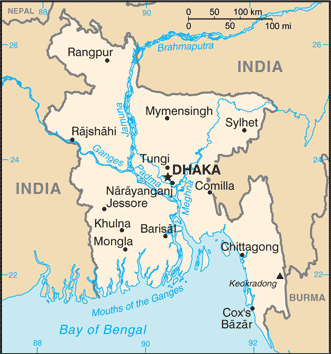
Bay of Bengal Pirates: Bangladesh Rescues 60 Fishermen

A Bangladeshi coastal problem - reported here with a rescue effort - as "Bangladesh rescues 60 fishermen from pirates" by the AFP:
"Initially, we thought some 50 fishermen were abducted, but we found more than 60," said Alam, adding the pirates abandoned the fishermen as naval personnel closed in.

No pirates have been arrested, he said.

Armed pirates routinely rob, kidnap or extort money from fishermen working along the coastline, and the government has deployed a force of 300 men to tackle the problem.
It's a start.

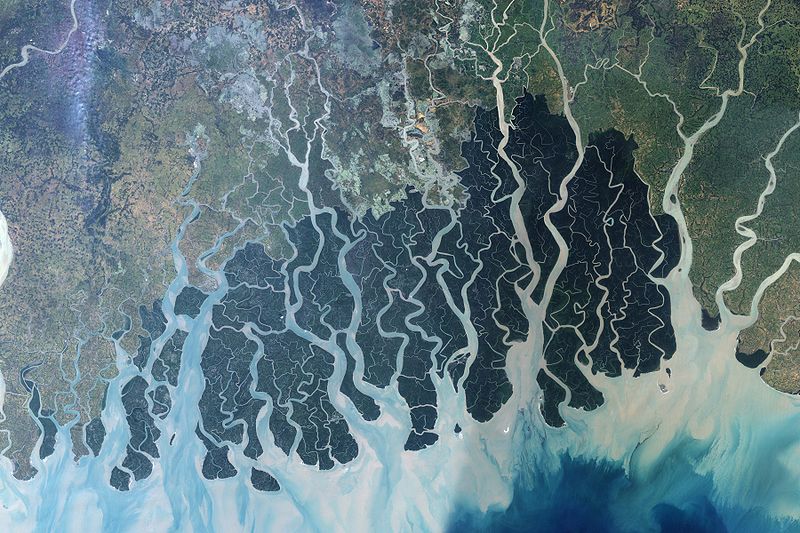
Out in the mangrove swamps.

Wednesday, August 15, 2012

Somalia: Puntland Interdicts al Qaeda Weapons Smuggling Attempt

Reported about 3 weeks ago as Puntland seizes boat smuggling weapons from al-Qaeda:
Puntland authorities announced they captured a ship carrying explosives from Yemen to Somalia on Friday (July 20th), the Yemen Post reported.

Al-Qaeda in Yemen was transporting the rockets, explosives, shells and ammunition to al-Shabaab, said Puntland Minister of Ports and Anti-Piracy Said Mohamed Rage. He said a Yemeni man was apprehended when the ship was seized.

Al-Shabaab announced its merger with al-Qaeda last year, and Puntland's government has been concerned that ongoing al-Qaeda activities in Yemen might extend to its territory, as fighters have been known to travel between Somalia and Yemen.
***
What? You thought al Qaeda was simply going to go away? There's a reason it's called the "long war."

Tuesday, August 14, 2012

Somali Pirates: EU NAVFOR and NATO Spring a Pirate Trap

HNLMS Rotterdam
From EU NAVFOR "Pirated Dhow Disrupted By Counter Piracy Forces"
After a three day hunt by NATO and EU counter piracy forces, HNLMS Rotterdam in close cooperation with EU unit FGS Sachsen, has successfully disrupted a pirated dhow.

This end game took place in the coastal waters of Somalia. The crew has been freed and is in good condition. The suspected pirates will be transported to Rotterdam and will be detained awaiting further decisions on the follow-on process.
More info at
Two Pirated Dhows Freed in the Last Three Days
:
FGS Sachsen
On 10 August, a suspicious dhow, reportedly pirated in Bosaso – Somalia, was located off the coast of Oman by the Spanish EU NAVFOR Maritime Patrol and Reconnaissance Aircraft (MPRA). The French EU Naval Force frigate La Fayette was dispatched to intercept and investigate the dhow. Early on Saturday morning an unopposed boarding found the pirates had left the dhow, leaving the vessel and the crew in good condition. According to the crew, the suspected pirates fled the scene on a second pirated dhow.

ITS San Giusto
The German MPRA located the fleeing dhow. With this information, EU Naval Force frigate FGS Sachsen was able to intercept the second pirated dhow on Sunday evening, heading south towards the Somali coast. The Sachsen kept pressure on the suspected pirates and was joined by EU NAVFOR flagship ITS San Giusto and the NATO flagship HNLMS Rotterdam.

The presence and the deterrence of naval units, their helicopters and the sea craft deployed by Rotterdam, kept constant pressure on the suspected pirates preventing them to receive any aid from land or to escape to the shoreline.

After careful considerations by the Commanders of EU NAVFOR and NATO, HNLMS Rotterdam’s amphibious craft blocked the dhow’s path to the shorelines forcing it to stop. With EU NAVFOR ships and helicopter providing surveillance and close protection, a Dutch team was able to board the dhow, freeing its crew and apprehending 6 suspected pirates. They are now detained onboard HNLMS Rotterdam, awaiting further decisions on the follow-up process.
And yet more from Marine Log:
"To us it seemed highly unlikely that the pirates would want to return to Bossaaso," said Commodore Ben Bekkering, Commander of NATO's counter piracy mission, Operation Ocean Shield. "The authorities there make no secret of their intentions to eradicate piracy. However, to the east of Bossaaso two hijacked ships are still held by the pirates, who seem to be present in the nearby villages as well. We expected the pirates to go there, possibly asking help from their colleagues. We therefore decided to station Rotterdam off the coast, deploying her landing craft in a number of locations, effectively blocking any retreat from or support of the dhow. As expected, the dhow entered the trap. It was then up to Rotterdam."

Rotterdam Boarding Teams Approach Pirated Dhow (NATO Photo)
"For the pirates it must have been a strange site," said Captain Huub Hulsker, Commanding Officer of HNLMS Rotterdam. "Not just Rotterdam and FGS Sachsen from the EU Naval Force Somalia (EUNAVFOR) following closely, but also a helicopter and few landing craft ahead making the coast almost impossible to approach.

"There was not really anywhere for them to go. Obviously, the main thought is always for the safety of my crew and that of the crew of the dhow. But the situation was clear and some strict orders and two warning shots later, the suspected pirates surrendered. The boarding team was on board and in control of the vessel within the next 20 minutes. A grateful dhow crew, an impressive first action of my whole team early in my deployment and six suspected pirates detained on board, awaiting further decisions - this is a result that counts."
NATO Press Release (pdf)
Nicely done!

Monday, August 13, 2012

Somali Pirates: Dhow Nabbing for "Mother Ships"

Here's how the Somali pirates get "mother ships" as reported by the NATO Shipping Center:
At 1800UTC 11 August 2012, a dhow at position 17 00N 054 00E reported that it had been pirated. The pirates abandoned this dhow after using it to pirate another dhow and the crew was able to report the incident. This second dhow is reported to have a 6 persons, a yellow crane and a small white craft aboard.

Saturday, August 11, 2012

MidratsThis Sunday: Episode 136: Watching the Potomac Flotilla with Chris Cavas, 5pm EST

Sunday 5pm EST Episode 136: "Watching the Potomac Flotilla with Chris Cavas" 08/12 by Midrats on Blog Talk Radio:
When it comes to appreciating the importance of our Founders emphasis on a free press - in few areas is that as apparent than in national security. A free people in a Representative Republic need the best information in order to be an informed people - and it is the media who is at the point in that struggle for facts, knowledge, and keeping the powerful in check. If you've been focused on the Navy - what a fertile ground to invest your talents if you are a media professional.

Our guest for the full hour will be one of the regular names in defense reporting for a long time, Chris Cavas, Naval Affairs Correspondent & Journalist at Defense News.

From the politicians, think tanks, senior uniformed leadership, civilian policy makers, media, and the general busy bodies that keep the pot stirred, we'll discuss it all and how it impacts present and future programs and strategy.
Listen live (or later) here or on our iTunes page

Friday, August 10, 2012

Somali Pirates: Dutch Go Drone

HMNLS Rotterdam
Dutch Navy increases its search capacity by throwing a UAV into the mix, as reported here:
The Dutch navy is using a new unmanned aircraft to search for pirates in the Gulf of Aden, the Telegraaf reports on Friday.

The ScanEagle was flown for the first time from the deck of naval ship the Rotterdam on Wednesday and made a nine hour flight, says the paper.

ScanEagle operations from a couple of years ago - from a U.S. Navy ship:


One of the unmanned tools that make launch platform more flexible (and less role specific) and their technology current - or, as Admiral Greenert recently put in a U.S. Naval Institute piece, Payloads over Platforms: Charting a New Course:
To ensure our Navy stays relevant, these platforms have to adapt to the changing fiscal, security, and technological conditions they will encounter over their long service lives. It is unaffordable, however, to adapt a platform by replacing either it or its integral systems each time a new mission or need arises. We will instead need to change the modular weapon, sensor, and unmanned vehicle “payloads” a platform carries or employs. In addition to being more affordable, this decoupling of payload development from platform development will take advantage of a set of emerging trends in precision weapons, stealth, ship and aircraft construction, economics, and warfare . . .
***
We also are in the early stages of incorporating unmanned payloads on our manned ships to further expand their reach on, above, and below the sea. Starting in 2005, we began equipping amphibious ships (LPDs, LSDs, and LHAs) and destroyers with the Scan Eagle UAV under a services contract for maritime and littoral intelligence, surveillance, and reconnaissance (ISR). Operating for up to 15 hours at a nominal range of 50 nautical miles from its host platform, Scan Eagle provides critical and unobtrusive day and night imagery in support of counterterrorism, counterpiracy, surface warfare, and irregular warfare missions—as well as helping to uncover other illicit activities at sea.
This was part of the discussion of a recent Midrats episode with Norman Friedman.

A greater operation range - one extended by the use of such a drone as is being employed by the Dutch- means fewer ships are needed to patrol the same area and allows for optimization of ship usage.